" width="43.9999991302804px"><path d="M 7.333 0.002 C 7.633 -0.008 7.787 0.018 8.036 0.193 C 8.002 0.618 7.851 0.976 7.688 1.367 L 7.513 1.799 L 7.422 2.02 C 6.754 3.652 6.114 5.295 5.544 6.964 L 6.63 6.836 L 6.646 6.465 C 6.705 5.731 6.946 5.118 7.512 4.629 C 8.115 4.207 8.868 4.146 9.573 4.265 C 10.135 4.392 10.559 4.647 10.91 5.112 C 11.345 5.941 11.444 6.953 11.221 7.866 C 10.994 8.534 10.641 8.987 10.016 9.327 C 9.328 9.591 8.677 9.59 7.983 9.355 C 7.417 9.099 7.081 8.671 6.83 8.114 C 6.697 7.768 6.629 7.399 6.63 7.028 L 6.466 7.089 C 6.241 7.157 6.042 7.181 5.808 7.196 L 5.585 7.21 L 5.417 7.219 L 5.398 7.331 C 5.363 7.528 5.326 7.725 5.289 7.922 L 5.262 8.073 C 5.232 8.237 5.201 8.401 5.17 8.565 L 5.14 8.728 L 5.11 8.882 L 5.084 9.021 C 5.034 9.136 5.034 9.136 4.913 9.215 C 4.778 9.263 4.778 9.263 4.587 9.263 L 4.602 9.013 C 4.602 8.665 4.493 8.41 4.343 8.102 L 4.274 7.953 C 4.175 7.741 4.071 7.531 3.963 7.324 C 3.884 7.156 3.884 7.156 3.884 6.964 L 3.712 6.952 C 3.154 6.87 2.63 6.599 2.132 6.346 L 2.008 6.283 L 1.712 6.134 L 1.626 6.302 C 1.471 6.603 1.316 6.904 1.161 7.205 C 1.026 7.466 0.891 7.727 0.756 7.988 C 0.691 8.112 0.628 8.237 0.564 8.362 L 0.445 8.59 L 0.341 8.793 C 0.243 8.944 0.243 8.944 0.051 9.008 C -0.023 8.789 -0.016 8.699 0.071 8.481 C 0.113 8.4 0.156 8.321 0.199 8.242 L 0.341 7.97 L 0.418 7.823 C 0.564 7.539 0.701 7.252 0.838 6.964 L 0.919 6.795 C 1.072 6.476 1.209 6.148 1.329 5.814 C 1.298 5.788 1.268 5.761 1.236 5.734 C 0.852 5.393 0.562 4.946 0.468 4.435 C 0.458 4.147 0.49 3.925 0.69 3.706 C 0.996 3.497 1.275 3.393 1.648 3.451 C 1.869 3.544 2.078 3.653 2.287 3.77 L 2.312 3.632 C 2.351 3.451 2.404 3.282 2.464 3.107 L 2.532 2.909 L 2.672 2.504 C 2.899 1.836 3.075 1.216 2.926 0.513 C 2.576 0.578 2.238 0.645 1.904 0.768 L 1.904 0.576 C 2.021 0.478 2.021 0.478 2.175 0.381 L 2.328 0.283 C 2.636 0.1 2.879 0.005 3.245 0.066 C 3.425 0.18 3.533 0.258 3.628 0.449 C 3.733 1.377 3.473 2.287 3.071 3.12 L 2.985 3.306 C 2.928 3.424 2.868 3.54 2.805 3.654 C 2.719 3.834 2.673 3.955 2.67 4.154 C 2.784 4.365 2.923 4.533 3.079 4.716 C 3.359 5.046 3.535 5.437 3.728 5.822 L 3.85 6.058 C 4.139 6.625 4.139 6.625 4.139 6.773 L 5.097 6.9 L 5.229 6.504 C 5.523 5.615 5.822 4.727 6.127 3.842 C 6.791 1.941 6.791 1.941 7.333 0.002 Z M 0.754 4.089 C 0.745 4.562 0.931 4.769 1.251 5.105 C 1.394 5.247 1.394 5.247 1.584 5.367 C 1.686 5.159 1.788 4.951 1.89 4.743 C 1.979 4.55 1.979 4.55 1.958 4.391 C 1.861 4.193 1.711 4.126 1.52 4.025 C 1.245 3.952 0.998 3.916 0.754 4.089 Z M 2.351 4.728 L 1.904 5.686 C 2.684 6.246 2.684 6.246 3.565 6.516 C 3.459 6.217 3.302 5.962 3.133 5.694 L 3.053 5.562 C 2.865 5.263 2.663 4.98 2.415 4.728 L 2.351 4.728 Z M 7.752 5.315 C 7.42 5.771 7.367 6.253 7.377 6.804 L 7.376 6.975 C 7.381 7.596 7.457 8.107 7.908 8.561 C 8.353 8.887 8.778 8.917 9.313 8.88 C 9.709 8.796 10.052 8.598 10.283 8.257 C 10.687 7.522 10.678 6.644 10.457 5.854 C 10.322 5.463 10.095 5.22 9.76 4.983 C 9.099 4.711 8.26 4.777 7.752 5.315 Z M 4.267 7.091 L 4.451 7.586 L 4.503 7.728 L 4.554 7.865 L 4.6 7.99 C 4.653 8.12 4.716 8.244 4.778 8.369 L 5.097 7.155 Z M 29.242 0.066 C 29.414 0.205 29.526 0.316 29.625 0.513 C 29.731 1.603 29.36 2.596 28.96 3.593 L 28.895 3.756 L 28.836 3.9 C 28.785 4.034 28.785 4.034 28.794 4.217 L 28.867 4.117 C 29.318 3.499 29.769 2.885 30.263 2.301 L 30.428 2.101 C 30.81 1.641 31.215 1.21 31.637 0.788 L 31.788 0.637 C 32.226 0.204 32.226 0.204 32.435 0.066 C 32.579 0.085 32.579 0.085 32.691 0.13 C 32.787 0.427 32.705 0.622 32.587 0.896 C 32.17 1.941 31.999 3.043 31.86 4.154 L 31.994 3.994 C 32.985 2.815 33.987 1.741 35.278 0.888 L 35.387 0.815 C 35.615 0.669 35.807 0.603 36.076 0.576 C 36.151 0.713 36.151 0.713 36.204 0.896 C 36.136 1.069 36.136 1.069 36.02 1.267 C 34.862 3.406 34.098 6.803 34.799 9.199 C 35.016 9.768 35.239 10.084 35.753 10.401 C 36.396 10.647 37.073 10.479 37.684 10.24 C 37.872 10.16 37.872 10.16 38.056 10.03 L 38.312 10.03 L 38.312 10.285 C 38.136 10.37 37.96 10.453 37.785 10.537 L 37.634 10.609 L 37.488 10.678 L 37.355 10.742 C 36.798 10.976 35.99 10.954 35.414 10.805 C 35.263 10.734 35.121 10.646 34.99 10.541 L 34.865 10.442 C 34.295 9.935 34.035 9.112 33.968 8.369 C 33.852 5.936 34.305 3.364 35.501 1.215 C 34.62 1.955 33.757 2.699 33.01 3.579 L 32.846 3.768 C 32.725 3.91 32.604 4.054 32.485 4.198 C 32.376 4.331 32.267 4.449 32.144 4.57 C 31.618 5.134 31.609 5.816 31.531 6.556 C 31.489 6.935 31.412 7.218 31.202 7.539 C 31.094 7.603 31.094 7.603 30.902 7.611 C 30.711 7.539 30.711 7.539 30.587 7.347 C 30.395 6.779 30.667 6.202 30.902 5.686 L 30.997 5.532 C 31.274 5.072 31.343 4.709 31.358 4.178 C 31.388 3.573 31.442 2.982 31.541 2.385 L 31.573 2.187 C 31.632 1.839 31.706 1.493 31.797 1.151 C 31.295 1.64 30.825 2.133 30.391 2.684 L 30.208 2.91 C 29.807 3.4 29.425 3.906 29.063 4.426 C 28.988 4.534 28.912 4.64 28.836 4.745 C 28.472 5.26 28.172 5.806 27.88 6.365 C 27.843 6.436 27.806 6.508 27.767 6.582 C 27.408 7.282 27.111 7.969 27.006 8.752 C 26.583 8.705 26.583 8.705 26.367 8.561 C 26.407 8.317 26.479 8.116 26.583 7.893 L 26.68 7.681 L 26.787 7.451 C 28.513 4.16 28.513 4.16 28.922 0.64 C 28.849 0.554 28.849 0.554 28.655 0.561 C 28.396 0.578 28.252 0.643 28.028 0.768 L 27.9 0.768 C 27.923 0.589 27.949 0.525 28.09 0.406 L 28.244 0.309 L 28.397 0.211 C 28.651 0.06 28.952 0.009 29.242 0.066 Z M 28.602 4.345 L 28.666 4.473 M 31.221 5.878 C 30.989 6.29 30.861 6.619 30.838 7.092 L 31.094 7.092 C 31.23 6.692 31.259 6.299 31.285 5.878 Z M 18.52 4.569 C 18.941 4.907 19.209 5.326 19.321 5.853 L 19.37 6.072 C 19.414 6.387 19.405 6.709 19.405 7.027 L 15.892 7.027 C 16.036 7.892 16.036 7.892 16.495 8.584 C 16.901 8.842 17.273 8.864 17.745 8.816 C 18.156 8.701 18.385 8.442 18.639 8.113 L 18.766 7.985 L 19.278 8.241 C 19.169 8.674 18.84 9.003 18.47 9.246 C 17.878 9.549 17.256 9.606 16.609 9.443 C 16.102 9.257 15.668 8.886 15.431 8.401 C 15.066 7.523 15.028 6.363 15.365 5.468 C 15.611 4.96 15.975 4.55 16.51 4.342 C 17.208 4.135 17.904 4.152 18.52 4.569 Z M 16.212 5.367 C 15.967 5.743 15.945 5.973 15.892 6.452 L 18.639 6.452 C 18.58 5.863 18.526 5.553 18.168 5.119 C 17.561 4.628 16.692 4.782 16.211 5.367 Z" fill="rgb(0, 0, 0)" height="10.917437449222685px" id="AGutxb3Yn" transform="translate(0 0)" width="38.31175535682081px"/><path d="M 27.593 2.235 C 27.757 2.233 27.922 2.231 28.086 2.229 C 28.232 2.235 28.232 2.235 28.296 2.299 C 28.302 2.406 28.305 2.513 28.305 2.619 L 28.306 2.826 L 28.307 3.051 L 28.312 3.522 C 28.314 3.771 28.316 4.018 28.317 4.267 C 28.318 4.506 28.32 4.744 28.323 4.983 L 28.323 5.206 C 28.329 5.655 28.376 6.061 28.615 6.451 C 28.901 6.701 29.165 6.729 29.533 6.724 C 29.854 6.691 30.101 6.584 30.31 6.334 C 30.637 5.836 30.679 5.377 30.686 4.793 L 30.689 4.571 C 30.693 4.338 30.696 4.105 30.699 3.872 L 30.706 3.397 C 30.713 3.01 30.718 2.623 30.723 2.235 L 31.426 2.235 L 31.489 7.281 L 30.851 7.281 L 30.723 6.643 L 30.564 6.85 C 30.249 7.217 29.859 7.381 29.382 7.419 C 28.878 7.44 28.475 7.331 28.08 7.01 C 27.733 6.682 27.606 6.297 27.585 5.822 L 27.586 5.622 L 27.586 5.393 L 27.587 5.148 L 27.587 4.896 L 27.589 4.235 L 27.59 3.559 C 27.591 3.118 27.592 2.676 27.593 2.235 Z M 4.407 1.214 L 4.982 1.214 L 4.982 2.299 L 6.196 2.299 L 6.196 2.938 L 4.982 2.938 C 4.988 3.423 4.995 3.909 5.002 4.394 L 5.009 4.89 C 5.012 5.127 5.016 5.364 5.02 5.602 L 5.022 5.825 L 5.025 6.034 L 5.028 6.218 C 5.047 6.403 5.091 6.541 5.174 6.707 C 5.369 6.804 5.574 6.777 5.788 6.774 L 5.925 6.774 C 6.037 6.773 6.148 6.772 6.26 6.77 L 6.26 7.345 C 5.114 7.539 5.114 7.539 4.611 7.237 C 4.212 6.816 4.254 6.338 4.261 5.789 L 4.261 5.541 C 4.262 5.326 4.264 5.11 4.266 4.895 C 4.269 4.242 4.273 3.59 4.28 2.938 L 3.577 2.938 L 3.577 2.299 L 4.28 2.299 Z M 12.2 0.064 L 12.902 0.064 L 12.902 7.345 L 12.2 7.345 Z M 33.023 0 L 33.725 0 L 33.725 7.281 L 33.023 7.281 Z M 35.003 2.235 L 35.642 2.235 L 35.642 7.281 L 35.003 7.281 Z M 1.342 0.224 L 1.549 0.235 L 1.757 0.244 L 1.916 0.255 C 1.885 0.538 1.797 0.66 1.593 0.854 L 1.436 1.004 C 1.252 1.173 1.066 1.339 0.875 1.5 C 0.757 1.6 0.757 1.6 0.639 1.752 C 0.435 1.911 0.252 1.869 0 1.852 C 0.038 1.643 0.107 1.522 0.243 1.359 L 0.352 1.227 L 0.467 1.09 L 0.69 0.821 L 0.798 0.693 C 0.904 0.566 0.904 0.566 1.024 0.384 C 1.15 0.255 1.15 0.255 1.342 0.224 Z M 30.448 0.179 L 30.64 0.184 L 30.787 0.191 C 30.739 0.631 30.411 0.869 30.112 1.169 L 29.941 1.349 C 29.527 1.768 29.527 1.768 29.29 1.826 C 29.149 1.826 29.149 1.826 28.934 1.788 C 28.974 1.568 29.056 1.437 29.193 1.262 L 29.313 1.11 L 29.438 0.953 L 29.561 0.796 C 30.057 0.165 30.057 0.165 30.448 0.179 Z M 35.003 0.128 L 35.642 0.128 L 35.642 1.022 L 35.003 1.022 Z" fill="rgb(0, 0, 0)" height="7.479521951991309px" id="sg9LEzmJ7" transform="translate(8.358 2.134)" width="35.641538703949834px"/></g></svg>)
Mornings in Reykjavík have a particular quality. The traffic on Miklabraut has not really started, the light comes in low and sideways, and the residential streets around Hallarmúli belong mostly to dog walkers and people cycling to work. If you are staying at Hotel Múli, you are a few minutes from Laugardalur — the green valley that Reykjavík locals treat as their back garden — and about half an hour on foot from the sea. That combination makes the hotel an unusually good base for walking before the day properly begins.
None of the five routes below need a car, a booking or a guide. They are self-guided walking loops and out-and-back strolls, most of them under an hour, and they all start at the hotel door. Take them before breakfast if you are an early riser, or after breakfast and before your pick-up for a Golden Circle or South Coast day tour. Reykjavík rewards this kind of unhurried exploring on foot far more than it rewards rushing between sights.
Before you head out
Two practical things shape every walk here.
The first is light. In June you can walk at five in the morning in full daylight; in December the sun does not clear the horizon until around eleven. Neither is a problem, but it changes what "morning walk" means. Winter walkers should plan for a headtorch or reflective layer if they set off early, and should know that the low winter sun over Esja — the flat-topped mountain across the bay — is one of the better scenic viewpoints the city offers for free.
The second is wind. Reykjavík rain is rarely heavy but it often arrives horizontally. A windproof outer layer and shoes you don't mind getting wet will do more for your morning than an umbrella, which tends to last about four minutes here.
Tap water is excellent and free everywhere, so there is no need to carry much. And if you want coffee before you leave, the hotel breakfast is included in every rate and opens early enough to fuel any of these routes.
1. Laugardalur Park: the valley walk
About 10 minutes to the entrance · 3–4 km loop · 45–60 minutes
This is the obvious first walk, and the one most guests end up repeating. Head north from Hallarmúli, cross Suðurlandsbraut, and within ten minutes you are on the paved paths of Laugardalur, a wide green valley that runs from the sports halls down towards the sea.
The name means "hot spring valley", and it is literal. Before Reykjavík had plumbing, women carried the city's laundry out here to wash it in the naturally hot water. The path they wore into the ground became Laugavegur, now the main shopping street downtown. You can still see the old washing springs, Þvottalaugarnar, marked near the eastern side of the valley — a small, unglamorous set of stone basins with steam drifting off them, and easily the most quietly interesting historical spot within walking distance of the hotel.
The valley itself is generous and easy: mown lawns, mature trees (planted, since almost nothing here is naturally forested), a running track, football pitches and Laugardalshöll, the concert and sports hall where most touring bands play. A loop around the perimeter takes about 45 minutes at a wandering pace. There are benches, public toilets in season, and enough tree cover that it stays pleasant even when the wind picks up on the coast.
In summer the valley is full of families and joggers by eight. In winter it is often almost empty, with frost on the grass and the floodlights still on over the pitches. Both versions are worth seeing.
2. Laugardalslaug: the walk to the geothermal pool
About 15–20 minutes each way · allow 2 hours in total
Of everything on this list, this is the walk that will teach you the most about how Icelanders actually live. Laugardalslaug sits at the top of the valley and is the largest public pool in the country: a 50-metre outdoor pool kept warm year-round by geothermal water, plus hot tubs at graded temperatures, a steam bath, a cold tub and a long waterslide for anyone travelling with children.
Walking there in the morning puts you among locals doing exactly what they do every day of the year. People swim before work, sit in the hot tubs to argue about politics and football, and go on with their day. In January, with steam rising off the water and snow on the ground a metre away, the experience is memorable in a way that no paid attraction quite matches.
Two things to know. Entry is inexpensive by Icelandic standards — a few euros, with towel and swimsuit rental available if you did not pack them. And the shower rules are taken seriously: you wash thoroughly without a swimsuit before entering the water, in the marked areas of the changing room. Attendants will remind you if you skip it. It is not personal; the pools are lightly chlorinated because of it, which is exactly why the water feels so good.
The pool typically opens early on weekdays, around six thirty, with shorter hours at weekends. Check the current times before you set out, since they shift with the season and on public holidays.
Walk back afterwards with wet hair in cold air, pick up a coffee, and you are back in your room at Múli before most of the city has started its day.
3. Reykjavík Botanical Garden (Grasagarðurinn)
About 20 minutes each way · 1–1.5 hours in total
At the northern end of Laugardalur, past the pool and next to the family park, the city's botanical garden covers a surprisingly large area and costs nothing to enter. Around five thousand plant species grow here, arranged in collections that demonstrate what will and won't survive at 64 degrees north — which turns out to be more than most visitors expect. There are rock gardens, a rose collection that flowers late, perennial beds, and a section of Icelandic native flora that is worth a slow look if you plan to travel outside the city later in your trip.
This is the gentlest walk on the list. The paths are flat and paved, the distances are short, and there are plenty of places to sit. It suits couples who want a quiet start, families with small children, and anyone recovering from a long travel day. Birdlife is good in the early hours: redwings, snipe, and geese on the ponds in season.
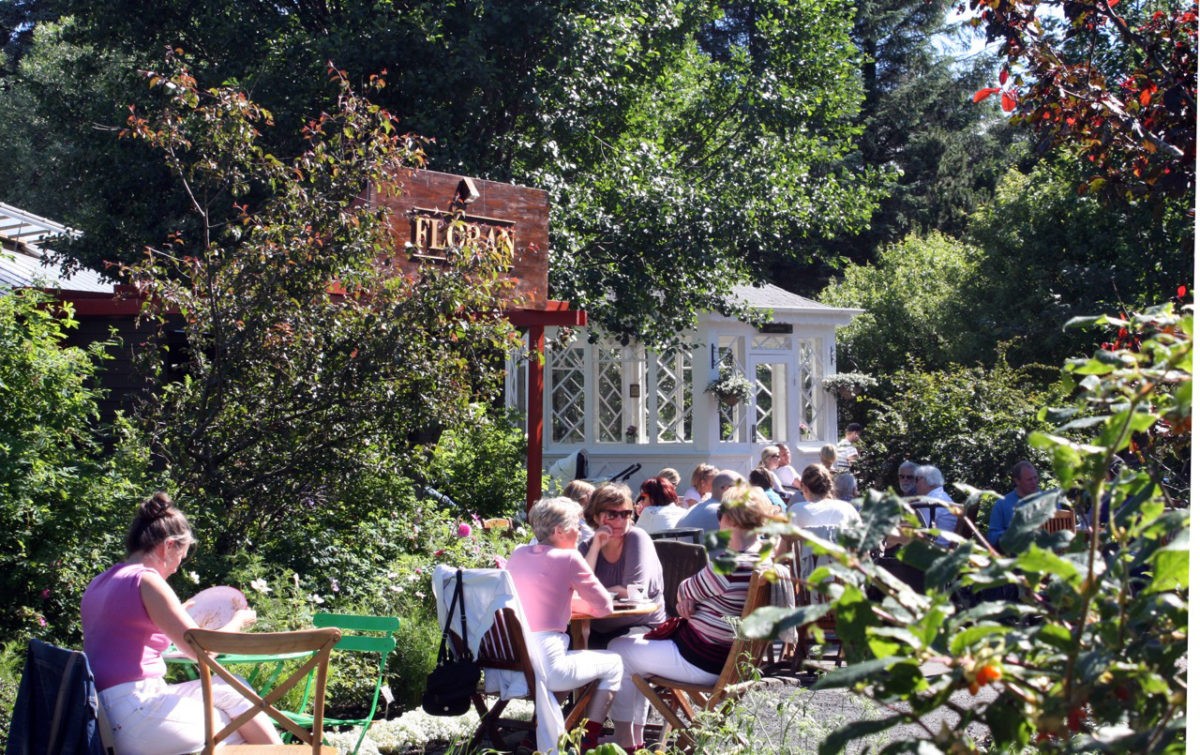
Café Flóra sits inside the garden in a glasshouse, opening later in the morning and mainly during the warmer months. If your walk runs long, it is a pleasant place to end up.
Do not write the garden off in winter. Much of it goes dormant, obviously, but the structure of the planting and the bare shapes of the trees under frost make for a different and quite beautiful walk, and you will usually have the paths to yourself. The gates stay open all year, with shorter hours from October onwards.
4. Ásmundarsafn and the sculpture walk
About 15 minutes each way · 1 hour in total
For a walk with more art in it, aim for the white domed building on the western edge of Laugardalur. This was the home and studio of Ásmundur Sveinsson (1893–1982), one of Iceland's most significant sculptors, who designed and largely built it himself. The architecture alone justifies the detour — a cluster of domes and curved white volumes that looks closer to North Africa than to the North Atlantic, which was more or less the point.
The building now holds a museum, part of Reykjavík Art Museum, but the sculpture garden around it is open at all hours and free to walk through. That is what makes this such a good morning route. Ásmundur's large bronze and concrete figures stand out on the grass, drawn from Icelandic folk tales, the sagas and working life: water carriers, blacksmiths, mythological women. Seen early, with no one else around and the light still coming in low, they have considerably more presence than they do at midday in July.
Combine it with a short section of the Laugardalur paths and you have a compact art walk of about an hour. If you decide you want to see more, the museum's interior opens mid-morning and the same ticket covers Reykjavík Art Museum's other sites downtown, including Hafnarhús near the old harbour — useful if the rest of your day is heading that way anyway.
5. The seafront walk to the Sun Voyager
About 30–35 minutes each way · allow 2 hours, or take the bus back
The one route that takes you properly out of the neighbourhood, and the one to choose if you want the postcard image of Reykjavík.
Walk north-west from the hotel until you reach Sæbraut and the coastal path that runs along it. From there the route is simple: keep the sea on your right and follow the promenade towards the city centre. This is one of the best coastal walks in the capital, entirely paved, flat, and separated from the road for most of its length. Across the bay you have Esja, the peninsula of Kjalarnes, and on clear mornings the light on the water does things that are hard to describe and easy to photograph.
Along the way you pass Höfði, the small white timber house where Reagan and Gorbachev met in 1986 for the summit that helped bring the Cold War towards its close. It is not open to the public, but it stands alone on its lawn facing the sea and takes two minutes to look at.
Continue and you reach Sólfar, the Sun Voyager — the steel sculpture by Jón Gunnar Árnason that everyone photographs. It is often described as a Viking ship; the artist described it as a dream boat and an ode to the sun. At nine in the morning in October, with the sun rising directly behind it, you may have it nearly to yourself. At two in the afternoon in July, you will not.
From there, Harpa concert hall is another ten minutes along the shore, and the old harbour and the city centre are within easy reach if you want to keep going. Otherwise, turn around and walk back, or catch a Strætó bus along Suðurlandsbraut to save your legs before a full day of excursions departing from Reykjavík.
If you want to walk further
Once you have done these, the rest of the city opens up easily on foot. A Tjörnin lake loop in the centre takes twenty minutes and passes the parliament, the city hall and a very large number of opinionated birds. The old harbour area is good for a slow stroll among the fishing boats and whale-watching operators. And several companies run free walking tours of the centre daily, which are a reasonable way to pick up the history if you would rather be told it than read it.
All of them are reachable from Múli in under half an hour on foot, or a short bus ride if the weather has other ideas.
A quiet base for slow mornings
Part of why these routes work is where the hotel sits: close enough to the centre to walk in, far enough out that the streets are calm at seven in the morning and there is green space rather than nightlife on the doorstep. Guests tell us the mornings are what they remember — the pool, the valley, the walk to the sea before anyone else was up.
Breakfast is included in every rate, the front desk can tell you what the wind is doing, and your room stays undisturbed if you would rather linger than go anywhere at all.