" width="43.9999991302804px"><path d="M 7.333 0.002 C 7.633 -0.008 7.787 0.018 8.036 0.193 C 8.002 0.618 7.851 0.976 7.688 1.367 L 7.513 1.799 L 7.422 2.02 C 6.754 3.652 6.114 5.295 5.544 6.964 L 6.63 6.836 L 6.646 6.465 C 6.705 5.731 6.946 5.118 7.512 4.629 C 8.115 4.207 8.868 4.146 9.573 4.265 C 10.135 4.392 10.559 4.647 10.91 5.112 C 11.345 5.941 11.444 6.953 11.221 7.866 C 10.994 8.534 10.641 8.987 10.016 9.327 C 9.328 9.591 8.677 9.59 7.983 9.355 C 7.417 9.099 7.081 8.671 6.83 8.114 C 6.697 7.768 6.629 7.399 6.63 7.028 L 6.466 7.089 C 6.241 7.157 6.042 7.181 5.808 7.196 L 5.585 7.21 L 5.417 7.219 L 5.398 7.331 C 5.363 7.528 5.326 7.725 5.289 7.922 L 5.262 8.073 C 5.232 8.237 5.201 8.401 5.17 8.565 L 5.14 8.728 L 5.11 8.882 L 5.084 9.021 C 5.034 9.136 5.034 9.136 4.913 9.215 C 4.778 9.263 4.778 9.263 4.587 9.263 L 4.602 9.013 C 4.602 8.665 4.493 8.41 4.343 8.102 L 4.274 7.953 C 4.175 7.741 4.071 7.531 3.963 7.324 C 3.884 7.156 3.884 7.156 3.884 6.964 L 3.712 6.952 C 3.154 6.87 2.63 6.599 2.132 6.346 L 2.008 6.283 L 1.712 6.134 L 1.626 6.302 C 1.471 6.603 1.316 6.904 1.161 7.205 C 1.026 7.466 0.891 7.727 0.756 7.988 C 0.691 8.112 0.628 8.237 0.564 8.362 L 0.445 8.59 L 0.341 8.793 C 0.243 8.944 0.243 8.944 0.051 9.008 C -0.023 8.789 -0.016 8.699 0.071 8.481 C 0.113 8.4 0.156 8.321 0.199 8.242 L 0.341 7.97 L 0.418 7.823 C 0.564 7.539 0.701 7.252 0.838 6.964 L 0.919 6.795 C 1.072 6.476 1.209 6.148 1.329 5.814 C 1.298 5.788 1.268 5.761 1.236 5.734 C 0.852 5.393 0.562 4.946 0.468 4.435 C 0.458 4.147 0.49 3.925 0.69 3.706 C 0.996 3.497 1.275 3.393 1.648 3.451 C 1.869 3.544 2.078 3.653 2.287 3.77 L 2.312 3.632 C 2.351 3.451 2.404 3.282 2.464 3.107 L 2.532 2.909 L 2.672 2.504 C 2.899 1.836 3.075 1.216 2.926 0.513 C 2.576 0.578 2.238 0.645 1.904 0.768 L 1.904 0.576 C 2.021 0.478 2.021 0.478 2.175 0.381 L 2.328 0.283 C 2.636 0.1 2.879 0.005 3.245 0.066 C 3.425 0.18 3.533 0.258 3.628 0.449 C 3.733 1.377 3.473 2.287 3.071 3.12 L 2.985 3.306 C 2.928 3.424 2.868 3.54 2.805 3.654 C 2.719 3.834 2.673 3.955 2.67 4.154 C 2.784 4.365 2.923 4.533 3.079 4.716 C 3.359 5.046 3.535 5.437 3.728 5.822 L 3.85 6.058 C 4.139 6.625 4.139 6.625 4.139 6.773 L 5.097 6.9 L 5.229 6.504 C 5.523 5.615 5.822 4.727 6.127 3.842 C 6.791 1.941 6.791 1.941 7.333 0.002 Z M 0.754 4.089 C 0.745 4.562 0.931 4.769 1.251 5.105 C 1.394 5.247 1.394 5.247 1.584 5.367 C 1.686 5.159 1.788 4.951 1.89 4.743 C 1.979 4.55 1.979 4.55 1.958 4.391 C 1.861 4.193 1.711 4.126 1.52 4.025 C 1.245 3.952 0.998 3.916 0.754 4.089 Z M 2.351 4.728 L 1.904 5.686 C 2.684 6.246 2.684 6.246 3.565 6.516 C 3.459 6.217 3.302 5.962 3.133 5.694 L 3.053 5.562 C 2.865 5.263 2.663 4.98 2.415 4.728 L 2.351 4.728 Z M 7.752 5.315 C 7.42 5.771 7.367 6.253 7.377 6.804 L 7.376 6.975 C 7.381 7.596 7.457 8.107 7.908 8.561 C 8.353 8.887 8.778 8.917 9.313 8.88 C 9.709 8.796 10.052 8.598 10.283 8.257 C 10.687 7.522 10.678 6.644 10.457 5.854 C 10.322 5.463 10.095 5.22 9.76 4.983 C 9.099 4.711 8.26 4.777 7.752 5.315 Z M 4.267 7.091 L 4.451 7.586 L 4.503 7.728 L 4.554 7.865 L 4.6 7.99 C 4.653 8.12 4.716 8.244 4.778 8.369 L 5.097 7.155 Z M 29.242 0.066 C 29.414 0.205 29.526 0.316 29.625 0.513 C 29.731 1.603 29.36 2.596 28.96 3.593 L 28.895 3.756 L 28.836 3.9 C 28.785 4.034 28.785 4.034 28.794 4.217 L 28.867 4.117 C 29.318 3.499 29.769 2.885 30.263 2.301 L 30.428 2.101 C 30.81 1.641 31.215 1.21 31.637 0.788 L 31.788 0.637 C 32.226 0.204 32.226 0.204 32.435 0.066 C 32.579 0.085 32.579 0.085 32.691 0.13 C 32.787 0.427 32.705 0.622 32.587 0.896 C 32.17 1.941 31.999 3.043 31.86 4.154 L 31.994 3.994 C 32.985 2.815 33.987 1.741 35.278 0.888 L 35.387 0.815 C 35.615 0.669 35.807 0.603 36.076 0.576 C 36.151 0.713 36.151 0.713 36.204 0.896 C 36.136 1.069 36.136 1.069 36.02 1.267 C 34.862 3.406 34.098 6.803 34.799 9.199 C 35.016 9.768 35.239 10.084 35.753 10.401 C 36.396 10.647 37.073 10.479 37.684 10.24 C 37.872 10.16 37.872 10.16 38.056 10.03 L 38.312 10.03 L 38.312 10.285 C 38.136 10.37 37.96 10.453 37.785 10.537 L 37.634 10.609 L 37.488 10.678 L 37.355 10.742 C 36.798 10.976 35.99 10.954 35.414 10.805 C 35.263 10.734 35.121 10.646 34.99 10.541 L 34.865 10.442 C 34.295 9.935 34.035 9.112 33.968 8.369 C 33.852 5.936 34.305 3.364 35.501 1.215 C 34.62 1.955 33.757 2.699 33.01 3.579 L 32.846 3.768 C 32.725 3.91 32.604 4.054 32.485 4.198 C 32.376 4.331 32.267 4.449 32.144 4.57 C 31.618 5.134 31.609 5.816 31.531 6.556 C 31.489 6.935 31.412 7.218 31.202 7.539 C 31.094 7.603 31.094 7.603 30.902 7.611 C 30.711 7.539 30.711 7.539 30.587 7.347 C 30.395 6.779 30.667 6.202 30.902 5.686 L 30.997 5.532 C 31.274 5.072 31.343 4.709 31.358 4.178 C 31.388 3.573 31.442 2.982 31.541 2.385 L 31.573 2.187 C 31.632 1.839 31.706 1.493 31.797 1.151 C 31.295 1.64 30.825 2.133 30.391 2.684 L 30.208 2.91 C 29.807 3.4 29.425 3.906 29.063 4.426 C 28.988 4.534 28.912 4.64 28.836 4.745 C 28.472 5.26 28.172 5.806 27.88 6.365 C 27.843 6.436 27.806 6.508 27.767 6.582 C 27.408 7.282 27.111 7.969 27.006 8.752 C 26.583 8.705 26.583 8.705 26.367 8.561 C 26.407 8.317 26.479 8.116 26.583 7.893 L 26.68 7.681 L 26.787 7.451 C 28.513 4.16 28.513 4.16 28.922 0.64 C 28.849 0.554 28.849 0.554 28.655 0.561 C 28.396 0.578 28.252 0.643 28.028 0.768 L 27.9 0.768 C 27.923 0.589 27.949 0.525 28.09 0.406 L 28.244 0.309 L 28.397 0.211 C 28.651 0.06 28.952 0.009 29.242 0.066 Z M 28.602 4.345 L 28.666 4.473 M 31.221 5.878 C 30.989 6.29 30.861 6.619 30.838 7.092 L 31.094 7.092 C 31.23 6.692 31.259 6.299 31.285 5.878 Z M 18.52 4.569 C 18.941 4.907 19.209 5.326 19.321 5.853 L 19.37 6.072 C 19.414 6.387 19.405 6.709 19.405 7.027 L 15.892 7.027 C 16.036 7.892 16.036 7.892 16.495 8.584 C 16.901 8.842 17.273 8.864 17.745 8.816 C 18.156 8.701 18.385 8.442 18.639 8.113 L 18.766 7.985 L 19.278 8.241 C 19.169 8.674 18.84 9.003 18.47 9.246 C 17.878 9.549 17.256 9.606 16.609 9.443 C 16.102 9.257 15.668 8.886 15.431 8.401 C 15.066 7.523 15.028 6.363 15.365 5.468 C 15.611 4.96 15.975 4.55 16.51 4.342 C 17.208 4.135 17.904 4.152 18.52 4.569 Z M 16.212 5.367 C 15.967 5.743 15.945 5.973 15.892 6.452 L 18.639 6.452 C 18.58 5.863 18.526 5.553 18.168 5.119 C 17.561 4.628 16.692 4.782 16.211 5.367 Z" fill="rgb(0, 0, 0)" height="10.917437449222685px" id="AGutxb3Yn" transform="translate(0 0)" width="38.31175535682081px"/><path d="M 27.593 2.235 C 27.757 2.233 27.922 2.231 28.086 2.229 C 28.232 2.235 28.232 2.235 28.296 2.299 C 28.302 2.406 28.305 2.513 28.305 2.619 L 28.306 2.826 L 28.307 3.051 L 28.312 3.522 C 28.314 3.771 28.316 4.018 28.317 4.267 C 28.318 4.506 28.32 4.744 28.323 4.983 L 28.323 5.206 C 28.329 5.655 28.376 6.061 28.615 6.451 C 28.901 6.701 29.165 6.729 29.533 6.724 C 29.854 6.691 30.101 6.584 30.31 6.334 C 30.637 5.836 30.679 5.377 30.686 4.793 L 30.689 4.571 C 30.693 4.338 30.696 4.105 30.699 3.872 L 30.706 3.397 C 30.713 3.01 30.718 2.623 30.723 2.235 L 31.426 2.235 L 31.489 7.281 L 30.851 7.281 L 30.723 6.643 L 30.564 6.85 C 30.249 7.217 29.859 7.381 29.382 7.419 C 28.878 7.44 28.475 7.331 28.08 7.01 C 27.733 6.682 27.606 6.297 27.585 5.822 L 27.586 5.622 L 27.586 5.393 L 27.587 5.148 L 27.587 4.896 L 27.589 4.235 L 27.59 3.559 C 27.591 3.118 27.592 2.676 27.593 2.235 Z M 4.407 1.214 L 4.982 1.214 L 4.982 2.299 L 6.196 2.299 L 6.196 2.938 L 4.982 2.938 C 4.988 3.423 4.995 3.909 5.002 4.394 L 5.009 4.89 C 5.012 5.127 5.016 5.364 5.02 5.602 L 5.022 5.825 L 5.025 6.034 L 5.028 6.218 C 5.047 6.403 5.091 6.541 5.174 6.707 C 5.369 6.804 5.574 6.777 5.788 6.774 L 5.925 6.774 C 6.037 6.773 6.148 6.772 6.26 6.77 L 6.26 7.345 C 5.114 7.539 5.114 7.539 4.611 7.237 C 4.212 6.816 4.254 6.338 4.261 5.789 L 4.261 5.541 C 4.262 5.326 4.264 5.11 4.266 4.895 C 4.269 4.242 4.273 3.59 4.28 2.938 L 3.577 2.938 L 3.577 2.299 L 4.28 2.299 Z M 12.2 0.064 L 12.902 0.064 L 12.902 7.345 L 12.2 7.345 Z M 33.023 0 L 33.725 0 L 33.725 7.281 L 33.023 7.281 Z M 35.003 2.235 L 35.642 2.235 L 35.642 7.281 L 35.003 7.281 Z M 1.342 0.224 L 1.549 0.235 L 1.757 0.244 L 1.916 0.255 C 1.885 0.538 1.797 0.66 1.593 0.854 L 1.436 1.004 C 1.252 1.173 1.066 1.339 0.875 1.5 C 0.757 1.6 0.757 1.6 0.639 1.752 C 0.435 1.911 0.252 1.869 0 1.852 C 0.038 1.643 0.107 1.522 0.243 1.359 L 0.352 1.227 L 0.467 1.09 L 0.69 0.821 L 0.798 0.693 C 0.904 0.566 0.904 0.566 1.024 0.384 C 1.15 0.255 1.15 0.255 1.342 0.224 Z M 30.448 0.179 L 30.64 0.184 L 30.787 0.191 C 30.739 0.631 30.411 0.869 30.112 1.169 L 29.941 1.349 C 29.527 1.768 29.527 1.768 29.29 1.826 C 29.149 1.826 29.149 1.826 28.934 1.788 C 28.974 1.568 29.056 1.437 29.193 1.262 L 29.313 1.11 L 29.438 0.953 L 29.561 0.796 C 30.057 0.165 30.057 0.165 30.448 0.179 Z M 35.003 0.128 L 35.642 0.128 L 35.642 1.022 L 35.003 1.022 Z" fill="rgb(0, 0, 0)" height="7.479521951991309px" id="sg9LEzmJ7" transform="translate(8.358 2.134)" width="35.641538703949834px"/></g></svg>)
Best time to visit Iceland: a season-by-season guide
Iceland doesn't keep tidy seasons. The year swings between two extremes — barely four hours of daylight in December, almost twenty-one in June — and the wind, the prices and the crowds swing along with it. The real question isn't which month is best, but what pace you want to give your week. The summer of 2026 happens to carry one rare gift, and the winter another. The rest of the year offers something quieter, but no less worth the trip. Here's the year, season by season, told gently and at your own pace.
Iceland season by season: a year unlike most
Iceland has its own logic. A summer that runs almost without nightfall, a winter that wraps the coast in a long velvet darkness, and two transition months on either side when light slowly returns or quietly leaves. The Gulf Stream keeps Reykjavík milder than its latitude suggests — around 0°C in January, around 11°C in July — but the cold is rarely what surprises first-time visitors. What surprises them is the sky: how quickly it shifts from clear blue to horizontal rain and back to sun, sometimes within an hour. Locals glance up out of habit, not anxiety, just to know when to step outside.
A waterproof, windproof shell stays in the bag whether you travel in June or November.
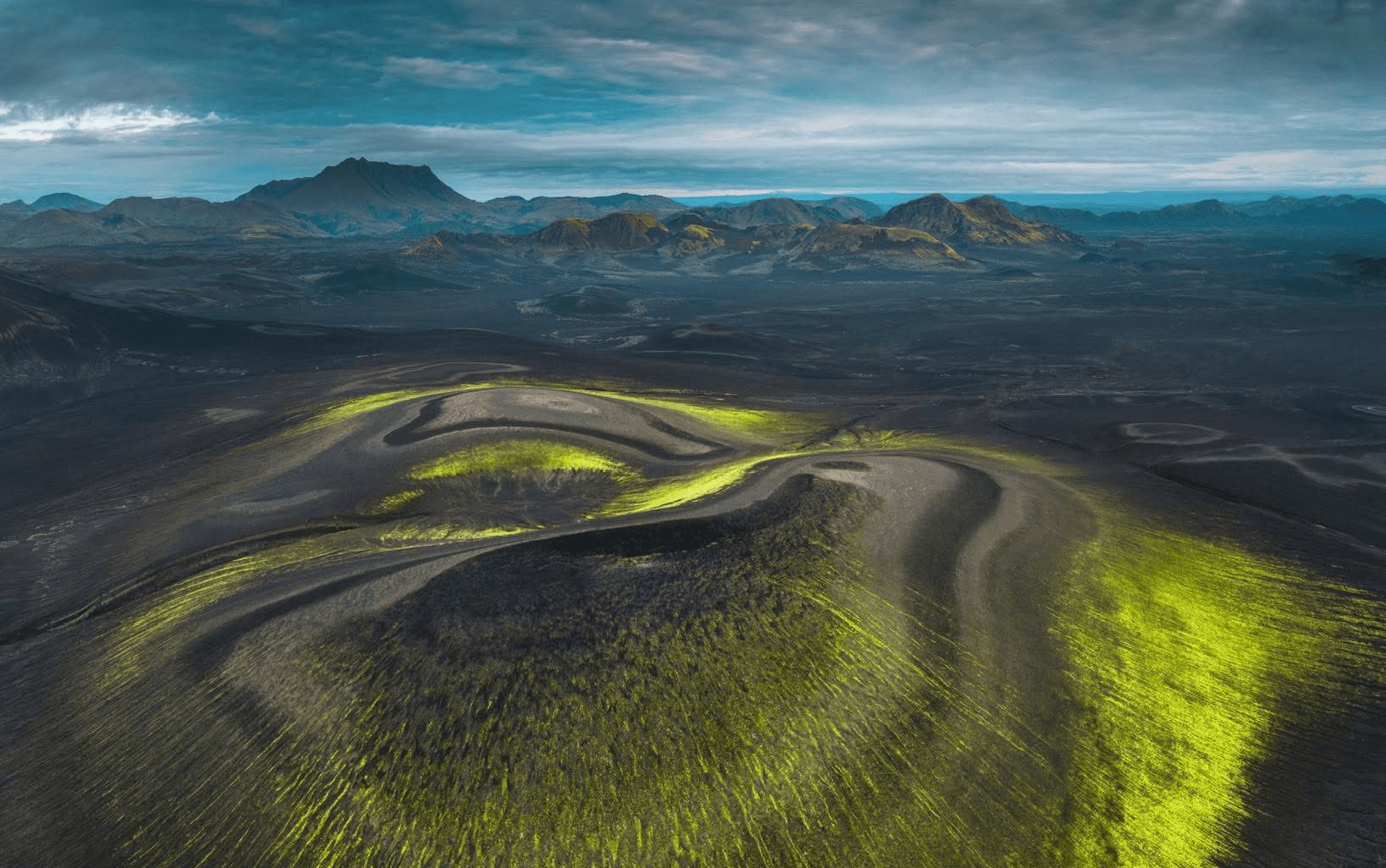
The bigger variable is the light. In June, you walk along the harbour at midnight in a long golden glow, dinner runs late, you don't switch on a lamp until two in the morning. In December, the day lasts barely a winter afternoon — enough for a quiet coffee, a walk to the lighthouse, and back to a warm room for the long evening. That swing changes your dinner hour, your urge to head out, the entire rhythm of a stay. So before you choose a month, choose a pace.
Season | The mood | What opens up | What closes |
|---|---|---|---|
Summer (June-August) | Endless light, open road | Highland tracks, hiking, whales | Auroras (sky too bright) |
Autumn shoulder (Sept-Oct) | First auroras, quieter pace | Aurora season, softer prices | Highland tracks (closing through Sept) |
Winter (Nov-March) | Deep nights, slower city | Natural ice caves, strong auroras | Most highland and side roads |
Spring shoulder (Apr-May) | Light returning, ground drying | Whales, coastal hikes, open roads | Auroras (after mid-April) |
Whatever the month, you'll find a quiet room in Reykjavík waiting at the end of the day.
Summer (June to early September): the long light and the open road
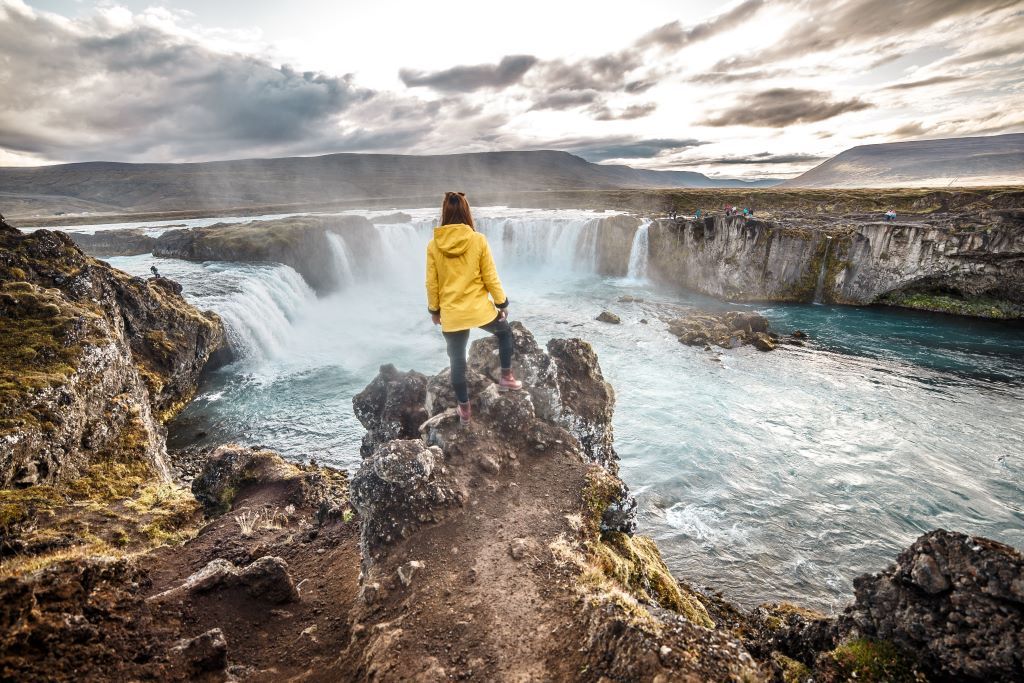
Picture this: it's eleven at night, you've just left a restaurant table at the old harbour, and the light is still that of late afternoon. Twilight is barely beginning. From late May to early August, the midnight sun gives you a strange urge to do everything in double — walk further, drive longer, eat late, drive up to a hilltop "just for tonight". This is also when the country opens up fully: the highland tracks become passable, whales pass close to the coast (the season runs April to October, with departures from Reykjavík's Old Harbour and from Húsavík further north), and puffins still nest on the cliffs through mid-August.
It's also peak season. Iceland is large, though, and stepping off Route 1 even a little gives back that rare feeling of being alone on raw land.
The highland tracks, the Ring Road and the rhythm of a day trip
Route 1, the Ring Road, is paved and open year-round. But to reach the wild interior, you'll need the F-roads. These mountain tracks are open only in summer, and a 4×4 is required by law (no exceptions, no insurance covers river-crossing damage). The dates below shift each year with the snowmelt — always check road.is the morning of your drive.
F-road | Where it leads | Typical 2026 opening | Difficulty |
|---|---|---|---|
F550 Kaldidalur | Between two glaciers | Early June | Easy (no rivers) |
F35 Kjölur | The centre of the island | Late June | Moderate |
F208 Landmannalaugar | Coloured rhyolite mountains | Late June | Several river crossings |
F26 Sprengisandur | Volcanic desert, long and remote | Early July | Committing |
F88 Askja | Lunar crater country | Early July | Committing — rivers |
Most close again between mid-September and early October. From a Reykjavík base, plenty of sites are within a long day:
The Golden Circle — Þingvellir, Geysir, Gullfoss: the most accessible loop, perfect for a first day.
The South Coast — Seljalandsfoss, Skógafoss, the black sand beach at Reynisfjara, on to Vík.
The Snæfellsnes peninsula — a one-day distillation of Iceland.
The Westfjords — at least one night out there; two to really feel them.
Parking in central Reykjavík is often the most exhausting part of a road-tripper's day. At Hotel Múli, a private spot waiting for you — free, included with the room — takes that worry off the table.
12 August 2026: a rare afternoon over Reykjavík
If summer 2026 has one date worth marking, it's this one. On 12 August, the Moon's shadow will sweep across the western half of the country: the Westfjords, Snæfellsnes, Reykjavík and Reykjanes. In Reykjavík, the partial phase begins around 14:04 local time, with totality at roughly 15:15 — about two minutes when the sky drops into mid-afternoon dusk. The longest totality on land, around 2 minutes 13 seconds, occurs at Látrabjarg at the far end of the Westfjords (eclipse2026.is, 2026).
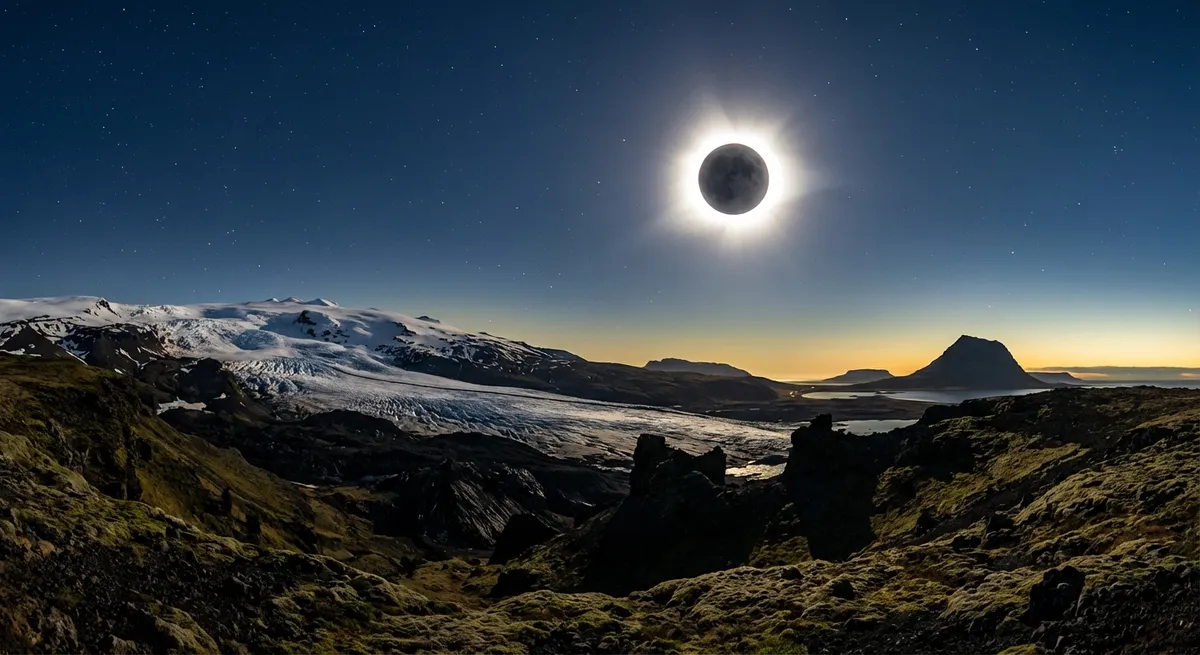
It's the first total eclipse visible from Iceland in seventy-two years, and the first over the capital since the fifteenth century. Mid-August also marks the very start of the aurora season, so a slightly longer stay can pair the eclipse with the first dark nights of autumn. Two rare phenomena in the same week — rare enough to book early.
Shoulder seasons (April-May, late September-October): the quiet edges
The two seasons either side of summer suit a slow trip particularly well. Daylight is still generous, the worst of winter is past, and the country is shared with fewer travellers. For couples, stopover guests, or anyone who prefers Iceland without crowds, this is where the best weeks tend to hide.
In September, the light begins to draw quietly back from the coast. Afternoons are still mild enough for a walk without a hat, but the sky cools at day's end, dark enough by mid-month for the first northern lights of the season. That contrast is what regular Iceland visitors come back for: walking in a t-shirt in the afternoon, then looking up at a green band over the bay later the same evening.
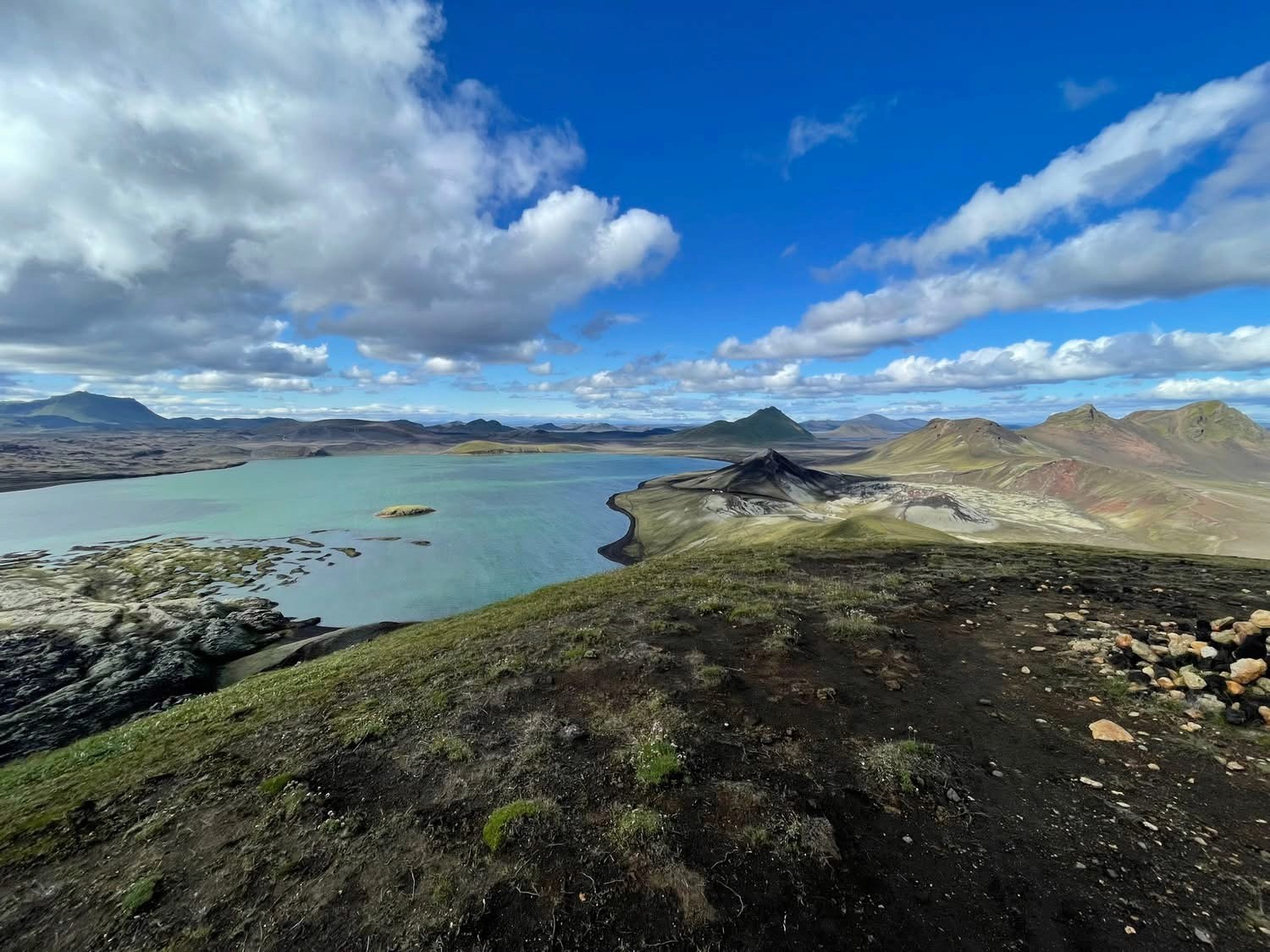
Spring is the inverse. In April, coastal roads still have patches of melting snow, but the light returns fast. By May, newborn lambs appear in the fields, the first wildflowers come back, and you no longer need a lamp to walk home. Prices follow the visitor curve — hotels, rental cars and tours are noticeably softer than in peak season.
Reading the weather, gently
Wind and rapid changes are the constant in these months. A storm can come through within hours and close a stretch of road, even on the paved Ring Road. Three free tools live on every Icelander's phone — keep them on yours:
vedur.is — the Icelandic Met Office, for weather and cloud cover.
road.is — Vegagerðin, for live road conditions.
safetravel.is — travel alerts and recommended itineraries.
Almost everything else stays open: whale-watching, the Golden Circle, the Blue Lagoon, the local hot springs, the coastal villages. The interior is mostly closed off — these are not the months for the wild centre. They're the months of long bath evenings after dinner, of an unhurried Reykjavík, of warming up over coffee while a shower passes outside the window.
Winter (November-March): long nights and skies traced with green
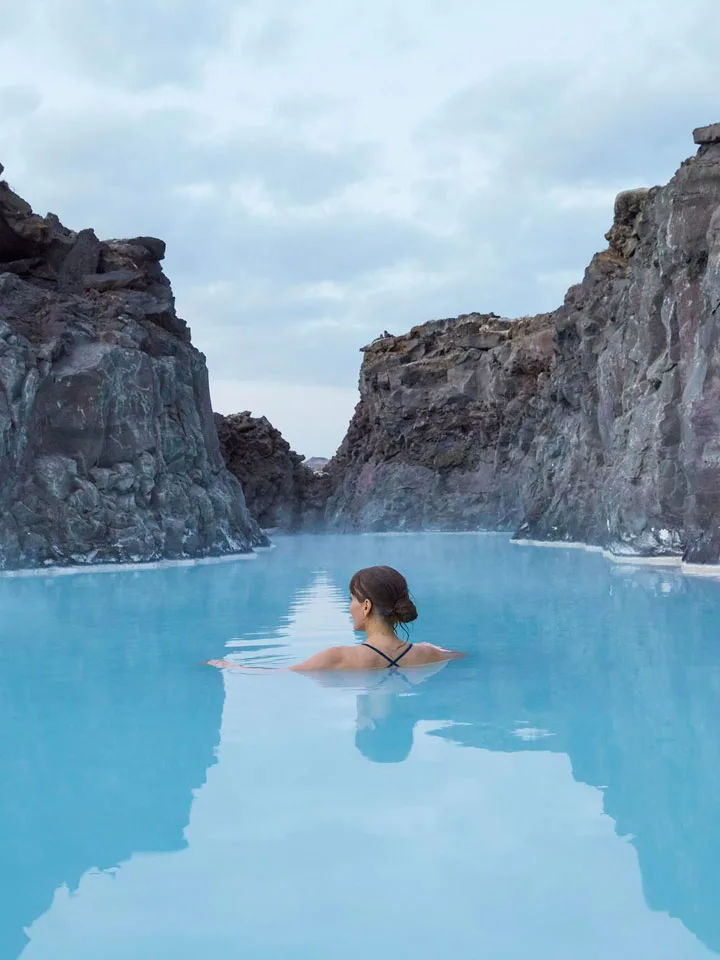
In winter the country shifts pace. Days compress, the coast wears a thin layer of snow, and the geothermal pools take on a whole new dimension when the air is at minus two and the water at thirty-eight. It's also the only season when you can step inside a natural ice cave — the cold stabilises the structure, while in summer they become unsafe.
And there's a reason 2026 stands out for aurora travellers. Solar Cycle 25, the Sun's eleven-year activity cycle, peaked between late 2024 and early 2026 according to the NOAA Space Weather Prediction Center. The years immediately following a peak typically deliver some of the strongest auroras of the cycle — placing this winter in a window the next one won't reopen for another decade.
Catching the lights
The aurora season runs from late August through mid-April. The best viewing windows fall between roughly 22:00 and 02:00, and four conditions need to line up:
Darkness — the longer the night, the better the contrast.
A clear sky — the cloud cover map at en.vedur.is is the daily reference.
Distance from city lights — even within Reykjavík, contrast varies by neighbourhood.
Geomagnetic activity — measured on the Kp scale; helpful, but not absolute.
Ice caves, hot pools, and a slower Reykjavík
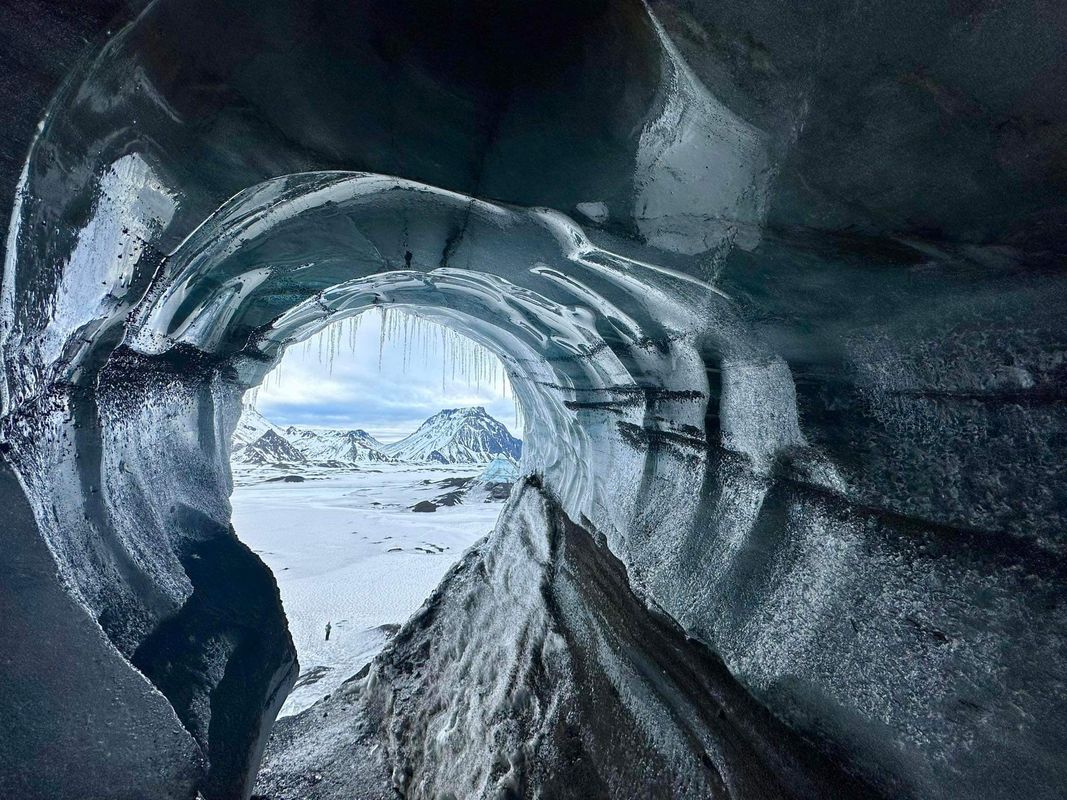
Natural ice caves are the kind of experience that rearranges what you thought you knew about a glacier. Inside, the light turns electric blue, the silence is complete, and the walls bend the daylight you came in through into something almost liquid. Tours fill up weeks in advance, especially over the winter holidays.
Ice cave | Glacier | Season | From Reykjavík |
|---|---|---|---|
Crystal Ice Cave | Vatnajökull | November-March | ~379 km via Ring Road |
Skaftafell Blue Cave | Vatnajökull | November-March | ~325 km via Ring Road |
Mýrdalsjökull | Year-round | ~180 km via Ring Road | |
Langjökull Ice Tunnel | Langjökull (man-made) | Year-round | ~120 km via Húsafell |
Closer to the city, the Blue Lagoon stays open year-round, about fifty minutes' drive away. Quieter still — and the locals' pick — is the Laugardalslaug geothermal pool, a fourteen-minute walk from the door. After an aurora chase that ended at one in the morning, a soft bed in a hotel that doesn't ask you to check in at the front desk tends to do more than any frantic itinerary.
Frequently asked questions
What is the cheapest month to visit Iceland?
The shoulder months are gentlest on the budget. Late September, October and February are the quietest outside the mid-winter holidays — the Icelandic Tourist Board recorded around 213,000 international arrivals in October 2024 versus 281,000 in August. Hotel rates, car hire and tours typically follow that curve, so a slow shoulder week often costs noticeably less than the same week in July or August.
What is the best month to see the northern lights in Iceland?
Late September to October and February to March often deliver the strongest displays, within the season that runs from late August to mid-April — months around the equinoxes are statistically more geomagnetically active. The 2026 winter benefits additionally from the lingering peak of Solar Cycle 25, per the NOAA Space Weather Prediction Center, making it one of the strongest aurora windows in over a decade.
Is it better to visit Iceland in summer or winter?
Neither truly wins — they suit different rhythms. Summer in Iceland means long days, open highland F-roads, midnight sun and whale-watching. Winter means short days, the northern lights and natural ice caves under the country's biggest glaciers. Choose the rhythm that matches the trip you actually want. A summer week and a winter week are, in practice, two different countries.
When does the midnight sun start in Iceland?
From late May to early August. Reykjavík reaches around twenty-one hours of daylight near the June solstice, with twilight filling the rest, so the sky never goes fully dark in this window. The trade-off is that there are no auroras during this stretch — the night doesn't get dark enough — but evenings remain walkable well past midnight, which changes the rhythm of a day.
When can you drive Iceland's highland F-roads?
Generally mid-June to mid-September, depending on snowmelt. F550 Kaldidalur usually opens earliest, in early June; F35 Kjölur and F208 toward Landmannalaugar around late June; F26 Sprengisandur and F88 toward Askja around early July. A 4×4 is required by law, and no insurance covers river-crossing damage. Always check road.is before setting off.
Will the 12 August 2026 solar eclipse be visible from Reykjavík?
Yes — Reykjavík sits within the path of totality. The partial phase begins around 14:04 local time, with totality at roughly 15:15. The longest totality on land in Iceland — about 2 minutes 13 seconds — occurs at Látrabjarg in the Westfjords. It is the first total solar eclipse over Reykjavík since 1433.
The best time to visit Iceland is the one that matches your pace
Each season here is its own kind of trip. Summer is long light and open road. The shoulders are the quiet edges. Winter is deep skies, slower streets, and — in 2026 — the rarest aurora window the country will see for years. None of these is the "right" answer on its own. The right answer is the rhythm you want to live a week in. Whichever season you choose, Reykjavík is here to be slept in slowly: choose a quiet room at Múli for the season that suits you, and we'll keep the rest unhurried.