" width="43.9999991302804px"><path d="M 7.333 0.002 C 7.633 -0.008 7.787 0.018 8.036 0.193 C 8.002 0.618 7.851 0.976 7.688 1.367 L 7.513 1.799 L 7.422 2.02 C 6.754 3.652 6.114 5.295 5.544 6.964 L 6.63 6.836 L 6.646 6.465 C 6.705 5.731 6.946 5.118 7.512 4.629 C 8.115 4.207 8.868 4.146 9.573 4.265 C 10.135 4.392 10.559 4.647 10.91 5.112 C 11.345 5.941 11.444 6.953 11.221 7.866 C 10.994 8.534 10.641 8.987 10.016 9.327 C 9.328 9.591 8.677 9.59 7.983 9.355 C 7.417 9.099 7.081 8.671 6.83 8.114 C 6.697 7.768 6.629 7.399 6.63 7.028 L 6.466 7.089 C 6.241 7.157 6.042 7.181 5.808 7.196 L 5.585 7.21 L 5.417 7.219 L 5.398 7.331 C 5.363 7.528 5.326 7.725 5.289 7.922 L 5.262 8.073 C 5.232 8.237 5.201 8.401 5.17 8.565 L 5.14 8.728 L 5.11 8.882 L 5.084 9.021 C 5.034 9.136 5.034 9.136 4.913 9.215 C 4.778 9.263 4.778 9.263 4.587 9.263 L 4.602 9.013 C 4.602 8.665 4.493 8.41 4.343 8.102 L 4.274 7.953 C 4.175 7.741 4.071 7.531 3.963 7.324 C 3.884 7.156 3.884 7.156 3.884 6.964 L 3.712 6.952 C 3.154 6.87 2.63 6.599 2.132 6.346 L 2.008 6.283 L 1.712 6.134 L 1.626 6.302 C 1.471 6.603 1.316 6.904 1.161 7.205 C 1.026 7.466 0.891 7.727 0.756 7.988 C 0.691 8.112 0.628 8.237 0.564 8.362 L 0.445 8.59 L 0.341 8.793 C 0.243 8.944 0.243 8.944 0.051 9.008 C -0.023 8.789 -0.016 8.699 0.071 8.481 C 0.113 8.4 0.156 8.321 0.199 8.242 L 0.341 7.97 L 0.418 7.823 C 0.564 7.539 0.701 7.252 0.838 6.964 L 0.919 6.795 C 1.072 6.476 1.209 6.148 1.329 5.814 C 1.298 5.788 1.268 5.761 1.236 5.734 C 0.852 5.393 0.562 4.946 0.468 4.435 C 0.458 4.147 0.49 3.925 0.69 3.706 C 0.996 3.497 1.275 3.393 1.648 3.451 C 1.869 3.544 2.078 3.653 2.287 3.77 L 2.312 3.632 C 2.351 3.451 2.404 3.282 2.464 3.107 L 2.532 2.909 L 2.672 2.504 C 2.899 1.836 3.075 1.216 2.926 0.513 C 2.576 0.578 2.238 0.645 1.904 0.768 L 1.904 0.576 C 2.021 0.478 2.021 0.478 2.175 0.381 L 2.328 0.283 C 2.636 0.1 2.879 0.005 3.245 0.066 C 3.425 0.18 3.533 0.258 3.628 0.449 C 3.733 1.377 3.473 2.287 3.071 3.12 L 2.985 3.306 C 2.928 3.424 2.868 3.54 2.805 3.654 C 2.719 3.834 2.673 3.955 2.67 4.154 C 2.784 4.365 2.923 4.533 3.079 4.716 C 3.359 5.046 3.535 5.437 3.728 5.822 L 3.85 6.058 C 4.139 6.625 4.139 6.625 4.139 6.773 L 5.097 6.9 L 5.229 6.504 C 5.523 5.615 5.822 4.727 6.127 3.842 C 6.791 1.941 6.791 1.941 7.333 0.002 Z M 0.754 4.089 C 0.745 4.562 0.931 4.769 1.251 5.105 C 1.394 5.247 1.394 5.247 1.584 5.367 C 1.686 5.159 1.788 4.951 1.89 4.743 C 1.979 4.55 1.979 4.55 1.958 4.391 C 1.861 4.193 1.711 4.126 1.52 4.025 C 1.245 3.952 0.998 3.916 0.754 4.089 Z M 2.351 4.728 L 1.904 5.686 C 2.684 6.246 2.684 6.246 3.565 6.516 C 3.459 6.217 3.302 5.962 3.133 5.694 L 3.053 5.562 C 2.865 5.263 2.663 4.98 2.415 4.728 L 2.351 4.728 Z M 7.752 5.315 C 7.42 5.771 7.367 6.253 7.377 6.804 L 7.376 6.975 C 7.381 7.596 7.457 8.107 7.908 8.561 C 8.353 8.887 8.778 8.917 9.313 8.88 C 9.709 8.796 10.052 8.598 10.283 8.257 C 10.687 7.522 10.678 6.644 10.457 5.854 C 10.322 5.463 10.095 5.22 9.76 4.983 C 9.099 4.711 8.26 4.777 7.752 5.315 Z M 4.267 7.091 L 4.451 7.586 L 4.503 7.728 L 4.554 7.865 L 4.6 7.99 C 4.653 8.12 4.716 8.244 4.778 8.369 L 5.097 7.155 Z M 29.242 0.066 C 29.414 0.205 29.526 0.316 29.625 0.513 C 29.731 1.603 29.36 2.596 28.96 3.593 L 28.895 3.756 L 28.836 3.9 C 28.785 4.034 28.785 4.034 28.794 4.217 L 28.867 4.117 C 29.318 3.499 29.769 2.885 30.263 2.301 L 30.428 2.101 C 30.81 1.641 31.215 1.21 31.637 0.788 L 31.788 0.637 C 32.226 0.204 32.226 0.204 32.435 0.066 C 32.579 0.085 32.579 0.085 32.691 0.13 C 32.787 0.427 32.705 0.622 32.587 0.896 C 32.17 1.941 31.999 3.043 31.86 4.154 L 31.994 3.994 C 32.985 2.815 33.987 1.741 35.278 0.888 L 35.387 0.815 C 35.615 0.669 35.807 0.603 36.076 0.576 C 36.151 0.713 36.151 0.713 36.204 0.896 C 36.136 1.069 36.136 1.069 36.02 1.267 C 34.862 3.406 34.098 6.803 34.799 9.199 C 35.016 9.768 35.239 10.084 35.753 10.401 C 36.396 10.647 37.073 10.479 37.684 10.24 C 37.872 10.16 37.872 10.16 38.056 10.03 L 38.312 10.03 L 38.312 10.285 C 38.136 10.37 37.96 10.453 37.785 10.537 L 37.634 10.609 L 37.488 10.678 L 37.355 10.742 C 36.798 10.976 35.99 10.954 35.414 10.805 C 35.263 10.734 35.121 10.646 34.99 10.541 L 34.865 10.442 C 34.295 9.935 34.035 9.112 33.968 8.369 C 33.852 5.936 34.305 3.364 35.501 1.215 C 34.62 1.955 33.757 2.699 33.01 3.579 L 32.846 3.768 C 32.725 3.91 32.604 4.054 32.485 4.198 C 32.376 4.331 32.267 4.449 32.144 4.57 C 31.618 5.134 31.609 5.816 31.531 6.556 C 31.489 6.935 31.412 7.218 31.202 7.539 C 31.094 7.603 31.094 7.603 30.902 7.611 C 30.711 7.539 30.711 7.539 30.587 7.347 C 30.395 6.779 30.667 6.202 30.902 5.686 L 30.997 5.532 C 31.274 5.072 31.343 4.709 31.358 4.178 C 31.388 3.573 31.442 2.982 31.541 2.385 L 31.573 2.187 C 31.632 1.839 31.706 1.493 31.797 1.151 C 31.295 1.64 30.825 2.133 30.391 2.684 L 30.208 2.91 C 29.807 3.4 29.425 3.906 29.063 4.426 C 28.988 4.534 28.912 4.64 28.836 4.745 C 28.472 5.26 28.172 5.806 27.88 6.365 C 27.843 6.436 27.806 6.508 27.767 6.582 C 27.408 7.282 27.111 7.969 27.006 8.752 C 26.583 8.705 26.583 8.705 26.367 8.561 C 26.407 8.317 26.479 8.116 26.583 7.893 L 26.68 7.681 L 26.787 7.451 C 28.513 4.16 28.513 4.16 28.922 0.64 C 28.849 0.554 28.849 0.554 28.655 0.561 C 28.396 0.578 28.252 0.643 28.028 0.768 L 27.9 0.768 C 27.923 0.589 27.949 0.525 28.09 0.406 L 28.244 0.309 L 28.397 0.211 C 28.651 0.06 28.952 0.009 29.242 0.066 Z M 28.602 4.345 L 28.666 4.473 M 31.221 5.878 C 30.989 6.29 30.861 6.619 30.838 7.092 L 31.094 7.092 C 31.23 6.692 31.259 6.299 31.285 5.878 Z M 18.52 4.569 C 18.941 4.907 19.209 5.326 19.321 5.853 L 19.37 6.072 C 19.414 6.387 19.405 6.709 19.405 7.027 L 15.892 7.027 C 16.036 7.892 16.036 7.892 16.495 8.584 C 16.901 8.842 17.273 8.864 17.745 8.816 C 18.156 8.701 18.385 8.442 18.639 8.113 L 18.766 7.985 L 19.278 8.241 C 19.169 8.674 18.84 9.003 18.47 9.246 C 17.878 9.549 17.256 9.606 16.609 9.443 C 16.102 9.257 15.668 8.886 15.431 8.401 C 15.066 7.523 15.028 6.363 15.365 5.468 C 15.611 4.96 15.975 4.55 16.51 4.342 C 17.208 4.135 17.904 4.152 18.52 4.569 Z M 16.212 5.367 C 15.967 5.743 15.945 5.973 15.892 6.452 L 18.639 6.452 C 18.58 5.863 18.526 5.553 18.168 5.119 C 17.561 4.628 16.692 4.782 16.211 5.367 Z" fill="rgb(0, 0, 0)" height="10.917437449222685px" id="AGutxb3Yn" transform="translate(0 0)" width="38.31175535682081px"/><path d="M 27.593 2.235 C 27.757 2.233 27.922 2.231 28.086 2.229 C 28.232 2.235 28.232 2.235 28.296 2.299 C 28.302 2.406 28.305 2.513 28.305 2.619 L 28.306 2.826 L 28.307 3.051 L 28.312 3.522 C 28.314 3.771 28.316 4.018 28.317 4.267 C 28.318 4.506 28.32 4.744 28.323 4.983 L 28.323 5.206 C 28.329 5.655 28.376 6.061 28.615 6.451 C 28.901 6.701 29.165 6.729 29.533 6.724 C 29.854 6.691 30.101 6.584 30.31 6.334 C 30.637 5.836 30.679 5.377 30.686 4.793 L 30.689 4.571 C 30.693 4.338 30.696 4.105 30.699 3.872 L 30.706 3.397 C 30.713 3.01 30.718 2.623 30.723 2.235 L 31.426 2.235 L 31.489 7.281 L 30.851 7.281 L 30.723 6.643 L 30.564 6.85 C 30.249 7.217 29.859 7.381 29.382 7.419 C 28.878 7.44 28.475 7.331 28.08 7.01 C 27.733 6.682 27.606 6.297 27.585 5.822 L 27.586 5.622 L 27.586 5.393 L 27.587 5.148 L 27.587 4.896 L 27.589 4.235 L 27.59 3.559 C 27.591 3.118 27.592 2.676 27.593 2.235 Z M 4.407 1.214 L 4.982 1.214 L 4.982 2.299 L 6.196 2.299 L 6.196 2.938 L 4.982 2.938 C 4.988 3.423 4.995 3.909 5.002 4.394 L 5.009 4.89 C 5.012 5.127 5.016 5.364 5.02 5.602 L 5.022 5.825 L 5.025 6.034 L 5.028 6.218 C 5.047 6.403 5.091 6.541 5.174 6.707 C 5.369 6.804 5.574 6.777 5.788 6.774 L 5.925 6.774 C 6.037 6.773 6.148 6.772 6.26 6.77 L 6.26 7.345 C 5.114 7.539 5.114 7.539 4.611 7.237 C 4.212 6.816 4.254 6.338 4.261 5.789 L 4.261 5.541 C 4.262 5.326 4.264 5.11 4.266 4.895 C 4.269 4.242 4.273 3.59 4.28 2.938 L 3.577 2.938 L 3.577 2.299 L 4.28 2.299 Z M 12.2 0.064 L 12.902 0.064 L 12.902 7.345 L 12.2 7.345 Z M 33.023 0 L 33.725 0 L 33.725 7.281 L 33.023 7.281 Z M 35.003 2.235 L 35.642 2.235 L 35.642 7.281 L 35.003 7.281 Z M 1.342 0.224 L 1.549 0.235 L 1.757 0.244 L 1.916 0.255 C 1.885 0.538 1.797 0.66 1.593 0.854 L 1.436 1.004 C 1.252 1.173 1.066 1.339 0.875 1.5 C 0.757 1.6 0.757 1.6 0.639 1.752 C 0.435 1.911 0.252 1.869 0 1.852 C 0.038 1.643 0.107 1.522 0.243 1.359 L 0.352 1.227 L 0.467 1.09 L 0.69 0.821 L 0.798 0.693 C 0.904 0.566 0.904 0.566 1.024 0.384 C 1.15 0.255 1.15 0.255 1.342 0.224 Z M 30.448 0.179 L 30.64 0.184 L 30.787 0.191 C 30.739 0.631 30.411 0.869 30.112 1.169 L 29.941 1.349 C 29.527 1.768 29.527 1.768 29.29 1.826 C 29.149 1.826 29.149 1.826 28.934 1.788 C 28.974 1.568 29.056 1.437 29.193 1.262 L 29.313 1.11 L 29.438 0.953 L 29.561 0.796 C 30.057 0.165 30.057 0.165 30.448 0.179 Z M 35.003 0.128 L 35.642 0.128 L 35.642 1.022 L 35.003 1.022 Z" fill="rgb(0, 0, 0)" height="7.479521951991309px" id="sg9LEzmJ7" transform="translate(8.358 2.134)" width="35.641538703949834px"/></g></svg>)
Picture your first evening in Reykjavík: the plane has landed, the light is low and silver, and all you really want is a quiet room and a warm drink. Where you booked decides how that evening feels. The right hotel can mean free parking after a long drive, an easy late arrival, and a soft start to the morning — or it can mean meters, late-night noise and a key you can’t collect. Choosing well isn’t about finding the single best hotel. It’s about matching a place to the way you actually travel, the season you’re visiting, and the small comforts that shape a stay. This guide walks you through that, calmly and step by step, so you can book with confidence and settle in.
Start with your trip, not a hotel list: location, season and travel style
The quickest way to choose the right hotel in Reykjavík is to stop scrolling listings and start with your own trip. Decide how you want to travel first. The shortlist gets short on its own after that. Iceland stays busy year-round, so a little planning goes a long way: the Icelandic Tourist Board reports just under 2.3 million foreign overnight visitors in 2025.
According to the Icelandic Tourist Board (Ferðamálastofa, 2026), Iceland welcomed close to 2.3 million foreign overnight visitors in 2025 — around 97.6% of its 2018 record.
Match the neighbourhood to how you’ll get around
Location is really a question about movement. A downtown address puts you on foot among bars and restaurants, but it quietly assumes you don’t need a car. A quieter neighborhood a short walk or bus ride from the center trades some buzz for calm, space and easier parking. Neither is better. One simply fits your travel style more than the other.
Think about a normal day on your trip. Are you walking to dinner, or driving the Ring Road at dawn? That answer points you toward the best area to stay in Reykjavík far more reliably than any ranking of boutique hotels. A central address also carries costs that rarely show up in the nightly rate — something we’ll come back to.
Let the season decide
Season changes what “the right hotel” even means. Winter visitors plan around darkness and the northern lights; summer visitors get long, gentle daylight and milder weather. The aurora season runs from roughly late August or September to mid-April, and solar activity has stayed elevated into 2026, so the odds remain good on clear, dark nights. Always check the live forecast before you head out.
The Icelandic Met Office publishes an aurora and cloud-cover forecast at en.vedur.is — the most reliable way to read conditions on any given night.
2026 holds one rare reason to time a trip. On 12 August 2026, a total solar eclipse crosses western Iceland, and downtown Reykjavík sits in the path for about a minute of totality in the late afternoon — the city’s first total eclipse since 1433, per Visit Reykjavík. August is also among the mildest months, with daytime highs around 14–15°C. If the date matters to you, book early; rooms along the path fill quickly. For aurora planning, our guide to the northern lights in Reykjavík goes deeper.
Set your budget and travel style
Before you compare a single price, name your style and your budget honestly. Each accommodation type comes with a different set of expectations:
Boutique and mid-range hotels — private bathrooms, breakfast, and small comforts that make a stay feel calm and uncomplicated.
Guesthouses — simple, often family-run, with a warm and personal feel.
Hostels — the most budget-friendly option, social, with shared spaces.
Settle this now and the later amenities checklist almost writes itself. When you’re ready to picture the actual stay, it helps to look at real room options and what each includes rather than a generic star rating.
The hidden cost of a central address: parking, noise and walkability
A central address sounds like the obvious choice. It can be. But “downtown” carries real, measurable costs — paid parking and late-night noise — that a calm address a little further out simply avoids. Here’s how to weigh it.
Parking in Reykjavík, explained
Parking in Reykjavík is zoned. The city center is divided into four paid tariff zones (P1 to P4), and prices and hours vary by zone. Crucially, street parking outside those zones is free. For anyone with a rental car, that single fact reshapes the math of where to stay.
Zone | Price (2026) | Paid hours |
|---|---|---|
P1 (center) | ~630 ISK/hour | 09:00–21:00 weekdays, 10:00–21:00 weekends |
P2 | ~230 ISK/hour | 09:00–21:00 weekdays, 10:00–21:00 weekends |
P3 | ~230 ISK/hour first 2 hours, then ~70 ISK | 09:00–18:00 weekdays |
P4 | ~230 ISK/hour | 08:00–16:00 weekdays |
Outside the zones | Free | — |
Figures from Reykjavík Parking Service (Bílastæðasjóður), reported in 2026 driving guides by Reykjavík Cars (5 January 2026) and Lava Car Rental (5 March 2026). Always confirm current rates before you travel.
This is where a hotel with its own parking earns its keep. At Múli, in the quiet Laugardalur neighborhood, free private parking sits outside the paid zones — so the daily worry of meters and tariffs simply isn’t part of the trip. If you’re driving, a calm Reykjavík hotel with free private parking takes one decision off your plate.
Noise, late nights and bars
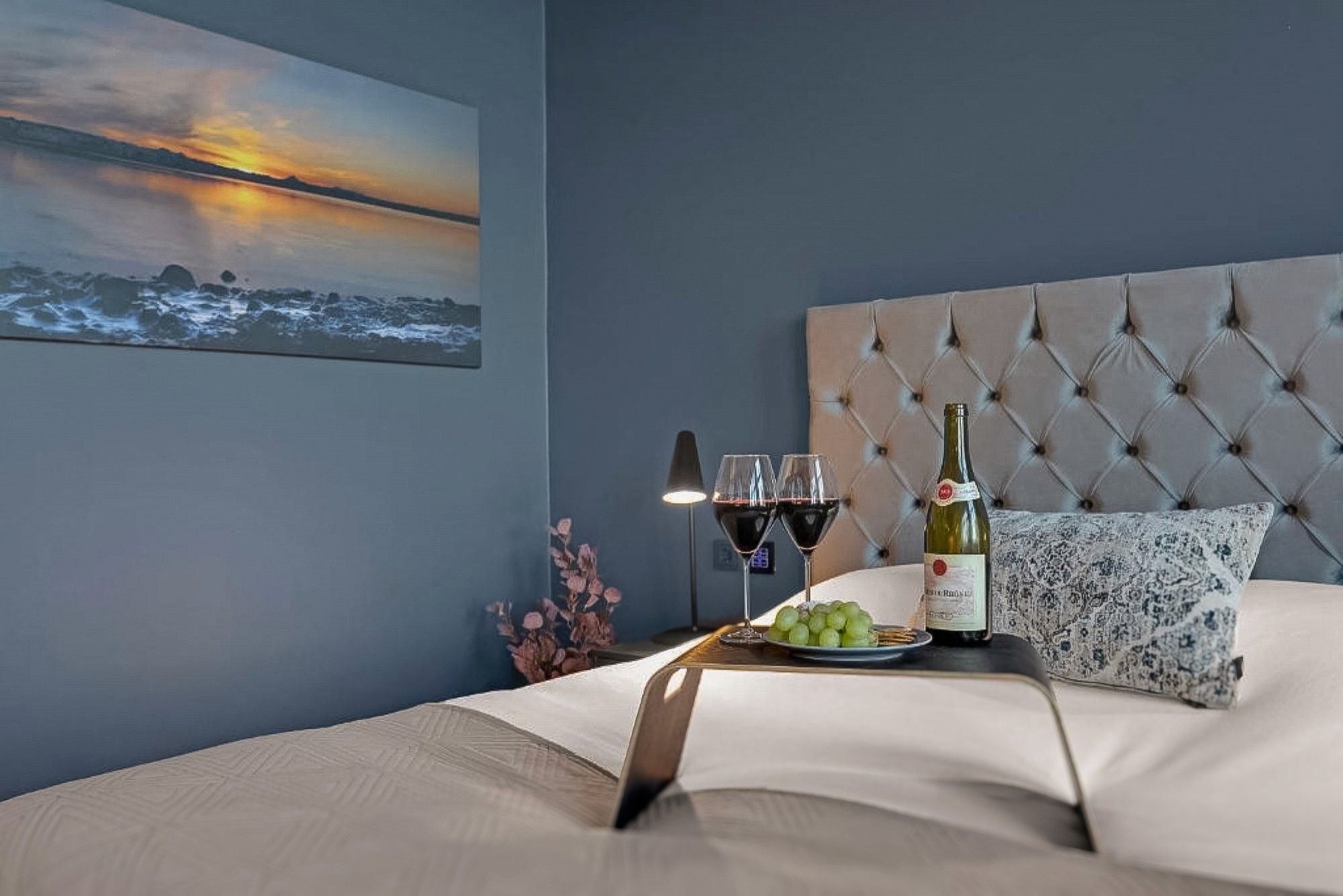
The liveliest streets are also the loudest. Around the main shopping street and the busiest squares, bars and restaurants keep going well past midnight, and thin walls turn that into a short night’s sleep. Two things matter here: how central you really want to be, and how well a room is soundproofed. A gentle distance from the late-night noise, plus soundproofed rooms and parquet floors, is what keeps a stay restful rather than restless.
Walking distance and easy arrival
“A little further out” is not the same as “far.” From Laugardalur, the city center is about a ten-minute walk, with the geothermal Laugardalslaug pool roughly fourteen minutes away and the Engjateigur bus stop close by for public transport. The walk to Laugavegur, Hallgrímskirkja (the Lutheran church), Harpa Concert Hall and the Old Harbour area stays comfortable. Arrival matters too: for late flights, airport shuttle access and a 24/7 self check-in mean you can simply ease into your room whenever you land. For ideas on foot, see our favorite morning walks near the hotel.
The amenities checklist that shapes your stay
“Amenities” is a vague word until you turn it into a checklist. What’s included in the rate — and what quietly isn’t — shapes how a stay actually feels, and how much you spend once you arrive.
What “included” should really mean
A complete rate and a rate that’s nickel-and-dimed by add-ons can look identical at first glance. The difference shows up at breakfast, at the coffee machine, and at checkout. A thoughtful, uncomplicated stay usually bundles the basics:
A generous breakfast included, not charged per morning
Free hot drinks — coffee, tea, hot chocolate — through the day
Free Wi-Fi included as standard
Free laundry facilities for longer trips
Free private parking rather than a nightly fee
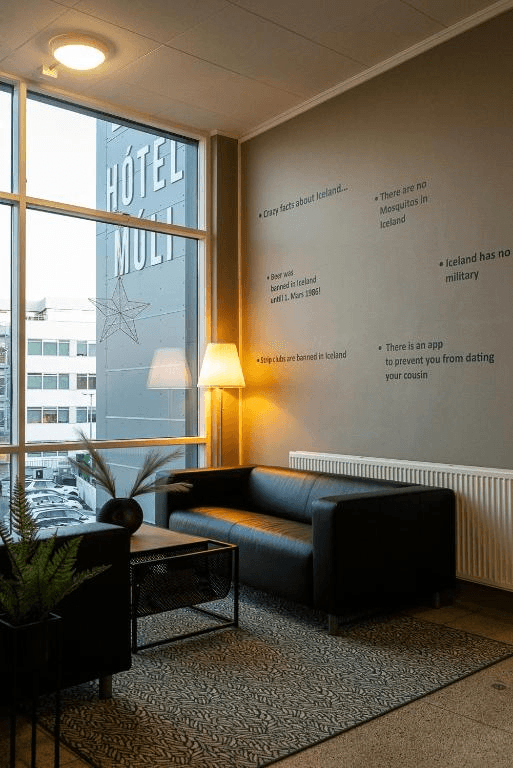
A slow, included breakfast sets the tone for an unhurried day. The same warmth carries into the lounge, where free hot drinks and quiet corners make an easy place to land between outings.
Feature | Hostel / budget | Mid-range / boutique hotel |
|---|---|---|
Breakfast | Often extra | Usually included |
Hot drinks all day | Rarely | Often free |
Private bathroom | Sometimes shared | Standard |
Parking | Rarely on site | Sometimes free and private |
Self check-in | Varies | Often 24/7 |
Rooms for couples, families and stopovers
Match the room to who’s travelling. A double or twin suits a couple; a family room or an apartment with a separate living room gives parents and children room to breathe, which matters on longer or multi-generation trips. Stopover travellers passing through on a short layover want something simple and easy to reach late at night. Looking at the actual room types and layouts is the fastest way to see what fits your group. If you’d like to add a Golden Circle day or a Blue Lagoon visit, in-house tour booking keeps the planning calm and in one place.
Booking direct vs OTAs
Before you reserve anywhere, check three things: the cancellation terms, what is truly included in the rate, and the check-in instructions. Booking direct with the hotel is often the clearest path — you see the real inclusions, you can ask a question and get a human answer, and there’s no third party between you and your arrival details. With demand firm in 2026 (March arrivals via Keflavík rose 1.6% year-on-year, per Íslandsbanki, 14 April 2026), booking early and direct is simply the calmer choice.
Choosing with confidence: a simple pre-booking checklist
You don’t need a spreadsheet to choose well. You need a short list of questions and an honest sense of your own trip. Run through these before you reserve, and the right hotel in Reykjavík tends to reveal itself.
Your Reykjavík hotel checklist at a glance
Location vs transport — walking everywhere, or driving? Match the neighborhood to how you’ll move.
Season fit — northern lights, summer light, or the August 2026 eclipse?
Parking — free and private, or paid by the hour in a city-center zone?
Noise — soundproofed and calm, or above a late-night bar?
What’s included — breakfast, hot drinks, Wi-Fi and laundry, or add-ons?
Room type — couple, family, apartment, or a simple stopover room?
Cancellation terms — flexible enough for changing plans?
Book direct — clearest inclusions and a real person to ask.
When you’re ready to slow down in Reykjavík
If your list points toward calm — a quiet neighborhood, free parking, an easy late arrival and a soft start to the morning — that’s the kind of stay Múli was made for. A 24/7 self check-in means you can arrive on any flight, at any hour, and settle in at your own pace; the story behind it is in our self check-in piece, and our take on a gentler trip lives in how to enjoy Reykjavík without the rush. Either way, the aim is the same: a peaceful, simple stay you can settle into at your own pace.
Frequently asked questions
What area of Reykjavík is best to stay in?
It depends on how you’ll get around. Downtown suits walkers who want bars and restaurants at the door. Quieter neighborhoods like Laugardalur trade some buzz for calm, space and easier parking, while staying a short walk or bus ride from the center. Match the area to your travel style.
Is it better to stay in Keflavík or Reykjavík?
For most visitors, Reykjavík. Keflavík sits by the airport, which helps mainly with a very early or very late flight and little time. Reykjavík keeps you close to the city’s sights, food and day tours, with an easy transfer. If you arrive late, a 24/7 self check-in makes the hour painless.
Does staying outside the paid parking zones actually save money in Reykjavík?
Often, yes. Downtown sits in paid tariff zones (P1–P4) that charge by the hour through the day, while streets outside those zones are free. A few hours daily in a central zone adds up across a trip. A hotel with free private parking removes both the cost and the daily search.
How many nights should I plan in Reykjavík to realistically see the northern lights?
Plan several nights, not one. The aurora needs darkness, clear skies and a little solar activity to line up, and Iceland’s weather shifts fast, so more nights mean more chances. Three to five gives reasonable odds in season. Check the Icelandic Met Office forecast nightly. Our northern lights guide goes deeper.
Choosing the right hotel in Reykjavík, your own way
In the end, choosing the right hotel in Reykjavík comes down to a few honest questions: how you’ll move around the city, the season you’re visiting, what a central address really costs, and which small comforts you don’t want to do without. Answer those, and the decision stops feeling like a guess. The calmer choice is usually the one that quietly removes friction — free parking after a long drive, an easy arrival at any hour, a warm breakfast, and a peaceful room to come back to. That’s the kind of unhurried stay we’ve shaped at Múli, in a quiet corner of Laugardalur a short walk from the center. When you’re ready to slow down in Reykjavík, have a look at our rooms and book direct — no rush, at your own pace, with everything that matters already included.