" width="43.9999991302804px"><path d="M 7.333 0.002 C 7.633 -0.008 7.787 0.018 8.036 0.193 C 8.002 0.618 7.851 0.976 7.688 1.367 L 7.513 1.799 L 7.422 2.02 C 6.754 3.652 6.114 5.295 5.544 6.964 L 6.63 6.836 L 6.646 6.465 C 6.705 5.731 6.946 5.118 7.512 4.629 C 8.115 4.207 8.868 4.146 9.573 4.265 C 10.135 4.392 10.559 4.647 10.91 5.112 C 11.345 5.941 11.444 6.953 11.221 7.866 C 10.994 8.534 10.641 8.987 10.016 9.327 C 9.328 9.591 8.677 9.59 7.983 9.355 C 7.417 9.099 7.081 8.671 6.83 8.114 C 6.697 7.768 6.629 7.399 6.63 7.028 L 6.466 7.089 C 6.241 7.157 6.042 7.181 5.808 7.196 L 5.585 7.21 L 5.417 7.219 L 5.398 7.331 C 5.363 7.528 5.326 7.725 5.289 7.922 L 5.262 8.073 C 5.232 8.237 5.201 8.401 5.17 8.565 L 5.14 8.728 L 5.11 8.882 L 5.084 9.021 C 5.034 9.136 5.034 9.136 4.913 9.215 C 4.778 9.263 4.778 9.263 4.587 9.263 L 4.602 9.013 C 4.602 8.665 4.493 8.41 4.343 8.102 L 4.274 7.953 C 4.175 7.741 4.071 7.531 3.963 7.324 C 3.884 7.156 3.884 7.156 3.884 6.964 L 3.712 6.952 C 3.154 6.87 2.63 6.599 2.132 6.346 L 2.008 6.283 L 1.712 6.134 L 1.626 6.302 C 1.471 6.603 1.316 6.904 1.161 7.205 C 1.026 7.466 0.891 7.727 0.756 7.988 C 0.691 8.112 0.628 8.237 0.564 8.362 L 0.445 8.59 L 0.341 8.793 C 0.243 8.944 0.243 8.944 0.051 9.008 C -0.023 8.789 -0.016 8.699 0.071 8.481 C 0.113 8.4 0.156 8.321 0.199 8.242 L 0.341 7.97 L 0.418 7.823 C 0.564 7.539 0.701 7.252 0.838 6.964 L 0.919 6.795 C 1.072 6.476 1.209 6.148 1.329 5.814 C 1.298 5.788 1.268 5.761 1.236 5.734 C 0.852 5.393 0.562 4.946 0.468 4.435 C 0.458 4.147 0.49 3.925 0.69 3.706 C 0.996 3.497 1.275 3.393 1.648 3.451 C 1.869 3.544 2.078 3.653 2.287 3.77 L 2.312 3.632 C 2.351 3.451 2.404 3.282 2.464 3.107 L 2.532 2.909 L 2.672 2.504 C 2.899 1.836 3.075 1.216 2.926 0.513 C 2.576 0.578 2.238 0.645 1.904 0.768 L 1.904 0.576 C 2.021 0.478 2.021 0.478 2.175 0.381 L 2.328 0.283 C 2.636 0.1 2.879 0.005 3.245 0.066 C 3.425 0.18 3.533 0.258 3.628 0.449 C 3.733 1.377 3.473 2.287 3.071 3.12 L 2.985 3.306 C 2.928 3.424 2.868 3.54 2.805 3.654 C 2.719 3.834 2.673 3.955 2.67 4.154 C 2.784 4.365 2.923 4.533 3.079 4.716 C 3.359 5.046 3.535 5.437 3.728 5.822 L 3.85 6.058 C 4.139 6.625 4.139 6.625 4.139 6.773 L 5.097 6.9 L 5.229 6.504 C 5.523 5.615 5.822 4.727 6.127 3.842 C 6.791 1.941 6.791 1.941 7.333 0.002 Z M 0.754 4.089 C 0.745 4.562 0.931 4.769 1.251 5.105 C 1.394 5.247 1.394 5.247 1.584 5.367 C 1.686 5.159 1.788 4.951 1.89 4.743 C 1.979 4.55 1.979 4.55 1.958 4.391 C 1.861 4.193 1.711 4.126 1.52 4.025 C 1.245 3.952 0.998 3.916 0.754 4.089 Z M 2.351 4.728 L 1.904 5.686 C 2.684 6.246 2.684 6.246 3.565 6.516 C 3.459 6.217 3.302 5.962 3.133 5.694 L 3.053 5.562 C 2.865 5.263 2.663 4.98 2.415 4.728 L 2.351 4.728 Z M 7.752 5.315 C 7.42 5.771 7.367 6.253 7.377 6.804 L 7.376 6.975 C 7.381 7.596 7.457 8.107 7.908 8.561 C 8.353 8.887 8.778 8.917 9.313 8.88 C 9.709 8.796 10.052 8.598 10.283 8.257 C 10.687 7.522 10.678 6.644 10.457 5.854 C 10.322 5.463 10.095 5.22 9.76 4.983 C 9.099 4.711 8.26 4.777 7.752 5.315 Z M 4.267 7.091 L 4.451 7.586 L 4.503 7.728 L 4.554 7.865 L 4.6 7.99 C 4.653 8.12 4.716 8.244 4.778 8.369 L 5.097 7.155 Z M 29.242 0.066 C 29.414 0.205 29.526 0.316 29.625 0.513 C 29.731 1.603 29.36 2.596 28.96 3.593 L 28.895 3.756 L 28.836 3.9 C 28.785 4.034 28.785 4.034 28.794 4.217 L 28.867 4.117 C 29.318 3.499 29.769 2.885 30.263 2.301 L 30.428 2.101 C 30.81 1.641 31.215 1.21 31.637 0.788 L 31.788 0.637 C 32.226 0.204 32.226 0.204 32.435 0.066 C 32.579 0.085 32.579 0.085 32.691 0.13 C 32.787 0.427 32.705 0.622 32.587 0.896 C 32.17 1.941 31.999 3.043 31.86 4.154 L 31.994 3.994 C 32.985 2.815 33.987 1.741 35.278 0.888 L 35.387 0.815 C 35.615 0.669 35.807 0.603 36.076 0.576 C 36.151 0.713 36.151 0.713 36.204 0.896 C 36.136 1.069 36.136 1.069 36.02 1.267 C 34.862 3.406 34.098 6.803 34.799 9.199 C 35.016 9.768 35.239 10.084 35.753 10.401 C 36.396 10.647 37.073 10.479 37.684 10.24 C 37.872 10.16 37.872 10.16 38.056 10.03 L 38.312 10.03 L 38.312 10.285 C 38.136 10.37 37.96 10.453 37.785 10.537 L 37.634 10.609 L 37.488 10.678 L 37.355 10.742 C 36.798 10.976 35.99 10.954 35.414 10.805 C 35.263 10.734 35.121 10.646 34.99 10.541 L 34.865 10.442 C 34.295 9.935 34.035 9.112 33.968 8.369 C 33.852 5.936 34.305 3.364 35.501 1.215 C 34.62 1.955 33.757 2.699 33.01 3.579 L 32.846 3.768 C 32.725 3.91 32.604 4.054 32.485 4.198 C 32.376 4.331 32.267 4.449 32.144 4.57 C 31.618 5.134 31.609 5.816 31.531 6.556 C 31.489 6.935 31.412 7.218 31.202 7.539 C 31.094 7.603 31.094 7.603 30.902 7.611 C 30.711 7.539 30.711 7.539 30.587 7.347 C 30.395 6.779 30.667 6.202 30.902 5.686 L 30.997 5.532 C 31.274 5.072 31.343 4.709 31.358 4.178 C 31.388 3.573 31.442 2.982 31.541 2.385 L 31.573 2.187 C 31.632 1.839 31.706 1.493 31.797 1.151 C 31.295 1.64 30.825 2.133 30.391 2.684 L 30.208 2.91 C 29.807 3.4 29.425 3.906 29.063 4.426 C 28.988 4.534 28.912 4.64 28.836 4.745 C 28.472 5.26 28.172 5.806 27.88 6.365 C 27.843 6.436 27.806 6.508 27.767 6.582 C 27.408 7.282 27.111 7.969 27.006 8.752 C 26.583 8.705 26.583 8.705 26.367 8.561 C 26.407 8.317 26.479 8.116 26.583 7.893 L 26.68 7.681 L 26.787 7.451 C 28.513 4.16 28.513 4.16 28.922 0.64 C 28.849 0.554 28.849 0.554 28.655 0.561 C 28.396 0.578 28.252 0.643 28.028 0.768 L 27.9 0.768 C 27.923 0.589 27.949 0.525 28.09 0.406 L 28.244 0.309 L 28.397 0.211 C 28.651 0.06 28.952 0.009 29.242 0.066 Z M 28.602 4.345 L 28.666 4.473 M 31.221 5.878 C 30.989 6.29 30.861 6.619 30.838 7.092 L 31.094 7.092 C 31.23 6.692 31.259 6.299 31.285 5.878 Z M 18.52 4.569 C 18.941 4.907 19.209 5.326 19.321 5.853 L 19.37 6.072 C 19.414 6.387 19.405 6.709 19.405 7.027 L 15.892 7.027 C 16.036 7.892 16.036 7.892 16.495 8.584 C 16.901 8.842 17.273 8.864 17.745 8.816 C 18.156 8.701 18.385 8.442 18.639 8.113 L 18.766 7.985 L 19.278 8.241 C 19.169 8.674 18.84 9.003 18.47 9.246 C 17.878 9.549 17.256 9.606 16.609 9.443 C 16.102 9.257 15.668 8.886 15.431 8.401 C 15.066 7.523 15.028 6.363 15.365 5.468 C 15.611 4.96 15.975 4.55 16.51 4.342 C 17.208 4.135 17.904 4.152 18.52 4.569 Z M 16.212 5.367 C 15.967 5.743 15.945 5.973 15.892 6.452 L 18.639 6.452 C 18.58 5.863 18.526 5.553 18.168 5.119 C 17.561 4.628 16.692 4.782 16.211 5.367 Z" fill="rgb(0, 0, 0)" height="10.917437449222685px" id="AGutxb3Yn" transform="translate(0 0)" width="38.31175535682081px"/><path d="M 27.593 2.235 C 27.757 2.233 27.922 2.231 28.086 2.229 C 28.232 2.235 28.232 2.235 28.296 2.299 C 28.302 2.406 28.305 2.513 28.305 2.619 L 28.306 2.826 L 28.307 3.051 L 28.312 3.522 C 28.314 3.771 28.316 4.018 28.317 4.267 C 28.318 4.506 28.32 4.744 28.323 4.983 L 28.323 5.206 C 28.329 5.655 28.376 6.061 28.615 6.451 C 28.901 6.701 29.165 6.729 29.533 6.724 C 29.854 6.691 30.101 6.584 30.31 6.334 C 30.637 5.836 30.679 5.377 30.686 4.793 L 30.689 4.571 C 30.693 4.338 30.696 4.105 30.699 3.872 L 30.706 3.397 C 30.713 3.01 30.718 2.623 30.723 2.235 L 31.426 2.235 L 31.489 7.281 L 30.851 7.281 L 30.723 6.643 L 30.564 6.85 C 30.249 7.217 29.859 7.381 29.382 7.419 C 28.878 7.44 28.475 7.331 28.08 7.01 C 27.733 6.682 27.606 6.297 27.585 5.822 L 27.586 5.622 L 27.586 5.393 L 27.587 5.148 L 27.587 4.896 L 27.589 4.235 L 27.59 3.559 C 27.591 3.118 27.592 2.676 27.593 2.235 Z M 4.407 1.214 L 4.982 1.214 L 4.982 2.299 L 6.196 2.299 L 6.196 2.938 L 4.982 2.938 C 4.988 3.423 4.995 3.909 5.002 4.394 L 5.009 4.89 C 5.012 5.127 5.016 5.364 5.02 5.602 L 5.022 5.825 L 5.025 6.034 L 5.028 6.218 C 5.047 6.403 5.091 6.541 5.174 6.707 C 5.369 6.804 5.574 6.777 5.788 6.774 L 5.925 6.774 C 6.037 6.773 6.148 6.772 6.26 6.77 L 6.26 7.345 C 5.114 7.539 5.114 7.539 4.611 7.237 C 4.212 6.816 4.254 6.338 4.261 5.789 L 4.261 5.541 C 4.262 5.326 4.264 5.11 4.266 4.895 C 4.269 4.242 4.273 3.59 4.28 2.938 L 3.577 2.938 L 3.577 2.299 L 4.28 2.299 Z M 12.2 0.064 L 12.902 0.064 L 12.902 7.345 L 12.2 7.345 Z M 33.023 0 L 33.725 0 L 33.725 7.281 L 33.023 7.281 Z M 35.003 2.235 L 35.642 2.235 L 35.642 7.281 L 35.003 7.281 Z M 1.342 0.224 L 1.549 0.235 L 1.757 0.244 L 1.916 0.255 C 1.885 0.538 1.797 0.66 1.593 0.854 L 1.436 1.004 C 1.252 1.173 1.066 1.339 0.875 1.5 C 0.757 1.6 0.757 1.6 0.639 1.752 C 0.435 1.911 0.252 1.869 0 1.852 C 0.038 1.643 0.107 1.522 0.243 1.359 L 0.352 1.227 L 0.467 1.09 L 0.69 0.821 L 0.798 0.693 C 0.904 0.566 0.904 0.566 1.024 0.384 C 1.15 0.255 1.15 0.255 1.342 0.224 Z M 30.448 0.179 L 30.64 0.184 L 30.787 0.191 C 30.739 0.631 30.411 0.869 30.112 1.169 L 29.941 1.349 C 29.527 1.768 29.527 1.768 29.29 1.826 C 29.149 1.826 29.149 1.826 28.934 1.788 C 28.974 1.568 29.056 1.437 29.193 1.262 L 29.313 1.11 L 29.438 0.953 L 29.561 0.796 C 30.057 0.165 30.057 0.165 30.448 0.179 Z M 35.003 0.128 L 35.642 0.128 L 35.642 1.022 L 35.003 1.022 Z" fill="rgb(0, 0, 0)" height="7.479521951991309px" id="sg9LEzmJ7" transform="translate(8.358 2.134)" width="35.641538703949834px"/></g></svg>)

The last bus has gone, the street outside is quiet, and somewhere north of the city the sky may or may not be doing something worth putting your boots back on for. That is what an aurora night in Reykjavík actually looks like: a lot of waiting, a little driving, and a return home at an hour when most hotels have long since locked the front desk.
Search for the best hotel for northern lights in Reykjavík and you will find rooftop bars, wake-up calls and rooms sold on their view of the sky. Some of that helps. Much of it does not, for reasons that have nothing to do with the hotels themselves. Here is how the season really works, how to read the forecast, and what to look for in a room when you plan to be awake at two in the morning.
What a Reykjavík hotel can and cannot do for your northern lights
Light pollution: why no city hotel has genuinely dark skies
Reykjavík is a small capital. Stand in a field half an hour outside it on a clear winter night and you will still see the city on the horizon, a soft orange smear under the aurora. That glow is the whole problem in one image.
Strong displays push straight through it. When geomagnetic activity climbs into the upper half of the Kp scale, the aurora borealis is visible from a supermarket car park in the middle of town. Faint displays, which are far more common, are not. No window, whichever way it faces, changes that.
The city has said as much through its actions. On evenings when a strong display was forecast, Reykjavík has switched off street lighting across several districts for around an hour and asked residents to dim their own windows (City of Reykjavík, via Visit Reykjavík). A capital that darkens its own streets is telling you plainly what stands between you and the sky.
So the useful question is not which hotel has the best view of the aurora. It is how easily you can leave the light behind when the forecast turns.
Aurora wake-up calls and aurora alarms: what they are really worth
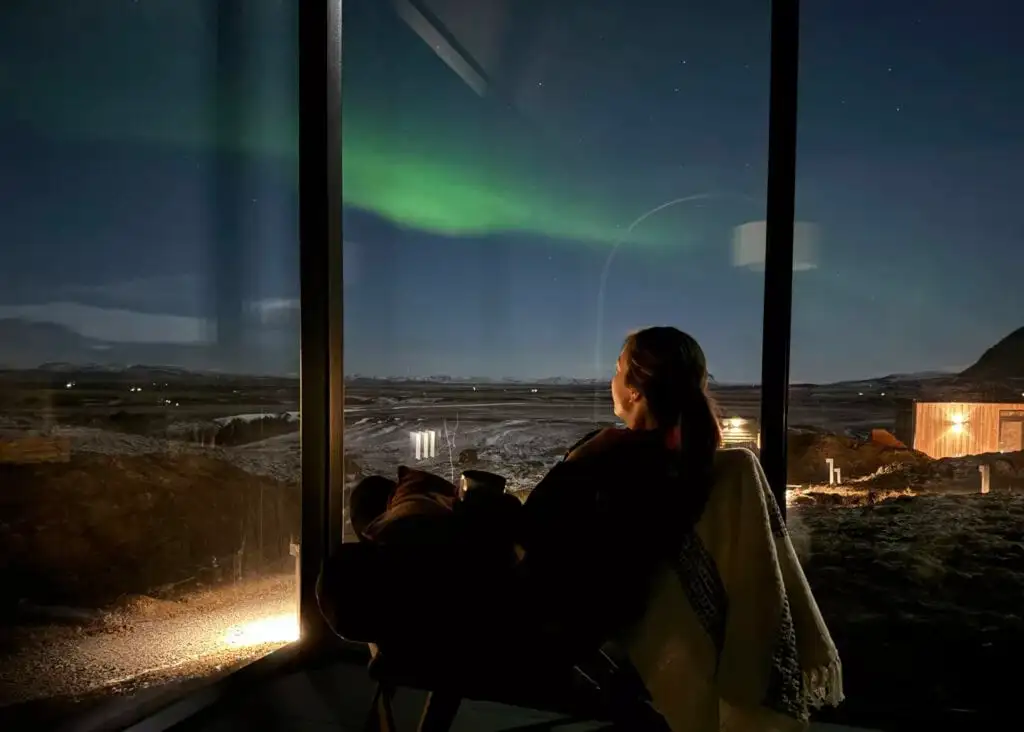
The mechanic is simple and rather lovely. Staff watch the forecast through the evening, or an app does it for them, and guests who asked to be woken get a knock when activity rises. At a remote lodge this is worth a great deal. You step outside in a coat over pyjamas and the sky is already there.
In a city the same call wakes you into the same glow. You are still twenty minutes from anywhere genuinely dark, at one in the morning, in winter. That is not an argument against the service. It is a question of where you are standing when it goes off.
Three things do much the same job at no cost:
a free aurora alert app, set to notify you above a chosen activity level
a reception desk open through the night, where you can simply ask what the sky is doing
a room facing away from the nearest streetlight, and curtains you are willing to leave open
The Icelandic Meteorological Office publishes its aurora forecast on a scale of 0 to 9, shown beside a cloud cover map of the country (Veðurstofa Íslands, aurora forecast page, consulted August 2026).
Darkness, clear sky, timing: the three things that decide your night
Three conditions have to meet. Enough darkness, a matter of season and hour. A gap in the cloud, a matter of luck and of being willing to drive towards it. And activity on the sun, a matter of physics happening 150 million kilometres away. A hotel influences none of them. What it does decide is quieter and more practical.
What only the sky decides | What your hotel decides |
Geomagnetic activity on the night you booked | How quickly you can leave when the forecast turns |
Cloud cover over the capital area | Whether parking on your return costs you a thought |
Hours of true darkness in your travel month | Whether something warm is waiting at two in the morning |
Which suggests a simpler way to compare hotels in aurora season. Call it the two in the morning test. We come back to it.
Aurora season in Reykjavík: timing, forecast and odds for winter 2026–2027
When the darkness comes back: the winter season month by month
The season is set by light, not by the aurora. From late April to mid August the sky over Reykjavík never gets dark enough, whatever the sun is doing. Darkness returns in late August, and the window runs to early April.
The swing is dramatic. Reykjavík has roughly 21 hours of daylight around the June solstice and about four to five hours near 21 December, when the sun sets mid-afternoon (sunrise and sunset tables for Reykjavík, timeanddate.com, consulted August 2026). Iceland stays on GMT all year and never changes its clocks.
Month | Conditions | Note for aurora nights |
September | Mild, wet, darkness returning | The equinox around 22 September often lifts activity |
October to November | Cool, changeable, driving still easy | A gentle balance of dark hours and workable weather |
December to January | Cold, more cloud, four to five hours of daylight | Most darkness, least room for a clouded-out week |
February to March | Brighter days, roads improving | The spring equinox gives a second lift |
Our season-by-season guide to visiting Iceland sets that window beside everything else. And in the deep of winter, the Winter Lights Festival runs from 4 to 7 February 2027 across the capital area, free of charge, with more than 150 events (City of Reykjavík, Winter Lights Festival programme, consulted August 2026). Somewhere to be in the early evening, before the sky is worth watching.
Reading the aurora forecast: Kp index and cloud cover from the Icelandic Met Office
Two numbers, one page. The Icelandic Meteorological Office puts a predicted activity value from 0 to 9 next to a cloud cover map, with sunset and darkness times underneath (Veðurstofa Íslands, aurora forecast, consulted August 2026). Read them together or not at all. Activity without a clear sky is a green display happening above a grey ceiling.
The Met Office notes that travelling within Iceland according to the combined forecast improves your chances of a memorable night (Veðurstofa Íslands, consulted August 2026).
A calm routine beats constant refreshing:
Check once in the early evening, between six and ten.
Look at the cloud map first. Find the clear patch, not the highest number.
Plan for the window between 21:00 and 01:00, when displays are most often seen.
Be willing to drive thirty to sixty minutes towards clear sky, and equally willing not to.
Reliable forecasting only reaches a few hours to a couple of days ahead, which should shape your booking more than anything else here. One night is a coin toss. Three or four dark evenings turn the odds around, and they cost you nothing but patience.
Solar cycle 25 in its declining phase: what it means for this winter
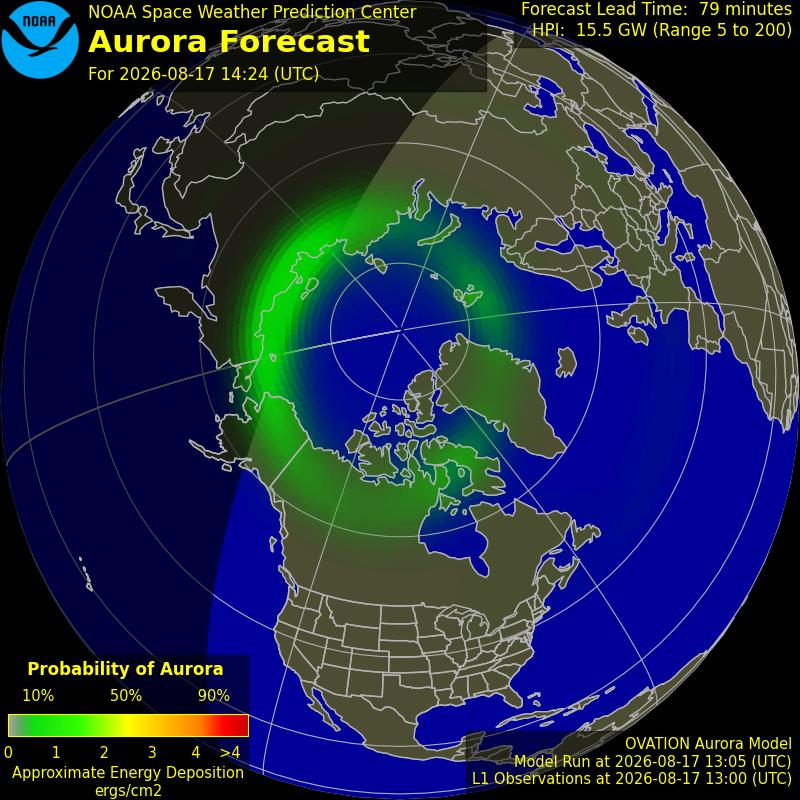
The sun runs on a rhythm of roughly eleven years. Solar cycle 25 reached its maximum around 2024 and has been declining since, which sounds like bad news and mostly is not (NOAA Space Weather Prediction Center, Solar Cycle Progression, consulted August 2026).
Declining does not mean quiet. As a cycle winds down, long-lived coronal holes take over from the eruptions of the peak years. They send fast streams of solar wind towards Earth, they can produce several usable nights in a row, and they often return with the sun's rotation about every 27 days. Steadier, less spectacular, kinder to a traveller with a few evenings to spend.
Activity this winter still sits well above the quiet years of the last decade, and no forecast makes a single night a certainty. Come with time rather than expectations.
The 2 a.m. test: what to look for before you book
Free parking and coming back late from an aurora tour
Aurora nights end when the sky decides, not when you do. You leave at nine, drive somewhere darker, wait, and come back between midnight and two, cold and quietly pleased with yourself. What you want at that moment is to stop the car and go to bed.
Downtown Reykjavík is not built for that. Central zones are chargeable from 09:00 to 21:00 on weekdays and from 10:00 to 21:00 at weekends, with a three-hour cap in the most central zone (Reykjavík Parking Service, reykjavik.is, consulted August 2026). Overnight is free, so the late return itself costs nothing. It is the other sixteen hours of every day, and the circling to find a space, that wear on you across a winter trip.
Free private parking on the property removes the question. It is uncommon in this city, which is why it belongs on your checklist rather than in a brochure. If you are starting a longer loop afterwards, our notes on basing an Iceland road trip in Reykjavík cover the road access side.
Not renting a car? Check instead that tour pick-up is a short walk away and that drop-off is at or near the hotel. Buses are no help at that hour: about half of Strætó's routes finish around midnight, and the five night routes run only on Friday and Saturday nights (Strætó, service hours, consulted August 2026).
Self check-in, quiet rooms and sleeping off a night under the sky
Two arrivals matter in aurora season, and both are late: the one from Keflavík after a delayed evening flight, and the one from a tour bus hours after reception would normally have closed. Round-the-clock access and self check-in mean nobody is waiting up for you, and you are not apologising for the hour.
Then there is sleep. If your night runs from two until ten, a soundproofed room on a quiet street is worth more than any other feature on the page. A beautiful room above a bar downtown will fail you at eight in the morning, gently and completely. Ask one more question while you are at it: will breakfast still be there, or can it be handed to you in a box?
Rooftop bars, panoramic views and ocean-view rooms: the promise and the sky
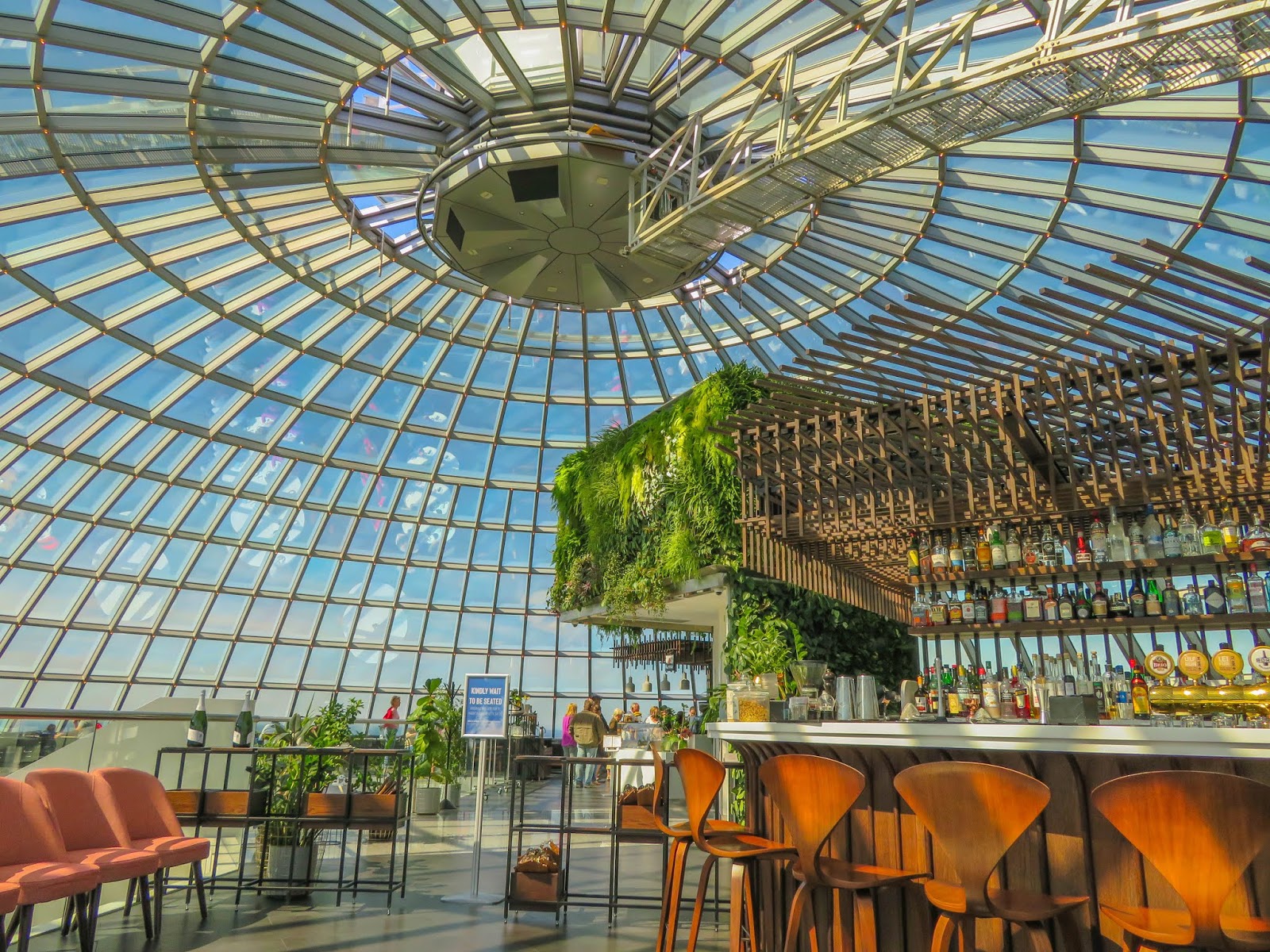
Let us be fair to the alternative. A rooftop terrace on a clear, active night is a lovely place to be, and so is a sky lounge with the lights turned low. On a strong display they work beautifully. The caveat is the one from earlier: a panoramic view of the city is a panoramic view of the city's lights, and ocean or harbour rooms help mainly by pointing away from the brightest streets rather than into them.
Feature | How it performs at 2 a.m. |
Aurora wake-up call or hotel aurora alarm | Useful in the countryside; in town you wake into the same glow |
Rooftop bar, sky lounge, rooftop viewing terrace | Pleasant on a bright night, closed on most others |
Panoramic city views, harbour or ocean view room | Worth having, but it is the orientation doing the work |
Free private parking | Decides whether the last twenty minutes of your night are calm |
Self check-in and a quiet street | Protects a sleep window that starts when the city wakes up |
Free hot drinks at any hour | The thing you actually want when you come through the door |
The same steadiness applies to aurora hunting packages. Before you pay, run through this:
Does the operator rebook you free of charge if the night is clouded out, and how many times?
Is pick-up from the hotel, or from a distant meeting point in town?
What time does the bus usually return, and does that fit your morning?
Can you book on the day the forecast looks right, rather than months ahead?
That last one is the quiet advantage of booking your northern lights excursion through the hotel: you choose the night, not the calendar. Which is the point of the whole test. The features that survive it are the unglamorous ones.
A quiet base in Laugardalur for your aurora nights
Ten minutes from the centre, a short drive from darker skies
Laugardalur is a green valley of quiet streets, playing fields and steam rising off a geothermal pool. The centre of Reykjavík is about ten minutes away on foot, the Engjateigur bus stop is around the corner, and when the cloud map points somewhere clearer, the roads out of the city are right there, with your own car in free private parking rather than three streets away.
Close enough to walk in for dinner. Far enough out that the street is dark and still at midnight. If you would like the neighbourhood in more detail, we wrote about Laugardalur, Reykjavík's quiet green valley.
Coming home warm: hot drinks, breakfast and an unhurried morning after
The door opens with your own code. The lounge lights are on, and there is coffee, tea and hot chocolate waiting whatever the hour, which is a small thing until you have stood in a field for two hours. Beyond that: free laundry for the layers you have worn four days running, and a breakfast in the morning nobody will hurry you through.
That last part matters more than it sounds. A night spent out means a morning that starts late and slowly, and the day is better for it.
Room | Who it suits on an aurora trip |
Double or twin | Two people, one of whom will want to stay out longer |
Family room | Children who fell asleep on the bus and need carrying in |
Apartment with separate living room | Groups who came together and would rather sleep apart |

Frequently asked questions
Can you see the northern lights from a hotel in Reykjavík?
On a strong night, yes, from a window or the car park. The threshold is roughly the upper half of the Kp scale. Below that, street lighting takes the display before you do, which is why a twenty-minute drive out of town changes your odds far more than which room you booked.
Which hotel is best for the northern lights around Reykjavík?
None of them can promise the aurora, so compare on the practical things instead of the scenic ones. Somewhere you can leave from quickly, park at on your return, and sleep in afterwards. A hotel earns its place in aurora season by making a late night cost you nothing the next day.
Where is the best place in Reykjavík to see the northern lights?
Anywhere with an open northern horizon and no streetlight behind you: the shoreline, the headlands, the open ground at the edges of the city. Let your eyes adjust for fifteen or twenty minutes before deciding there is nothing to see. Most people give up too early, on a night that was working.
Do Reykjavík hotels offer aurora wake-up calls?
Some do, and remote lodges more often. In town the service has a ceiling: it can wake you, but it cannot move you somewhere darker. A free alert app on your phone does the same waking for nothing, and leaves you free to decide whether the drive is worth it.
What is the best month to see the northern lights in Reykjavík?
October, February and March, if you want one answer. They pair long dark evenings with roads and weather that let you actually go out and use them. Midwinter gives you more darkness but more cloud with it, and September closes the season's opening equinox rather than its best odds.
Do you need a car to see the northern lights from Reykjavík?
No. Guided excursions leave on clear evenings and return between midnight and two, and most can be booked at the front desk on the day rather than months ahead. A car only adds the freedom to chase a gap in the cloud yourself, which is worth more in winter than most visitors expect.
Choosing your hotel for northern lights in Reykjavík, without the rush
Nothing on this page will make the aurora appear. The sky keeps its own hours, and the sun was making these decisions long before any of us booked a room. What you can choose is everything around the waiting: enough dark evenings to give yourself a fair chance, a forecast checked once after dinner rather than five times an hour, and somewhere to come back to that makes a late return feel like nothing at all.
When you are ready to slow down in Reykjavík, there is a warm room waiting in Laugardalur. Check availability for aurora season and book directly with us, at your own pace.