" width="43.9999991302804px"><path d="M 7.333 0.002 C 7.633 -0.008 7.787 0.018 8.036 0.193 C 8.002 0.618 7.851 0.976 7.688 1.367 L 7.513 1.799 L 7.422 2.02 C 6.754 3.652 6.114 5.295 5.544 6.964 L 6.63 6.836 L 6.646 6.465 C 6.705 5.731 6.946 5.118 7.512 4.629 C 8.115 4.207 8.868 4.146 9.573 4.265 C 10.135 4.392 10.559 4.647 10.91 5.112 C 11.345 5.941 11.444 6.953 11.221 7.866 C 10.994 8.534 10.641 8.987 10.016 9.327 C 9.328 9.591 8.677 9.59 7.983 9.355 C 7.417 9.099 7.081 8.671 6.83 8.114 C 6.697 7.768 6.629 7.399 6.63 7.028 L 6.466 7.089 C 6.241 7.157 6.042 7.181 5.808 7.196 L 5.585 7.21 L 5.417 7.219 L 5.398 7.331 C 5.363 7.528 5.326 7.725 5.289 7.922 L 5.262 8.073 C 5.232 8.237 5.201 8.401 5.17 8.565 L 5.14 8.728 L 5.11 8.882 L 5.084 9.021 C 5.034 9.136 5.034 9.136 4.913 9.215 C 4.778 9.263 4.778 9.263 4.587 9.263 L 4.602 9.013 C 4.602 8.665 4.493 8.41 4.343 8.102 L 4.274 7.953 C 4.175 7.741 4.071 7.531 3.963 7.324 C 3.884 7.156 3.884 7.156 3.884 6.964 L 3.712 6.952 C 3.154 6.87 2.63 6.599 2.132 6.346 L 2.008 6.283 L 1.712 6.134 L 1.626 6.302 C 1.471 6.603 1.316 6.904 1.161 7.205 C 1.026 7.466 0.891 7.727 0.756 7.988 C 0.691 8.112 0.628 8.237 0.564 8.362 L 0.445 8.59 L 0.341 8.793 C 0.243 8.944 0.243 8.944 0.051 9.008 C -0.023 8.789 -0.016 8.699 0.071 8.481 C 0.113 8.4 0.156 8.321 0.199 8.242 L 0.341 7.97 L 0.418 7.823 C 0.564 7.539 0.701 7.252 0.838 6.964 L 0.919 6.795 C 1.072 6.476 1.209 6.148 1.329 5.814 C 1.298 5.788 1.268 5.761 1.236 5.734 C 0.852 5.393 0.562 4.946 0.468 4.435 C 0.458 4.147 0.49 3.925 0.69 3.706 C 0.996 3.497 1.275 3.393 1.648 3.451 C 1.869 3.544 2.078 3.653 2.287 3.77 L 2.312 3.632 C 2.351 3.451 2.404 3.282 2.464 3.107 L 2.532 2.909 L 2.672 2.504 C 2.899 1.836 3.075 1.216 2.926 0.513 C 2.576 0.578 2.238 0.645 1.904 0.768 L 1.904 0.576 C 2.021 0.478 2.021 0.478 2.175 0.381 L 2.328 0.283 C 2.636 0.1 2.879 0.005 3.245 0.066 C 3.425 0.18 3.533 0.258 3.628 0.449 C 3.733 1.377 3.473 2.287 3.071 3.12 L 2.985 3.306 C 2.928 3.424 2.868 3.54 2.805 3.654 C 2.719 3.834 2.673 3.955 2.67 4.154 C 2.784 4.365 2.923 4.533 3.079 4.716 C 3.359 5.046 3.535 5.437 3.728 5.822 L 3.85 6.058 C 4.139 6.625 4.139 6.625 4.139 6.773 L 5.097 6.9 L 5.229 6.504 C 5.523 5.615 5.822 4.727 6.127 3.842 C 6.791 1.941 6.791 1.941 7.333 0.002 Z M 0.754 4.089 C 0.745 4.562 0.931 4.769 1.251 5.105 C 1.394 5.247 1.394 5.247 1.584 5.367 C 1.686 5.159 1.788 4.951 1.89 4.743 C 1.979 4.55 1.979 4.55 1.958 4.391 C 1.861 4.193 1.711 4.126 1.52 4.025 C 1.245 3.952 0.998 3.916 0.754 4.089 Z M 2.351 4.728 L 1.904 5.686 C 2.684 6.246 2.684 6.246 3.565 6.516 C 3.459 6.217 3.302 5.962 3.133 5.694 L 3.053 5.562 C 2.865 5.263 2.663 4.98 2.415 4.728 L 2.351 4.728 Z M 7.752 5.315 C 7.42 5.771 7.367 6.253 7.377 6.804 L 7.376 6.975 C 7.381 7.596 7.457 8.107 7.908 8.561 C 8.353 8.887 8.778 8.917 9.313 8.88 C 9.709 8.796 10.052 8.598 10.283 8.257 C 10.687 7.522 10.678 6.644 10.457 5.854 C 10.322 5.463 10.095 5.22 9.76 4.983 C 9.099 4.711 8.26 4.777 7.752 5.315 Z M 4.267 7.091 L 4.451 7.586 L 4.503 7.728 L 4.554 7.865 L 4.6 7.99 C 4.653 8.12 4.716 8.244 4.778 8.369 L 5.097 7.155 Z M 29.242 0.066 C 29.414 0.205 29.526 0.316 29.625 0.513 C 29.731 1.603 29.36 2.596 28.96 3.593 L 28.895 3.756 L 28.836 3.9 C 28.785 4.034 28.785 4.034 28.794 4.217 L 28.867 4.117 C 29.318 3.499 29.769 2.885 30.263 2.301 L 30.428 2.101 C 30.81 1.641 31.215 1.21 31.637 0.788 L 31.788 0.637 C 32.226 0.204 32.226 0.204 32.435 0.066 C 32.579 0.085 32.579 0.085 32.691 0.13 C 32.787 0.427 32.705 0.622 32.587 0.896 C 32.17 1.941 31.999 3.043 31.86 4.154 L 31.994 3.994 C 32.985 2.815 33.987 1.741 35.278 0.888 L 35.387 0.815 C 35.615 0.669 35.807 0.603 36.076 0.576 C 36.151 0.713 36.151 0.713 36.204 0.896 C 36.136 1.069 36.136 1.069 36.02 1.267 C 34.862 3.406 34.098 6.803 34.799 9.199 C 35.016 9.768 35.239 10.084 35.753 10.401 C 36.396 10.647 37.073 10.479 37.684 10.24 C 37.872 10.16 37.872 10.16 38.056 10.03 L 38.312 10.03 L 38.312 10.285 C 38.136 10.37 37.96 10.453 37.785 10.537 L 37.634 10.609 L 37.488 10.678 L 37.355 10.742 C 36.798 10.976 35.99 10.954 35.414 10.805 C 35.263 10.734 35.121 10.646 34.99 10.541 L 34.865 10.442 C 34.295 9.935 34.035 9.112 33.968 8.369 C 33.852 5.936 34.305 3.364 35.501 1.215 C 34.62 1.955 33.757 2.699 33.01 3.579 L 32.846 3.768 C 32.725 3.91 32.604 4.054 32.485 4.198 C 32.376 4.331 32.267 4.449 32.144 4.57 C 31.618 5.134 31.609 5.816 31.531 6.556 C 31.489 6.935 31.412 7.218 31.202 7.539 C 31.094 7.603 31.094 7.603 30.902 7.611 C 30.711 7.539 30.711 7.539 30.587 7.347 C 30.395 6.779 30.667 6.202 30.902 5.686 L 30.997 5.532 C 31.274 5.072 31.343 4.709 31.358 4.178 C 31.388 3.573 31.442 2.982 31.541 2.385 L 31.573 2.187 C 31.632 1.839 31.706 1.493 31.797 1.151 C 31.295 1.64 30.825 2.133 30.391 2.684 L 30.208 2.91 C 29.807 3.4 29.425 3.906 29.063 4.426 C 28.988 4.534 28.912 4.64 28.836 4.745 C 28.472 5.26 28.172 5.806 27.88 6.365 C 27.843 6.436 27.806 6.508 27.767 6.582 C 27.408 7.282 27.111 7.969 27.006 8.752 C 26.583 8.705 26.583 8.705 26.367 8.561 C 26.407 8.317 26.479 8.116 26.583 7.893 L 26.68 7.681 L 26.787 7.451 C 28.513 4.16 28.513 4.16 28.922 0.64 C 28.849 0.554 28.849 0.554 28.655 0.561 C 28.396 0.578 28.252 0.643 28.028 0.768 L 27.9 0.768 C 27.923 0.589 27.949 0.525 28.09 0.406 L 28.244 0.309 L 28.397 0.211 C 28.651 0.06 28.952 0.009 29.242 0.066 Z M 28.602 4.345 L 28.666 4.473 M 31.221 5.878 C 30.989 6.29 30.861 6.619 30.838 7.092 L 31.094 7.092 C 31.23 6.692 31.259 6.299 31.285 5.878 Z M 18.52 4.569 C 18.941 4.907 19.209 5.326 19.321 5.853 L 19.37 6.072 C 19.414 6.387 19.405 6.709 19.405 7.027 L 15.892 7.027 C 16.036 7.892 16.036 7.892 16.495 8.584 C 16.901 8.842 17.273 8.864 17.745 8.816 C 18.156 8.701 18.385 8.442 18.639 8.113 L 18.766 7.985 L 19.278 8.241 C 19.169 8.674 18.84 9.003 18.47 9.246 C 17.878 9.549 17.256 9.606 16.609 9.443 C 16.102 9.257 15.668 8.886 15.431 8.401 C 15.066 7.523 15.028 6.363 15.365 5.468 C 15.611 4.96 15.975 4.55 16.51 4.342 C 17.208 4.135 17.904 4.152 18.52 4.569 Z M 16.212 5.367 C 15.967 5.743 15.945 5.973 15.892 6.452 L 18.639 6.452 C 18.58 5.863 18.526 5.553 18.168 5.119 C 17.561 4.628 16.692 4.782 16.211 5.367 Z" fill="rgb(0, 0, 0)" height="10.917437449222685px" id="AGutxb3Yn" transform="translate(0 0)" width="38.31175535682081px"/><path d="M 27.593 2.235 C 27.757 2.233 27.922 2.231 28.086 2.229 C 28.232 2.235 28.232 2.235 28.296 2.299 C 28.302 2.406 28.305 2.513 28.305 2.619 L 28.306 2.826 L 28.307 3.051 L 28.312 3.522 C 28.314 3.771 28.316 4.018 28.317 4.267 C 28.318 4.506 28.32 4.744 28.323 4.983 L 28.323 5.206 C 28.329 5.655 28.376 6.061 28.615 6.451 C 28.901 6.701 29.165 6.729 29.533 6.724 C 29.854 6.691 30.101 6.584 30.31 6.334 C 30.637 5.836 30.679 5.377 30.686 4.793 L 30.689 4.571 C 30.693 4.338 30.696 4.105 30.699 3.872 L 30.706 3.397 C 30.713 3.01 30.718 2.623 30.723 2.235 L 31.426 2.235 L 31.489 7.281 L 30.851 7.281 L 30.723 6.643 L 30.564 6.85 C 30.249 7.217 29.859 7.381 29.382 7.419 C 28.878 7.44 28.475 7.331 28.08 7.01 C 27.733 6.682 27.606 6.297 27.585 5.822 L 27.586 5.622 L 27.586 5.393 L 27.587 5.148 L 27.587 4.896 L 27.589 4.235 L 27.59 3.559 C 27.591 3.118 27.592 2.676 27.593 2.235 Z M 4.407 1.214 L 4.982 1.214 L 4.982 2.299 L 6.196 2.299 L 6.196 2.938 L 4.982 2.938 C 4.988 3.423 4.995 3.909 5.002 4.394 L 5.009 4.89 C 5.012 5.127 5.016 5.364 5.02 5.602 L 5.022 5.825 L 5.025 6.034 L 5.028 6.218 C 5.047 6.403 5.091 6.541 5.174 6.707 C 5.369 6.804 5.574 6.777 5.788 6.774 L 5.925 6.774 C 6.037 6.773 6.148 6.772 6.26 6.77 L 6.26 7.345 C 5.114 7.539 5.114 7.539 4.611 7.237 C 4.212 6.816 4.254 6.338 4.261 5.789 L 4.261 5.541 C 4.262 5.326 4.264 5.11 4.266 4.895 C 4.269 4.242 4.273 3.59 4.28 2.938 L 3.577 2.938 L 3.577 2.299 L 4.28 2.299 Z M 12.2 0.064 L 12.902 0.064 L 12.902 7.345 L 12.2 7.345 Z M 33.023 0 L 33.725 0 L 33.725 7.281 L 33.023 7.281 Z M 35.003 2.235 L 35.642 2.235 L 35.642 7.281 L 35.003 7.281 Z M 1.342 0.224 L 1.549 0.235 L 1.757 0.244 L 1.916 0.255 C 1.885 0.538 1.797 0.66 1.593 0.854 L 1.436 1.004 C 1.252 1.173 1.066 1.339 0.875 1.5 C 0.757 1.6 0.757 1.6 0.639 1.752 C 0.435 1.911 0.252 1.869 0 1.852 C 0.038 1.643 0.107 1.522 0.243 1.359 L 0.352 1.227 L 0.467 1.09 L 0.69 0.821 L 0.798 0.693 C 0.904 0.566 0.904 0.566 1.024 0.384 C 1.15 0.255 1.15 0.255 1.342 0.224 Z M 30.448 0.179 L 30.64 0.184 L 30.787 0.191 C 30.739 0.631 30.411 0.869 30.112 1.169 L 29.941 1.349 C 29.527 1.768 29.527 1.768 29.29 1.826 C 29.149 1.826 29.149 1.826 28.934 1.788 C 28.974 1.568 29.056 1.437 29.193 1.262 L 29.313 1.11 L 29.438 0.953 L 29.561 0.796 C 30.057 0.165 30.057 0.165 30.448 0.179 Z M 35.003 0.128 L 35.642 0.128 L 35.642 1.022 L 35.003 1.022 Z" fill="rgb(0, 0, 0)" height="7.479521951991309px" id="sg9LEzmJ7" transform="translate(8.358 2.134)" width="35.641538703949834px"/></g></svg>)
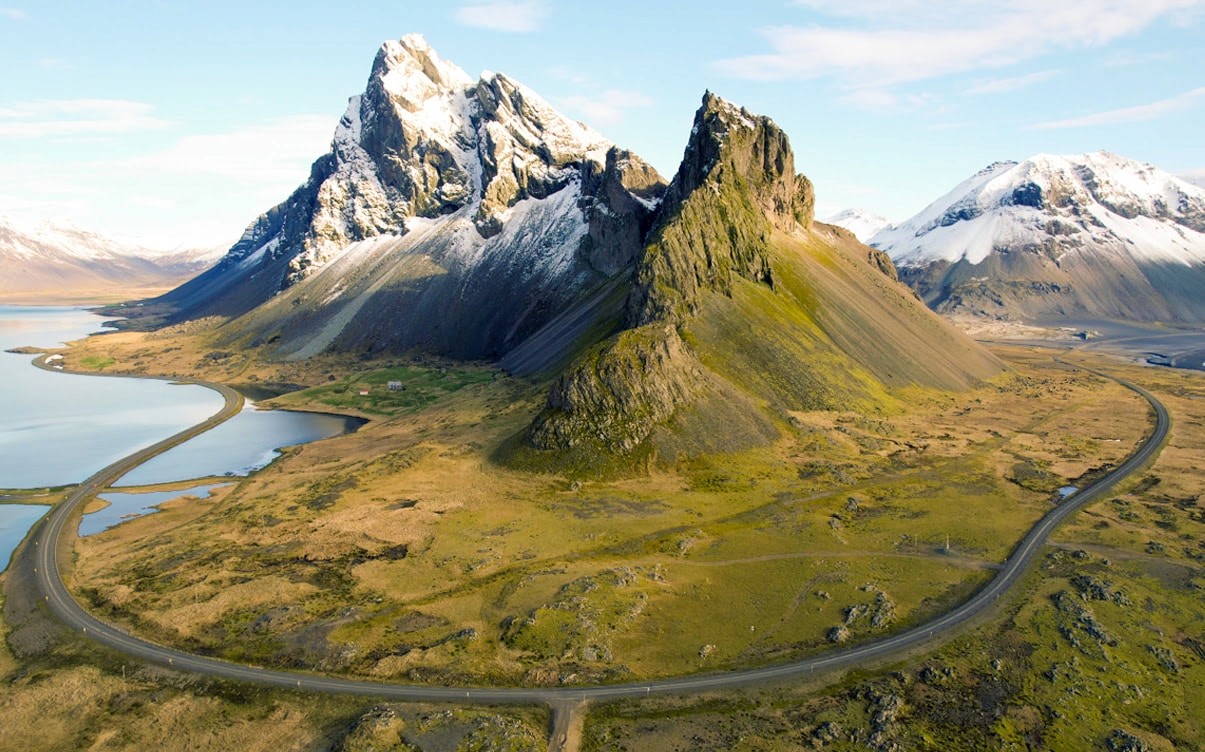
Planning an Iceland Ring Road road trip opens the door to one of the world's most rewarding driving adventures. This legendary 1,332-kilometer circuit reveals thundering waterfalls, ancient glaciers, volcanic plains, and quiet coastal villages, all linked by a single, well-maintained highway that showcases the raw beauty of this Nordic island.
Pulling off this journey takes thoughtful preparation: picking the right vehicle, timing your visit, budgeting realistically, and getting familiar with Iceland's particular driving conditions. Whether you're hoping to catch the Northern Lights dancing over black sand or steam rising from a remote geothermal field, good planning is what turns a long drive into an unforgettable trip.
Understanding the Ring Road Route
What is Route 1
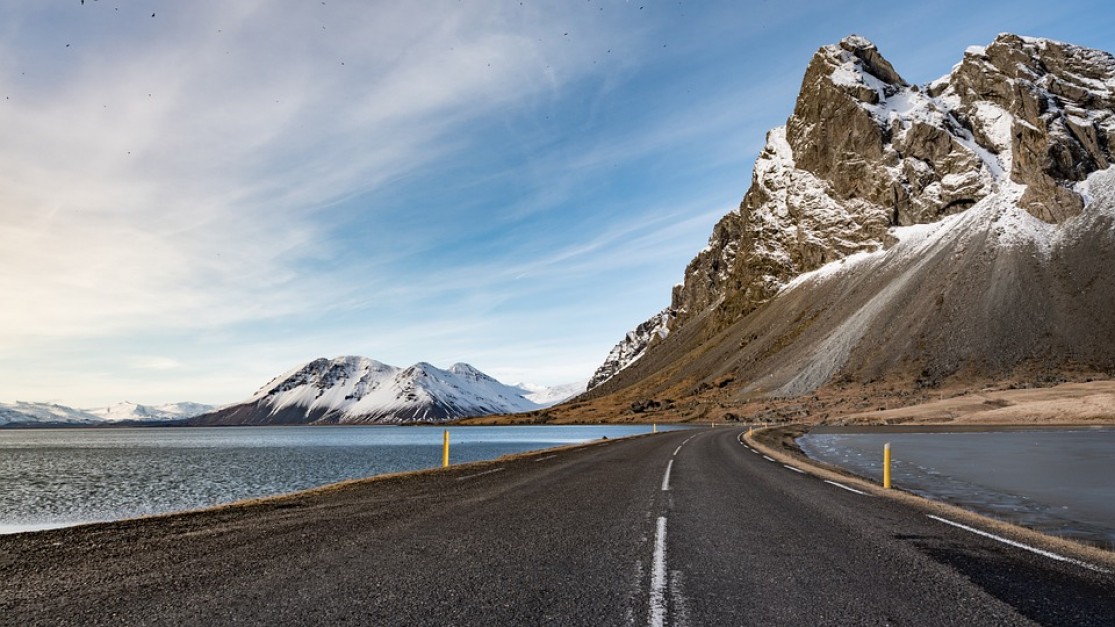
Iceland's Ring Road, formally Route 1, forms a complete loop around the island and connects nearly every major town and natural landmark. It functions as the backbone of the country's road network, passing through lava fields, coastal plains, mountain passes, and glacial valleys. Pavement covers the entire route and conditions are generally reliable year-round, though winter travel demands extra care.
Reykjavík serves as both the starting and ending point for most travellers.
Distance and Driving Times
The full loop measures 1,332 kilometers (828 miles). Driven non-stop, it takes 13 to 16 hours behind the wheel — but the point is to stop often, which is why most visitors take 7 to 10 days.
Useful segment times:
Reykjavík → Akureyri: 4.5 hours
Akureyri → Egilsstaðir: 3 hours
Egilsstaðir → Höfn: 3.5 hours
Höfn → Reykjavík: 4.5 hours
Clockwise or Counterclockwise?
The direction you choose shapes your trip. Going counterclockwise gets you to the popular South Coast first — Seljalandsfoss, Skógafoss, and the Jökulsárlón area — and many photographers prefer this option for lighting reasons.
Going clockwise eases you in through the gentler north before tackling the more demanding eastern fjords. Seasonal weather often tips the scales: in winter, southbound storms or specific road advisories may decide for you.
Planning Your Itinerary
A good itinerary balances driving time, sightseeing, and rest. Plan for 200–300 km behind the wheel per day, which leaves space for photos, short hikes, and the inevitable detour.
How Long to Spend
Seven days covers the highlights. Ten to fourteen days lets you slow down, add glacier walks or longer hikes, and stay flexible if weather forces a change of plan. Daylight is the other variable — June gives you almost 24 hours of light, December barely four. The best time of year to visit Iceland depends largely on which experience you're after.
A Sample Route
Built around a counterclockwise loop:
Days 1–2: Reykjavík to Vík via the Golden Circle and South Coast
Days 3–4: Vík to Höfn through the Vatnajökull region
Days 5–6: East Fjords up to Akureyri
Days 7–8: North Iceland, including Húsavík and Lake Mývatn
Days 9–10: Snæfellsnes Peninsula and return to Reykjavík
Highlights by Region
Each stretch has its own character. The South Coast delivers waterfalls, dark beaches, and the iceberg-filled Jökulsárlón lagoon. The East is fjord country, with steep cliffs dropping into long sea inlets and quiet fishing villages. The North centres on Mývatn's volcanic terrain and Húsavík's whale-watching harbour. The West, anchored by the Snæfellsnes Peninsula, packs glaciers, lava caves, and basalt cliffs into one compact region. Plan overnight stops in Akureyri and Vík to give yourself proper time on both halves of the loop.
Choosing Your Vehicle
2WD or 4WD
A standard 2WD car handles the Ring Road well during summer if you stick to the main route. It's cheaper to rent, cheaper to fuel, and perfectly adequate for the paved circuit and most popular sights.
A 4WD becomes the right call if you want to drive F-roads into the highlands, visit in winter, or simply want extra reassurance on gravel tracks and sudden weather changes. Anyone planning to leave the Ring Road for an interior route legally needs 4WD — F-roads are restricted.
Booking a Rental Car
Reserve early for summer — prices climb and inventory shrinks quickly
Compare insurance carefully; gravel, sand, and ash damage have separate policies
Look at fuel return rules and additional driver fees
Confirm whether the car comes with winter tires if travelling between November and April
Campervan or Hotel?
A campervan rolls accommodation and transport into one bill and gives you maximum flexibility — useful when chasing aurora forecasts or weather windows. Designated campsites along the route handle the rest.
Hotels trade some of that flexibility for reliable warmth, private bathrooms, and proper beds. Shoulder-season travellers in particular often prefer them when nights turn cold and wind picks up.
South Coast Highlights
The South Coast packs more famous sights per kilometre than anywhere else in Iceland.
Jökulsárlón Glacier Lagoon and Diamond Beach
Massive icebergs drift slowly across the deep waters of Jökulsárlón, having calved off Breiðamerkurjökull glacier above. Located between Höfn and Vík, the lagoon is one of Iceland's most photographed spots. Visit at early morning or late evening for softer light. Boat tours operate from late spring through autumn and bring you close to the bigger bergs.
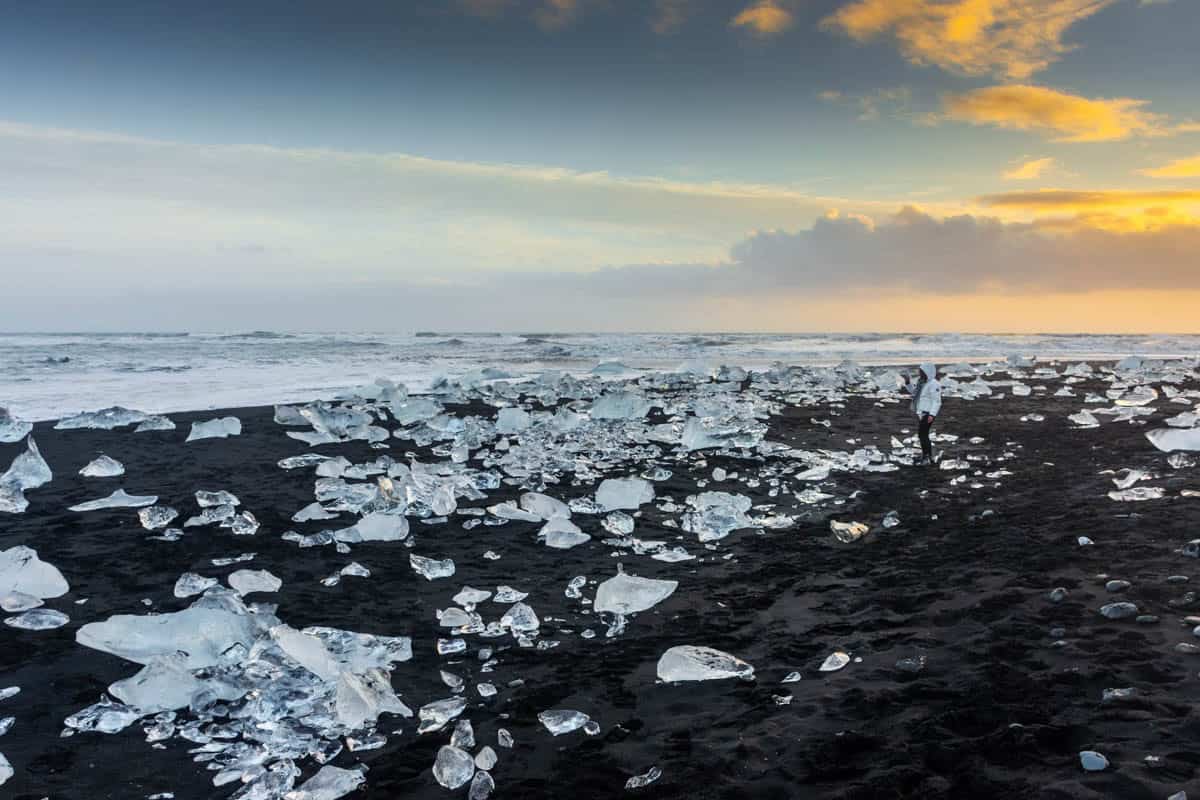
Just across the road, Diamond Beach scatters ice fragments across black volcanic sand — a small but striking landscape made by the same glacier.
Black Sand Beaches
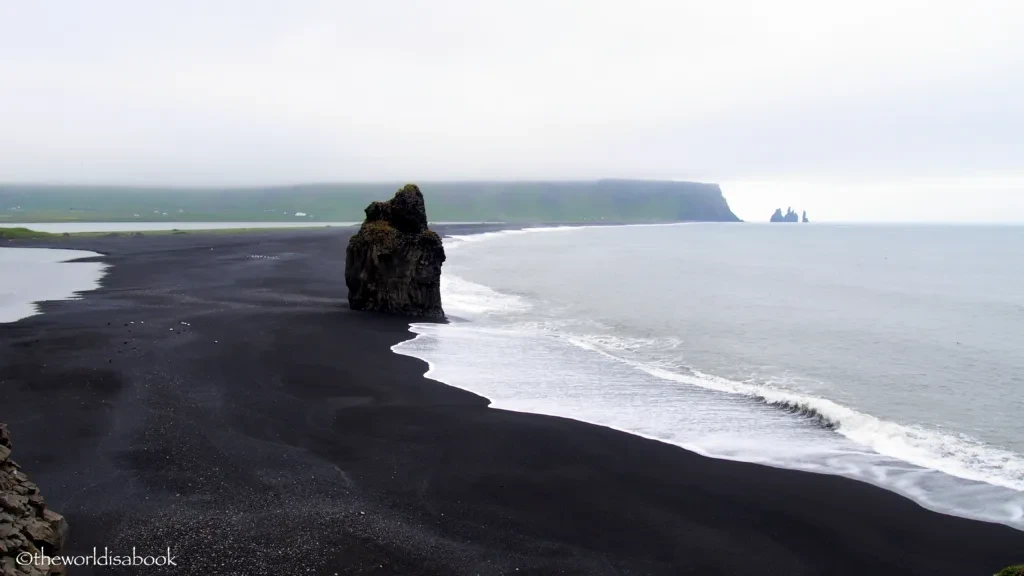
Iceland's southern shores are dark because they're young: volcanic basalt ground down into fine grit by Atlantic waves. Reynisfjara, near Vík, is the most famous example.
A safety note that bears repeating: sneaker waves on these beaches kill people most years. They appear suddenly, surge much further inland than ordinary waves, and the dark sand makes them hard to judge. Stay well back from the water, never turn your back on the sea, and skip the photo if the surf looks restless.
Skógafoss and Seljalandsfoss
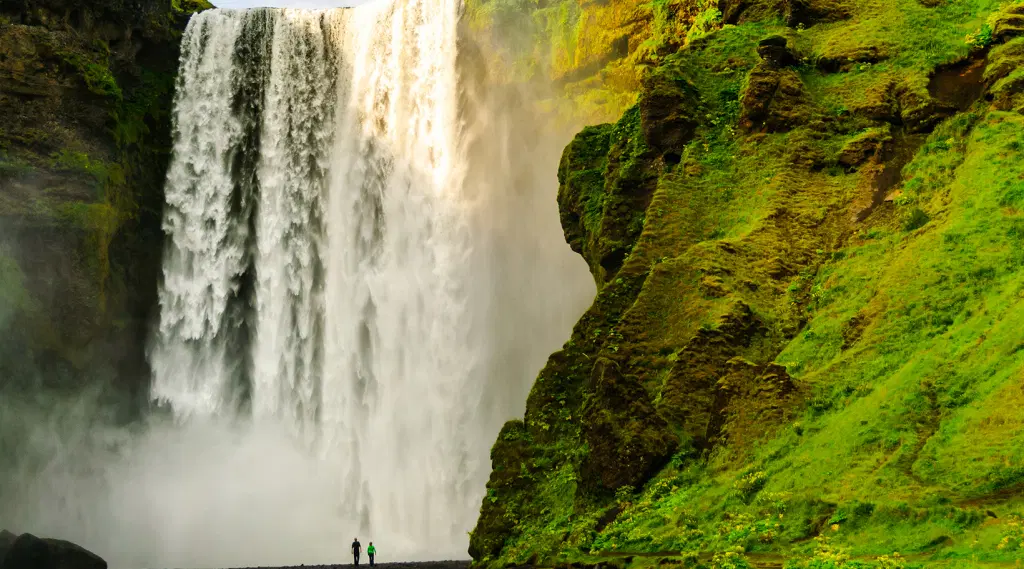
Two waterfalls anchor the South Coast experience. Skógafoss drops 60 metres in a thick curtain over an old sea cliff; a staircase climbs to a viewing platform above. Seljalandsfoss is narrower but lets you walk all the way behind the falling water. Both stay open year-round, but expect ice and slippery rock in winter — proper boots aren't optional.
Golden Circle and National Parks
The Golden Circle is the country's most popular day loop, easily added to either end of a Ring Road trip.
Þingvellir National Park
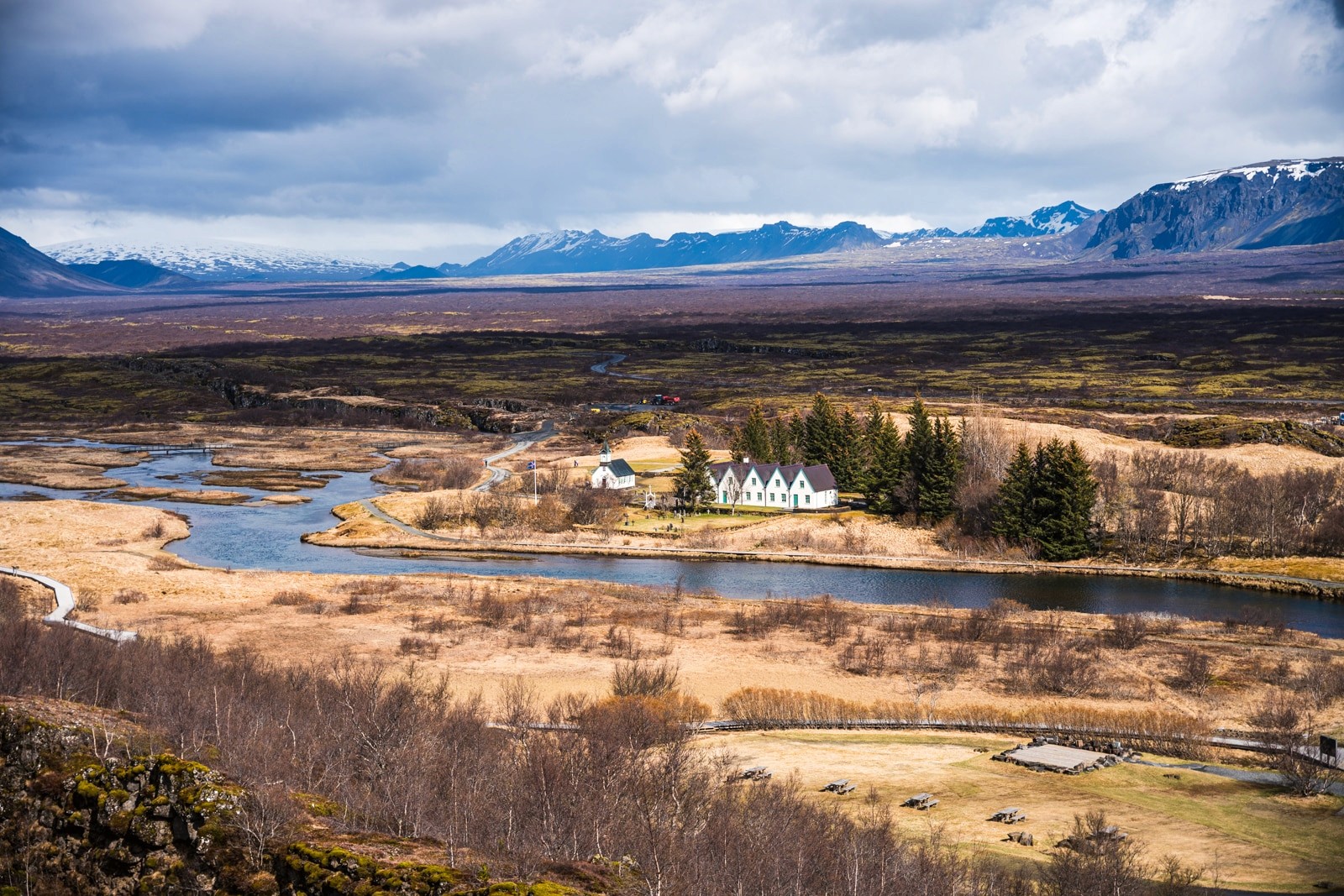
Þingvellir is a UNESCO World Heritage Site for two reasons. Geologically, it sits in the rift where the North American and Eurasian tectonic plates pull apart — you can walk between them in Almannagjá gorge. Historically, this is where Iceland's parliament, the Althing, met from 930 AD for over eight centuries. Divers and snorkellers also come here for Silfra, a fissure filled with glacial meltwater so clear that visibility runs over 100 metres.
Gullfoss and Geysir
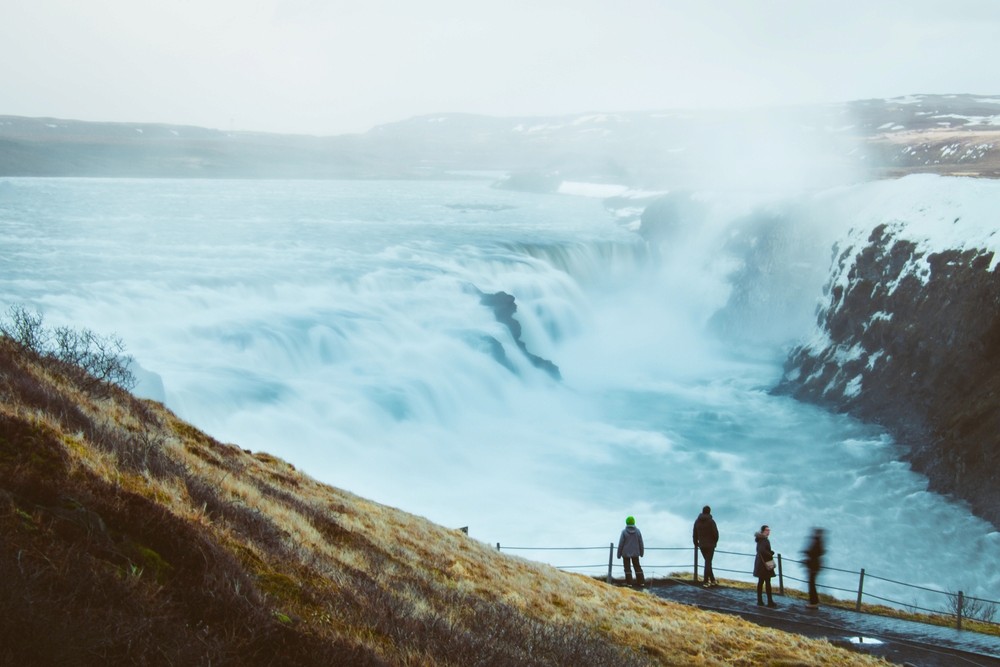
A short drive away, Strokkur geyser erupts every 8–10 minutes, sending a column of boiling water 20 metres into the air. The original Geysir nearby — the one all other geysers are named after — is mostly dormant now. Gullfoss completes the trio: a two-tier waterfall plunging into a narrow canyon, often topped with rainbows on sunny days.
Vatnajökull National Park
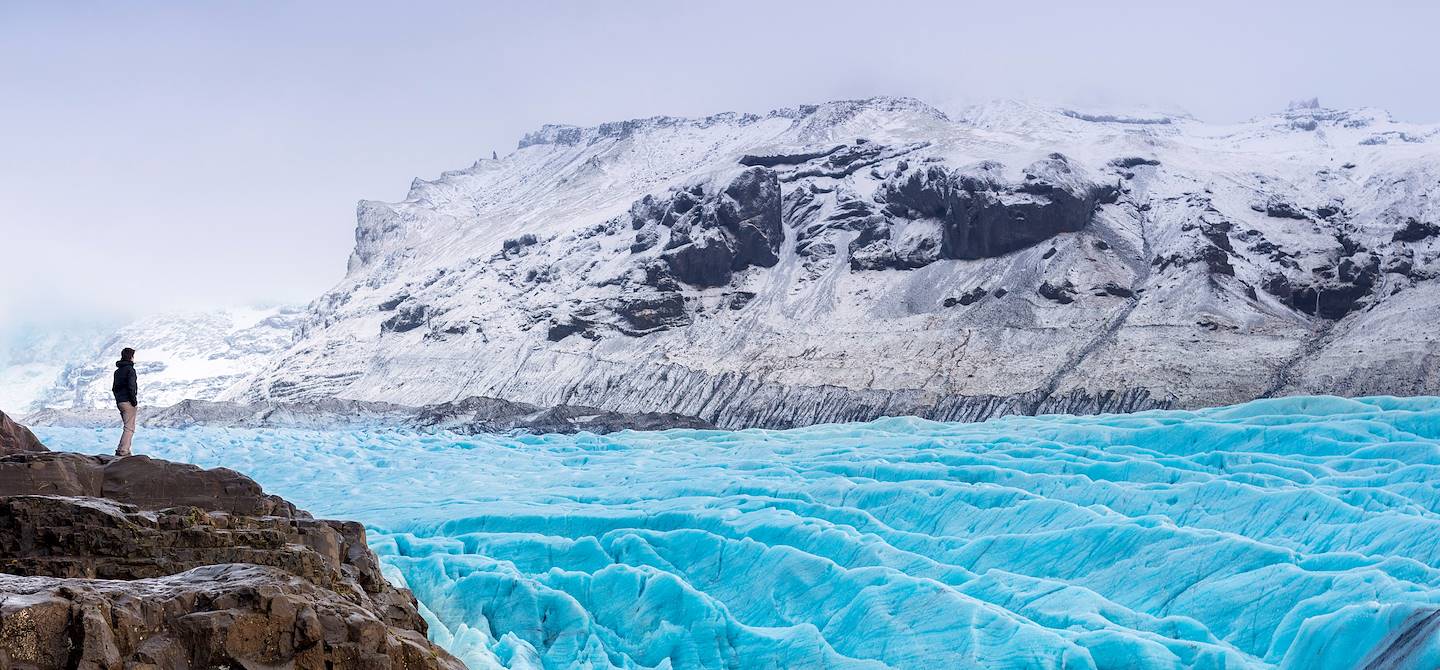
Covering roughly 14% of Iceland's surface, Vatnajökull is the largest national park in Europe. It includes the ice cap of the same name plus a mix of highland desert, coastal lowlands, and active volcanoes underneath the ice. Guided glacier walks, ice cave tours (winter only), and ice climbing are all available from outfitters based in Skaftafell and along the southern coast.
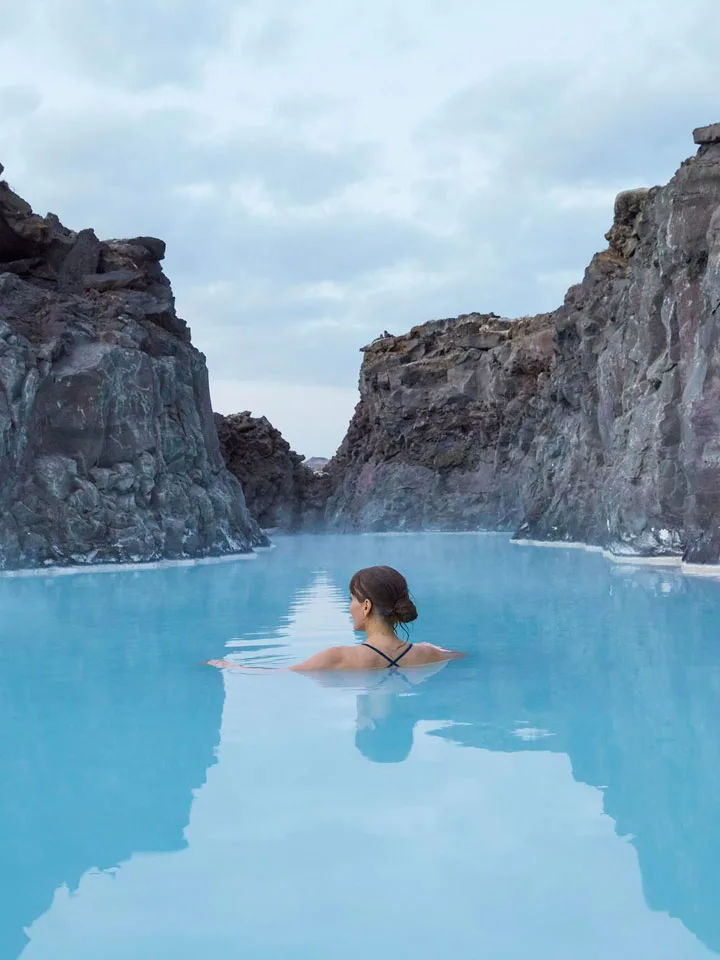
A common add-on is the Blue Lagoon, the famous geothermal spa near Keflavík — convenient on either your first or last day given its proximity to the airport.
Northern Iceland and Lake Mývatn
The north feels more remote than the south and rewards travellers willing to slow down.
Akureyri
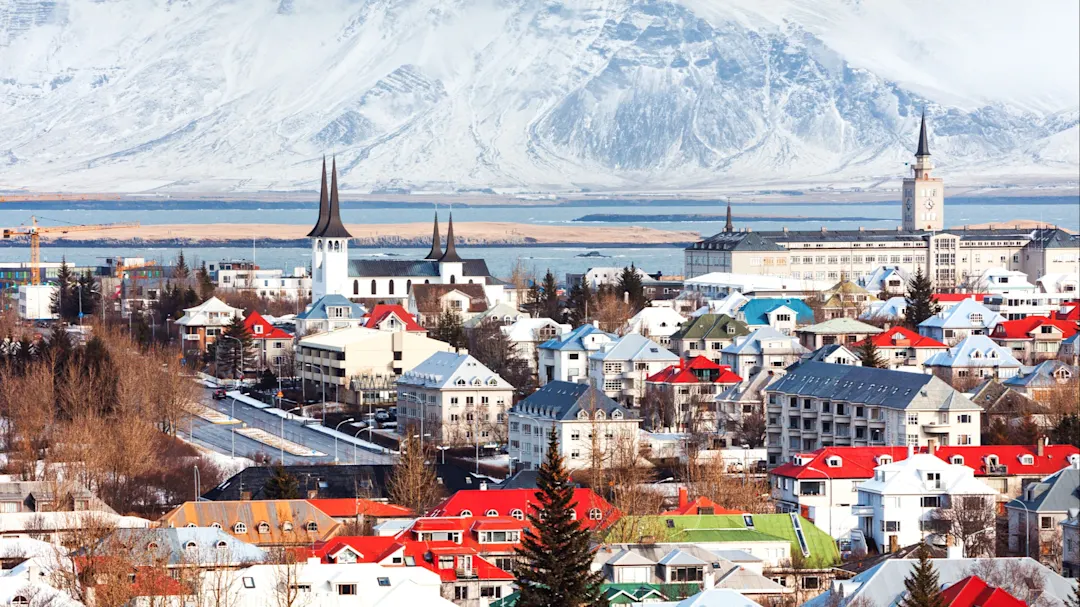
Often called Iceland's second city, Akureyri sits at the head of a long fjord and has just under 20,000 residents. Colourful houses climb the hillsides; the modern church above town is hard to miss. Good cafés, a botanical garden surprisingly far north of where you'd expect one, and decent museums make it a comfortable base for two or three nights.
Lake Mývatn
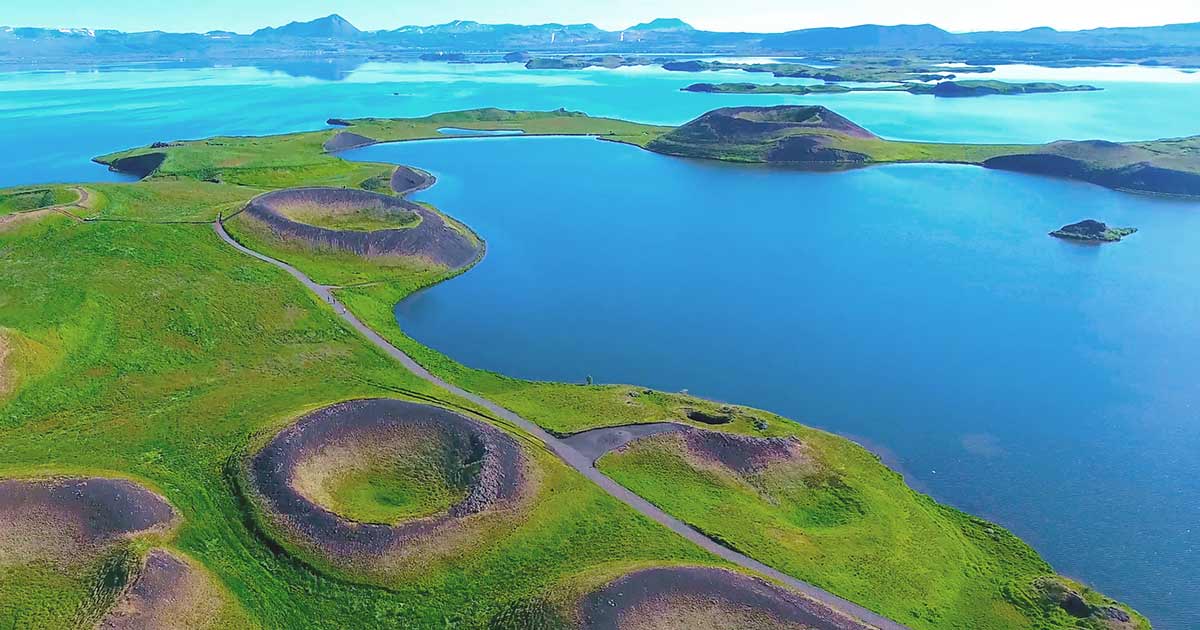
Mývatn is a shallow, nutrient-rich lake surrounded by some of Iceland's strangest volcanic features:
Pseudo-craters at Skútustaðir, formed when lava flowed over wet ground and steam exploded upward
Dimmuborgir, a maze of dark lava pillars and arches
Námafjall, a hissing field of mud pots and sulphurous fumaroles in shades of orange and yellow
Mývatn Nature Baths — quieter and cheaper than the Blue Lagoon, with similar mineral-rich water
Birdwatchers come for the unusually dense duck populations that breed here in summer.
Whale Watching
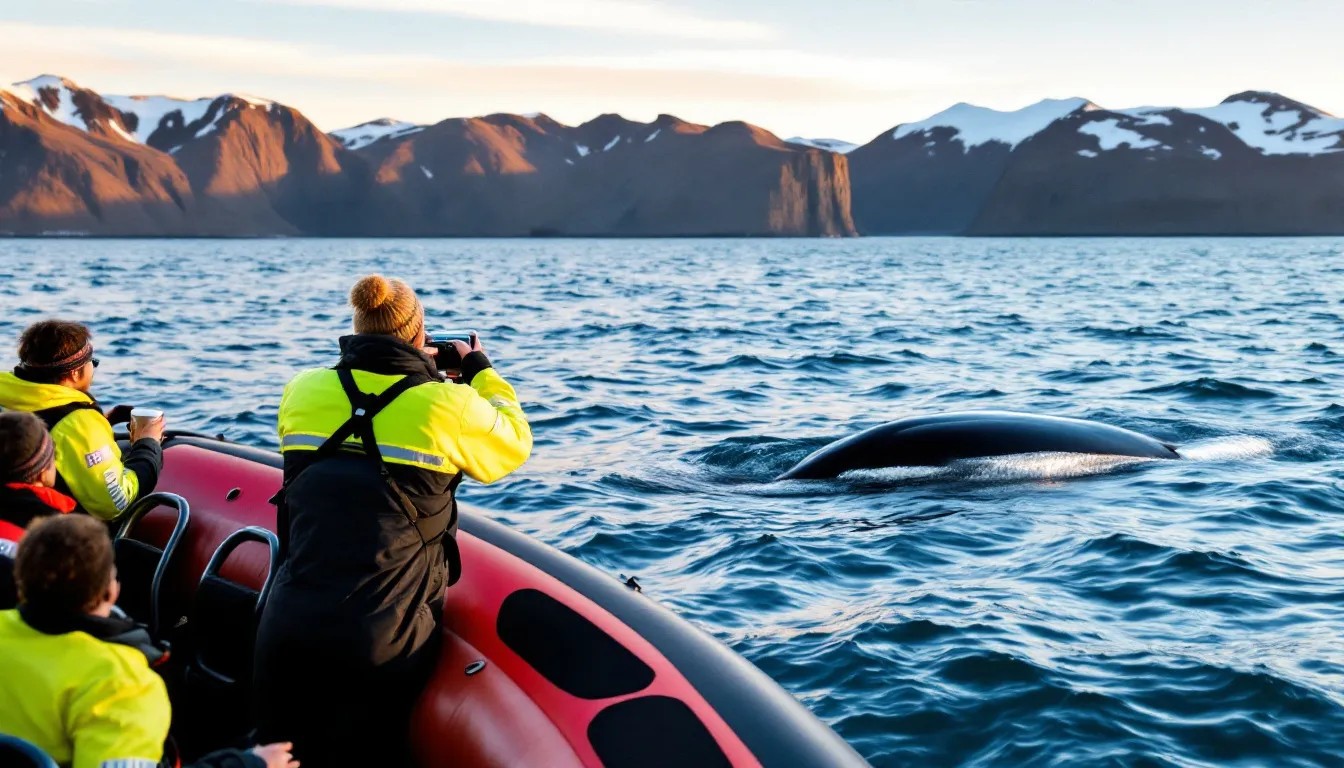
Húsavík, about an hour north of Mývatn, calls itself Europe's whale-watching capital and largely earns the title. Tours run from April through October. Humpbacks are the most common sighting in summer, with minke whales, white-beaked dolphins, and occasionally blue whales also turning up in Skjálfandi Bay.
Budget Planning
Costs in Iceland surprise most first-time visitors. Expect to spend $150–400 per person per day depending on how you travel.
Fuel
The biggest variable expense after accommodation. Gas runs roughly $6–8 per gallon (or about €1.80–2.10 per litre), and the full Ring Road consumes 2–3 tanks depending on the car. Budget $200–350 over a week.
Stations thin out in the east and along parts of the north coast. The basic rule: refuel at a quarter tank, not when you're almost empty. N1 has the densest network; Orkan and ÓB are typically a few krónur cheaper.
Accommodation
Rates vary widely by season and location, with July and August commanding the steepest prices:
Camping: $15–25 per night at designated sites
Hostel dorm beds: $30–60
Guesthouses with private rooms: $80–150
Mid-range hotels: $150–250
Luxury properties: $300–600+
Reykjavík and the South Coast tend to sit at the top of these ranges, with a mid-range hotel in Reykjavik typically landing between $150 and $250 per night; smaller towns in the north and east often offer better value.
Food and Activities
Eating out is expensive — sit-down dinners typically run $25–45 per person before drinks. Cooking your own breakfast and lunch with supplies from Bónus or Krónan supermarkets cuts daily food costs in half. Plan for $40–80 per person daily if you mix self-catering and a few restaurant meals.
Activity costs to factor in:
Glacier hikes or ice cave tours: $80–200
Whale watching: $90–130
Geothermal spas (Blue Lagoon, Mývatn Nature Baths): $50–80
Safety and Emergency Preparedness
Driving Conditions
Iceland's weather can shift from clear to whiteout in under an hour. Before setting off each day, check road.is for live road status and vedur.is for the forecast. Wind is often more dangerous than snow — gusts can exceed 100 km/h, ripping car doors off their hinges and tipping high-sided vehicles. Reduce speed in poor visibility, hold doors firmly when opening them in wind, and avoid parking facing into the wind.
Emergency Resources
SafeTravel.is is the official platform for travel safety. You can register your itinerary so authorities know roughly where you'll be — particularly useful for highland or off-Ring-Road routes. The general emergency number is 112, the same as the rest of Europe. Tell someone your plan and your expected return time when heading anywhere remote.
What to Pack
Iceland weather rewards layers. The packing basics:
Waterproof shell jacket and trousers
Warm mid-layers (fleece or wool)
Sturdy waterproof hiking boots
Hat, gloves, buff
First aid kit and personal medications
Headlamp with spare batteries
Power bank for your phone
Offline maps downloaded in advance
Emergency blanket and snacks for 48 hours
Check tire condition and fuel level before each leg, and make sure your rental's roadside assistance number is saved in your phone.
FAQ
When should I start booking? Reserve rental cars 4–6 months out for summer trips; accommodation in popular spots like Vík, Höfn, and Mývatn books up similarly far in advance during peak season. Winter trips allow more flexibility, but snow tires become mandatory and some rural accommodation closes for the season.
Are there toll roads? Just one — the Hvalfjörður tunnel near Reykjavík, which has been free since 2018. Otherwise no road tolls anywhere on the Ring Road, including bridges.
What about driver's licence requirements? Licences from the EU, EEA, UK, US, Canada, Australia, and most Asian countries are accepted directly. International Driving Permits aren't required but are recommended if your licence isn't in Latin script.
Can I drive the Ring Road in an EV? Yes — Iceland has a growing fast-charging network along Route 1, with stations spaced roughly every 100 km in the south and west. The east and parts of the north have fewer chargers, so plan stops carefully. Range can drop noticeably in cold weather.
Is the Ring Road one continuous paved road? Almost entirely. A few short gravel stretches remain in the east but they're well-graded. Side roads to specific attractions are sometimes gravel.
What about cell service? Coverage along the Ring Road is good through most major networks. Dead zones exist in some valleys and on the more remote eastern and northeastern stretches. A local SIM or eSIM gets you the best rates.
Do I need to worry about Iceland's volcanoes? Active eruptions occasionally close specific roads or trigger ashfall, but the Ring Road as a whole rarely closes for volcanic activity. Check the Icelandic Met Office before travel if there's been recent news.
Can I sleep in my rental car? Not legally outside designated campsites. Wild camping in any motorised vehicle has been banned since 2015. Stick to official campsites — they're well-distributed and inexpensive.
Start Planning Your Trip
The Ring Road delivers something rare in modern travel: a single highway that takes you past glacier lagoons, geothermal valleys, fishing villages, and waterfalls without ever feeling like a tourist conveyor belt. With the right vehicle, a flexible itinerary, and a healthy respect for the weather, the loop becomes the kind of trip you'll be reading travel notes about years later.
Book early at a hotel in Reykjavik, pack for four seasons in one day, and leave room in your plan for the things you can't predict — which, in Iceland, is often the best part.