" width="43.9999991302804px"><path d="M 7.333 0.002 C 7.633 -0.008 7.787 0.018 8.036 0.193 C 8.002 0.618 7.851 0.976 7.688 1.367 L 7.513 1.799 L 7.422 2.02 C 6.754 3.652 6.114 5.295 5.544 6.964 L 6.63 6.836 L 6.646 6.465 C 6.705 5.731 6.946 5.118 7.512 4.629 C 8.115 4.207 8.868 4.146 9.573 4.265 C 10.135 4.392 10.559 4.647 10.91 5.112 C 11.345 5.941 11.444 6.953 11.221 7.866 C 10.994 8.534 10.641 8.987 10.016 9.327 C 9.328 9.591 8.677 9.59 7.983 9.355 C 7.417 9.099 7.081 8.671 6.83 8.114 C 6.697 7.768 6.629 7.399 6.63 7.028 L 6.466 7.089 C 6.241 7.157 6.042 7.181 5.808 7.196 L 5.585 7.21 L 5.417 7.219 L 5.398 7.331 C 5.363 7.528 5.326 7.725 5.289 7.922 L 5.262 8.073 C 5.232 8.237 5.201 8.401 5.17 8.565 L 5.14 8.728 L 5.11 8.882 L 5.084 9.021 C 5.034 9.136 5.034 9.136 4.913 9.215 C 4.778 9.263 4.778 9.263 4.587 9.263 L 4.602 9.013 C 4.602 8.665 4.493 8.41 4.343 8.102 L 4.274 7.953 C 4.175 7.741 4.071 7.531 3.963 7.324 C 3.884 7.156 3.884 7.156 3.884 6.964 L 3.712 6.952 C 3.154 6.87 2.63 6.599 2.132 6.346 L 2.008 6.283 L 1.712 6.134 L 1.626 6.302 C 1.471 6.603 1.316 6.904 1.161 7.205 C 1.026 7.466 0.891 7.727 0.756 7.988 C 0.691 8.112 0.628 8.237 0.564 8.362 L 0.445 8.59 L 0.341 8.793 C 0.243 8.944 0.243 8.944 0.051 9.008 C -0.023 8.789 -0.016 8.699 0.071 8.481 C 0.113 8.4 0.156 8.321 0.199 8.242 L 0.341 7.97 L 0.418 7.823 C 0.564 7.539 0.701 7.252 0.838 6.964 L 0.919 6.795 C 1.072 6.476 1.209 6.148 1.329 5.814 C 1.298 5.788 1.268 5.761 1.236 5.734 C 0.852 5.393 0.562 4.946 0.468 4.435 C 0.458 4.147 0.49 3.925 0.69 3.706 C 0.996 3.497 1.275 3.393 1.648 3.451 C 1.869 3.544 2.078 3.653 2.287 3.77 L 2.312 3.632 C 2.351 3.451 2.404 3.282 2.464 3.107 L 2.532 2.909 L 2.672 2.504 C 2.899 1.836 3.075 1.216 2.926 0.513 C 2.576 0.578 2.238 0.645 1.904 0.768 L 1.904 0.576 C 2.021 0.478 2.021 0.478 2.175 0.381 L 2.328 0.283 C 2.636 0.1 2.879 0.005 3.245 0.066 C 3.425 0.18 3.533 0.258 3.628 0.449 C 3.733 1.377 3.473 2.287 3.071 3.12 L 2.985 3.306 C 2.928 3.424 2.868 3.54 2.805 3.654 C 2.719 3.834 2.673 3.955 2.67 4.154 C 2.784 4.365 2.923 4.533 3.079 4.716 C 3.359 5.046 3.535 5.437 3.728 5.822 L 3.85 6.058 C 4.139 6.625 4.139 6.625 4.139 6.773 L 5.097 6.9 L 5.229 6.504 C 5.523 5.615 5.822 4.727 6.127 3.842 C 6.791 1.941 6.791 1.941 7.333 0.002 Z M 0.754 4.089 C 0.745 4.562 0.931 4.769 1.251 5.105 C 1.394 5.247 1.394 5.247 1.584 5.367 C 1.686 5.159 1.788 4.951 1.89 4.743 C 1.979 4.55 1.979 4.55 1.958 4.391 C 1.861 4.193 1.711 4.126 1.52 4.025 C 1.245 3.952 0.998 3.916 0.754 4.089 Z M 2.351 4.728 L 1.904 5.686 C 2.684 6.246 2.684 6.246 3.565 6.516 C 3.459 6.217 3.302 5.962 3.133 5.694 L 3.053 5.562 C 2.865 5.263 2.663 4.98 2.415 4.728 L 2.351 4.728 Z M 7.752 5.315 C 7.42 5.771 7.367 6.253 7.377 6.804 L 7.376 6.975 C 7.381 7.596 7.457 8.107 7.908 8.561 C 8.353 8.887 8.778 8.917 9.313 8.88 C 9.709 8.796 10.052 8.598 10.283 8.257 C 10.687 7.522 10.678 6.644 10.457 5.854 C 10.322 5.463 10.095 5.22 9.76 4.983 C 9.099 4.711 8.26 4.777 7.752 5.315 Z M 4.267 7.091 L 4.451 7.586 L 4.503 7.728 L 4.554 7.865 L 4.6 7.99 C 4.653 8.12 4.716 8.244 4.778 8.369 L 5.097 7.155 Z M 29.242 0.066 C 29.414 0.205 29.526 0.316 29.625 0.513 C 29.731 1.603 29.36 2.596 28.96 3.593 L 28.895 3.756 L 28.836 3.9 C 28.785 4.034 28.785 4.034 28.794 4.217 L 28.867 4.117 C 29.318 3.499 29.769 2.885 30.263 2.301 L 30.428 2.101 C 30.81 1.641 31.215 1.21 31.637 0.788 L 31.788 0.637 C 32.226 0.204 32.226 0.204 32.435 0.066 C 32.579 0.085 32.579 0.085 32.691 0.13 C 32.787 0.427 32.705 0.622 32.587 0.896 C 32.17 1.941 31.999 3.043 31.86 4.154 L 31.994 3.994 C 32.985 2.815 33.987 1.741 35.278 0.888 L 35.387 0.815 C 35.615 0.669 35.807 0.603 36.076 0.576 C 36.151 0.713 36.151 0.713 36.204 0.896 C 36.136 1.069 36.136 1.069 36.02 1.267 C 34.862 3.406 34.098 6.803 34.799 9.199 C 35.016 9.768 35.239 10.084 35.753 10.401 C 36.396 10.647 37.073 10.479 37.684 10.24 C 37.872 10.16 37.872 10.16 38.056 10.03 L 38.312 10.03 L 38.312 10.285 C 38.136 10.37 37.96 10.453 37.785 10.537 L 37.634 10.609 L 37.488 10.678 L 37.355 10.742 C 36.798 10.976 35.99 10.954 35.414 10.805 C 35.263 10.734 35.121 10.646 34.99 10.541 L 34.865 10.442 C 34.295 9.935 34.035 9.112 33.968 8.369 C 33.852 5.936 34.305 3.364 35.501 1.215 C 34.62 1.955 33.757 2.699 33.01 3.579 L 32.846 3.768 C 32.725 3.91 32.604 4.054 32.485 4.198 C 32.376 4.331 32.267 4.449 32.144 4.57 C 31.618 5.134 31.609 5.816 31.531 6.556 C 31.489 6.935 31.412 7.218 31.202 7.539 C 31.094 7.603 31.094 7.603 30.902 7.611 C 30.711 7.539 30.711 7.539 30.587 7.347 C 30.395 6.779 30.667 6.202 30.902 5.686 L 30.997 5.532 C 31.274 5.072 31.343 4.709 31.358 4.178 C 31.388 3.573 31.442 2.982 31.541 2.385 L 31.573 2.187 C 31.632 1.839 31.706 1.493 31.797 1.151 C 31.295 1.64 30.825 2.133 30.391 2.684 L 30.208 2.91 C 29.807 3.4 29.425 3.906 29.063 4.426 C 28.988 4.534 28.912 4.64 28.836 4.745 C 28.472 5.26 28.172 5.806 27.88 6.365 C 27.843 6.436 27.806 6.508 27.767 6.582 C 27.408 7.282 27.111 7.969 27.006 8.752 C 26.583 8.705 26.583 8.705 26.367 8.561 C 26.407 8.317 26.479 8.116 26.583 7.893 L 26.68 7.681 L 26.787 7.451 C 28.513 4.16 28.513 4.16 28.922 0.64 C 28.849 0.554 28.849 0.554 28.655 0.561 C 28.396 0.578 28.252 0.643 28.028 0.768 L 27.9 0.768 C 27.923 0.589 27.949 0.525 28.09 0.406 L 28.244 0.309 L 28.397 0.211 C 28.651 0.06 28.952 0.009 29.242 0.066 Z M 28.602 4.345 L 28.666 4.473 M 31.221 5.878 C 30.989 6.29 30.861 6.619 30.838 7.092 L 31.094 7.092 C 31.23 6.692 31.259 6.299 31.285 5.878 Z M 18.52 4.569 C 18.941 4.907 19.209 5.326 19.321 5.853 L 19.37 6.072 C 19.414 6.387 19.405 6.709 19.405 7.027 L 15.892 7.027 C 16.036 7.892 16.036 7.892 16.495 8.584 C 16.901 8.842 17.273 8.864 17.745 8.816 C 18.156 8.701 18.385 8.442 18.639 8.113 L 18.766 7.985 L 19.278 8.241 C 19.169 8.674 18.84 9.003 18.47 9.246 C 17.878 9.549 17.256 9.606 16.609 9.443 C 16.102 9.257 15.668 8.886 15.431 8.401 C 15.066 7.523 15.028 6.363 15.365 5.468 C 15.611 4.96 15.975 4.55 16.51 4.342 C 17.208 4.135 17.904 4.152 18.52 4.569 Z M 16.212 5.367 C 15.967 5.743 15.945 5.973 15.892 6.452 L 18.639 6.452 C 18.58 5.863 18.526 5.553 18.168 5.119 C 17.561 4.628 16.692 4.782 16.211 5.367 Z" fill="rgb(0, 0, 0)" height="10.917437449222685px" id="AGutxb3Yn" transform="translate(0 0)" width="38.31175535682081px"/><path d="M 27.593 2.235 C 27.757 2.233 27.922 2.231 28.086 2.229 C 28.232 2.235 28.232 2.235 28.296 2.299 C 28.302 2.406 28.305 2.513 28.305 2.619 L 28.306 2.826 L 28.307 3.051 L 28.312 3.522 C 28.314 3.771 28.316 4.018 28.317 4.267 C 28.318 4.506 28.32 4.744 28.323 4.983 L 28.323 5.206 C 28.329 5.655 28.376 6.061 28.615 6.451 C 28.901 6.701 29.165 6.729 29.533 6.724 C 29.854 6.691 30.101 6.584 30.31 6.334 C 30.637 5.836 30.679 5.377 30.686 4.793 L 30.689 4.571 C 30.693 4.338 30.696 4.105 30.699 3.872 L 30.706 3.397 C 30.713 3.01 30.718 2.623 30.723 2.235 L 31.426 2.235 L 31.489 7.281 L 30.851 7.281 L 30.723 6.643 L 30.564 6.85 C 30.249 7.217 29.859 7.381 29.382 7.419 C 28.878 7.44 28.475 7.331 28.08 7.01 C 27.733 6.682 27.606 6.297 27.585 5.822 L 27.586 5.622 L 27.586 5.393 L 27.587 5.148 L 27.587 4.896 L 27.589 4.235 L 27.59 3.559 C 27.591 3.118 27.592 2.676 27.593 2.235 Z M 4.407 1.214 L 4.982 1.214 L 4.982 2.299 L 6.196 2.299 L 6.196 2.938 L 4.982 2.938 C 4.988 3.423 4.995 3.909 5.002 4.394 L 5.009 4.89 C 5.012 5.127 5.016 5.364 5.02 5.602 L 5.022 5.825 L 5.025 6.034 L 5.028 6.218 C 5.047 6.403 5.091 6.541 5.174 6.707 C 5.369 6.804 5.574 6.777 5.788 6.774 L 5.925 6.774 C 6.037 6.773 6.148 6.772 6.26 6.77 L 6.26 7.345 C 5.114 7.539 5.114 7.539 4.611 7.237 C 4.212 6.816 4.254 6.338 4.261 5.789 L 4.261 5.541 C 4.262 5.326 4.264 5.11 4.266 4.895 C 4.269 4.242 4.273 3.59 4.28 2.938 L 3.577 2.938 L 3.577 2.299 L 4.28 2.299 Z M 12.2 0.064 L 12.902 0.064 L 12.902 7.345 L 12.2 7.345 Z M 33.023 0 L 33.725 0 L 33.725 7.281 L 33.023 7.281 Z M 35.003 2.235 L 35.642 2.235 L 35.642 7.281 L 35.003 7.281 Z M 1.342 0.224 L 1.549 0.235 L 1.757 0.244 L 1.916 0.255 C 1.885 0.538 1.797 0.66 1.593 0.854 L 1.436 1.004 C 1.252 1.173 1.066 1.339 0.875 1.5 C 0.757 1.6 0.757 1.6 0.639 1.752 C 0.435 1.911 0.252 1.869 0 1.852 C 0.038 1.643 0.107 1.522 0.243 1.359 L 0.352 1.227 L 0.467 1.09 L 0.69 0.821 L 0.798 0.693 C 0.904 0.566 0.904 0.566 1.024 0.384 C 1.15 0.255 1.15 0.255 1.342 0.224 Z M 30.448 0.179 L 30.64 0.184 L 30.787 0.191 C 30.739 0.631 30.411 0.869 30.112 1.169 L 29.941 1.349 C 29.527 1.768 29.527 1.768 29.29 1.826 C 29.149 1.826 29.149 1.826 28.934 1.788 C 28.974 1.568 29.056 1.437 29.193 1.262 L 29.313 1.11 L 29.438 0.953 L 29.561 0.796 C 30.057 0.165 30.057 0.165 30.448 0.179 Z M 35.003 0.128 L 35.642 0.128 L 35.642 1.022 L 35.003 1.022 Z" fill="rgb(0, 0, 0)" height="7.479521951991309px" id="sg9LEzmJ7" transform="translate(8.358 2.134)" width="35.641538703949834px"/></g></svg>)

The bus leaves at eight. That is how most Reykjavík trips begin, and often how they end: a capital seen through a coach window on the way to somewhere else, with an hour left over for dinner and a photograph of a church.
There is another way to spend the same days. Reykjavík is small, walkable and geothermally warm, and it keeps a rhythm of its own — busy through the middle of the day, quiet at both ends of it. Once you can read that rhythm, an unhurried day falls into place around it.
What follows is how to enjoy Reykjavík without the rush: when the centre empties out, what a slow day looks like from a soft start to a late soak at the neighbourhood pool, which green corners stay open when everything else has closed, and what all of it currently costs.
Why Reykjavík rewards a slower pace
Most people arrive in Reykjavík holding a list. Waterfalls before breakfast, a lagoon at midday, the city fitted into whatever hours are left over. It works, after a fashion. It also sends people home tired.
What slow travel looks like in a small capital
Slow travel is not complicated. Fewer places. Longer in each. Some hours left unplanned on purpose. It has also stopped being a fringe habit: in its 2026 Holiday Barometer, reported in May 2026, Generali Global Assistance described travellers heading into the summer "with confidence, but also with intention", according to chief executive Paul-Adrien Maizener.
In a capital this small, an unhurried pace costs you almost nothing. The centre of Reykjavík can be crossed on foot in under half an hour, so slowing down does not mean seeing less. It means walking between things instead of scheduling them. The alternative most visitors are sold treats the city as a departure point for day tours rather than as somewhere to spend time.
When the city fills up, and when it empties again
Here is the part almost nobody plans around. Reykjavík has a daily rhythm as well as a seasonal one. Coaches pull out early and come back in the late afternoon. Cruise passengers come ashore in one block and go back aboard before dinner. The result is a centre that is busiest in the middle of the day and calm at both ends of it.
Time of day | What is happening | How the centre feels |
Before 10:00 | Day tours have already left; ships have not yet emptied | Quiet, mostly residents |
10:00 to 17:00 | Shore excursions and coach groups moving through | The busiest stretch |
After 18:00 | Ships sail, tour groups return to their hotels | Calm again, and staying that way |
The volumes are real. The Icelandic Tourist Board (Ferðamálastofa) recorded 223,000 foreign passenger departures in June 2026, in figures published on 10 July 2026. Cruise traffic sits on top of that, running roughly from May to September and peaking in July and August, with most large ships berthing at Skarfabakki, a few kilometres east of the centre, at the Vör terminal that the Port of Reykjavík brought into service for the 2026 season. None of this makes the city crowded all day. It makes it crowded between roughly ten and five.
So take the two quiet windows. Early morning belongs to the people who live here, which is why our own mornings start the way they do, and the evening gives the same streets back to you a second time.
One base beats three, even on a short trip
Is Reykjavík enough for two or three days? People ask this constantly, usually on forums, usually with a note of doubt. The honest answer: it is enough if you stop treating it as a corridor. It is not enough if you spend half of every day in transit.
Staying put removes the quiet tax a trip charges you without ever showing it on a receipt:
Repacking a bag you unpacked yesterday
Checking out before you are ready to leave
Moving the car, then finding somewhere to leave it again
Learning a new neighbourhood every night instead of settling into one
A base slightly outside the middle buys you quiet at night and a ten-minute walk in the morning. Stop racing the clock and the day starts to arrange itself.
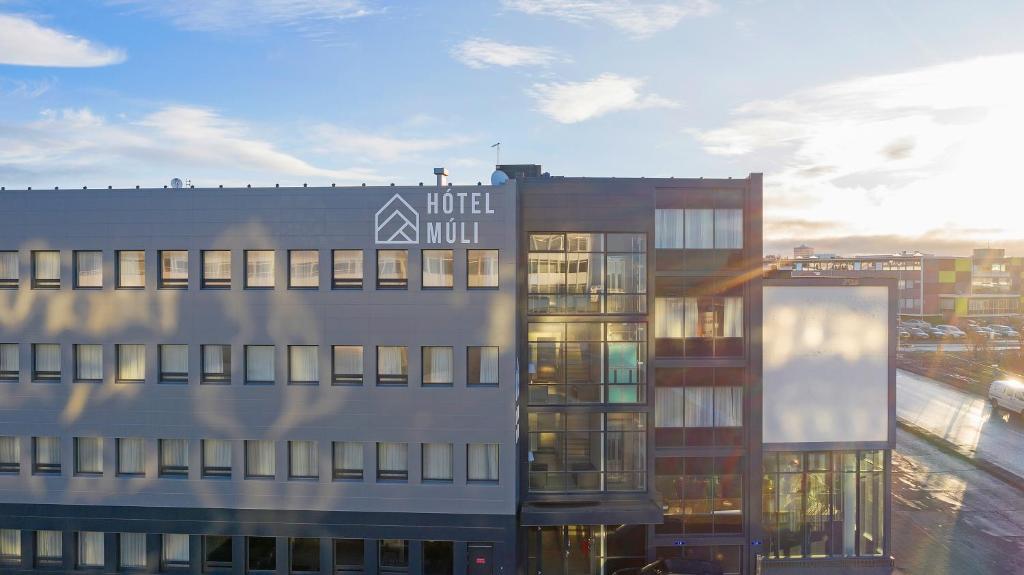
An unhurried day in Reykjavík, from soft start to late soak
What follows is a shape, not a timetable. Nothing in it needs booking. Nothing in it needs an alarm.
A leisurely morning walk and the city's coffee culture
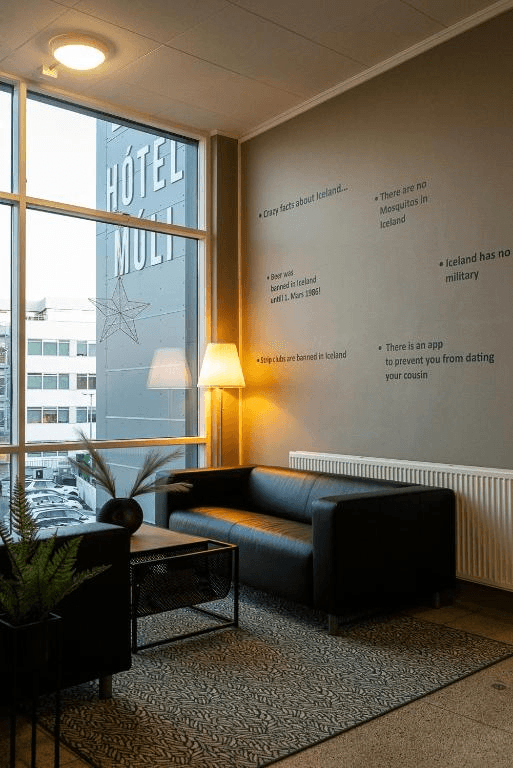
Begin with a soft start. Breakfast without a queue, a second cup because nobody is waiting on you, and then out. At Múli the breakfast is included and the hot drinks in the common lounges stay available through the day, which spares you the small daily indignity of hunting down coffee before you are awake enough to think. There is more on what the lounge is like in the quiet hours if that is the part of a trip you tend to protect.
Then walk. From Laugardalur into the centre takes about ten minutes, past houses and gardens rather than souvenir racks. If you want routes rather than a direction, we have written up five morning walks close to the hotel.
Reykjavík's coffee culture rewards sitting down. Cozy cafés here are places to stay an hour, with a book, at a window, watching weather arrive. Order, sit, and leave the rest of the day undecided for now.
One museum or gallery, not five
Pick one. That is the whole instruction.
Art and culture in this city works best in small doses, because the venues are small themselves. The city art museum runs across separate sites. Independent art galleries sit above shops and behind unmarked doors. Design and photography spaces occupy single rooms. Three of them in an afternoon turns a pleasure into an errand; one of them, given proper time, stays with you.
Midday is also the right time to be indoors, for reasons the table above makes plain.
The geothermal pool as the anchor of your afternoon
Now the part that changes the whole day.
In Reykjavík the neighbourhood pool is not a treat. It is daily life, the way a corner café is elsewhere. People come after work, sit in the hot tubs, argue mildly about the news, and go home. Visitors are welcome and largely unremarked upon. Local thermal baths of this kind are also priced like municipal infrastructure rather than a spa.
Reykjavík City's swimming pool fee schedule was approved by the City Council in April 2026 and took effect on 5 May 2026. Source: City of Reykjavík, "Fees for swimming pools", reykjavik.is.
Ticket | Price (ISK) |
Adult, single admission | 1,500 |
Children aged 0 to 9, with a guardian | Free |
Children aged 10 to 17 | 400 |
Adult 10-visit pass | 7,000 |
Swimsuit rental | 1,270 |
Towel rental | 860 |
Swim, towel and swimsuit together | 2,770 |
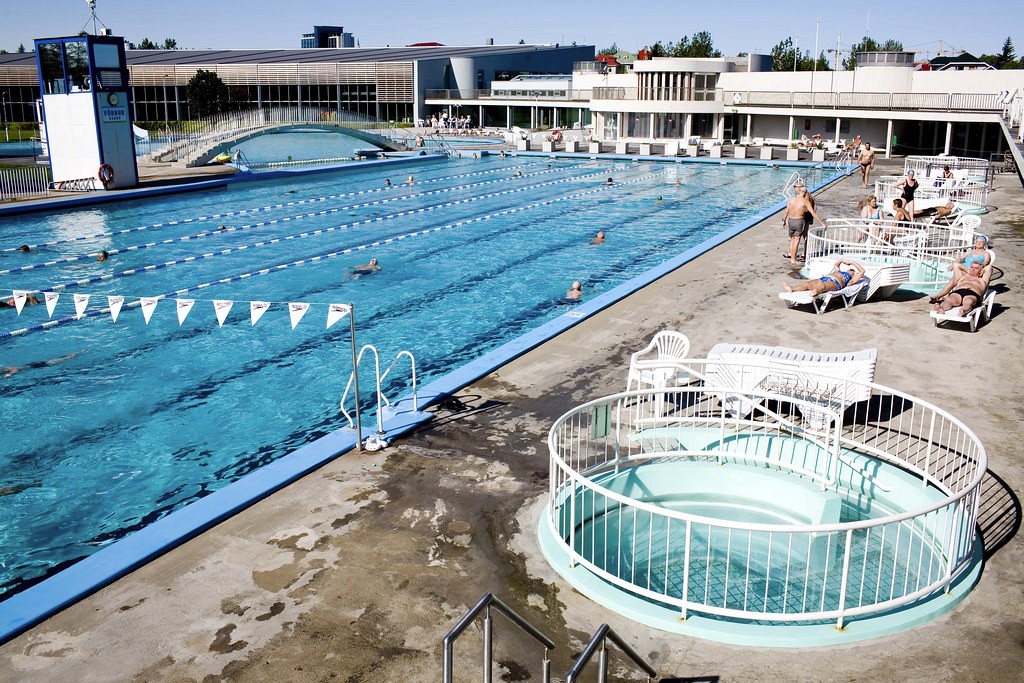
Laugardalslaug, about fourteen minutes on foot from the hotel, is the largest pool in the country. Geothermal pools elsewhere in the city are smaller and just as good, but this one has room for a family to spread out:
● A 50-metre outdoor pool, held at around 28°C
● An indoor pool and shallow pools for small children
● Hot tubs at several different temperatures, plus a cold tub
● A steam room and sauna
● An 86-metre water slide
● A lift and an accessible hot tub
One piece of etiquette, offered gently: shower properly, without a swimsuit, before you get in. Everyone does it, the pools carry very little chlorine as a result, and nobody is watching you.
Go late in the afternoon or early in the evening. That is the local hour, when the light goes long and the steam sits on the surface. Soak until you are warm through, then walk back slowly.
Quiet corners of Reykjavík that day tours skip
None of what follows is secret. These are ordinary places that ordinary residents use on ordinary evenings. They are simply out of reach of anyone moving at speed.
Laugardalur: botanical garden, green paths and a sculpture garden stroll
Laugardalur is a shallow green valley just east of the centre. Playing fields, a family park and zoo, running paths, and gardens that stay open when everything else has shut.
The Reykjavík Botanic Garden, Grasagarður, sits in the middle of it. Entry is free. The garden itself never closes, which is the detail that matters on a long summer evening or a dark winter afternoon.
The garden is an outdoor museum, always open, while the display greenhouse and gazebo open 10:00 to 19:00 in summer and 10:00 to 15:00 in winter. Café Flóra serves daily from 10:00 to 18:00 through the summer. Source: City of Reykjavík, Reykjavík Botanic Garden, reykjavik.is, 2026.
It was founded in 1961 and holds its plants across eight collections, arranged so you can walk the whole thing in forty minutes or spend an afternoon on one bed of Icelandic natives. There are ponds, small bridges, and bumblebees the size of a thumb joint.
For a sculpture garden stroll, the city keeps a large collection of outdoor work, and one of the museum sites has a garden attached. Check current opening arrangements before you set out, since these change with the season.
For a family this is a rare thing: the pool, the garden, the park and the zoo inside one walkable valley, with family rooms and apartments at the edge of it, so a slow day does not have to be a quiet one for everybody.
The old harbour and the coastal walk to the Sun Voyager
The old harbour still works. Fishing boats, welding, ropes, a smell of diesel and salt, small restaurants that appeared later and did not take the place over. It is a working waterfront rather than a promenade, which is exactly why it is worth an hour.
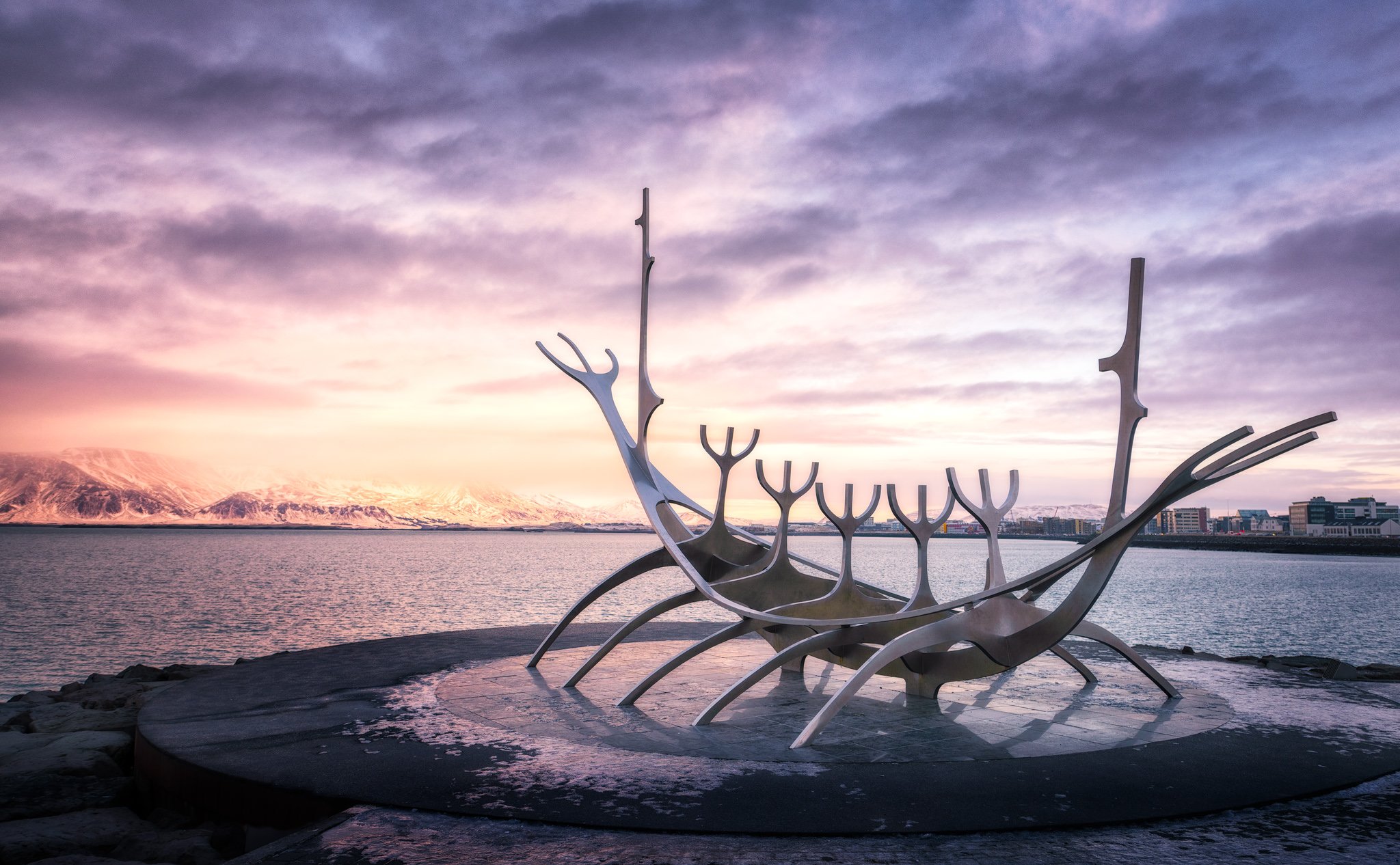
From there the coastal path along Sæbraut gives you scenic coastal walks with Mount Esja sitting across the water, changing colour every twenty minutes. The Sun Voyager stands on that stretch. It is free, always open, and photographed relentlessly between eleven and four; go early or late and you may have it alone.
Dress for wind. Weather here is not an interruption to the day, it is the texture of it, and a change of plan is part of the arrangement rather than a failure of one. Our notes on what to bring in any season cover the rest.
City ponds, small streets and the downtown evening
Tjörnin, the city pond, is a complete walk in twenty minutes. Birds, City Hall standing in the water, gardens along one side, benches. It costs nothing and asks nothing of you.
The small streets between the pond and the main shopping street hold independent boutiques and design shops. Browse them at five o'clock rather than one o'clock and the whole experience is different: fewer people, more conversation.
Place | What it is | Cost | Best time |
Grasagarður botanic garden | Outdoor museum, eight plant collections | Free | Evening, or midday for the greenhouse |
Old harbour | Working port with boats and small workshops | Free | Late afternoon |
Sæbraut coastal path | Seafront walk facing Mount Esja | Free | Early morning or after 18:00 |
Sun Voyager | Waterfront sculpture | Free | Before 10:00 |
Tjörnin city pond | Short circular walk with birdlife | Free | Any hour, quietest at dusk |
If you still want one day trip out of the city, take one, and book it from the hotel rather than rearranging your stay around it. Then come back to the same room.
Because the evening is the reward. Once the boats are back on their moorings, the centre becomes what it actually is: a small northern town where people walk home along the water.
Frequently asked questions
How do you avoid the crowds in Reykjavík?
Work with the day rather than the season. The centre is calm before 10:00 and again after 18:00, and busiest in between, when coach tours and shore excursions are moving through. Cruise traffic peaks in July and August, so keep the middle of those days for indoor plans.
What is the best way to get around Reykjavík?
On foot for the centre, which crosses in under half an hour. Otherwise Strætó city buses: a single adult fare has been 690 ISK since 6 January 2026, valid 75 minutes with transfers, and children aged 11 and under travel free. A rental car earns its place on day trips but not downtown, where the City of Reykjavík charges 660 ISK an hour in zone P1 with a three-hour limit. Free private parking at your hotel removes that search entirely.
Is one day enough for Reykjavík?
One day gives you a first taste: a walk, one museum, a soak, dinner. Two days turn it into a stay, because the second morning is when you stop navigating and start recognising streets. Three days is generous unless you are using the city as a base for trips out.
How much does it cost to swim in a Reykjavík geothermal pool?
Adult entry is 1,500 ISK and children under 10 swim free, under the City of Reykjavík schedule in force since 5 May 2026. A 10-visit adult pass at 7,000 ISK pays for itself from the third swim, and swimsuits and towels can be hired on site if you arrive without them.
Can you enjoy Reykjavík without booking tours?
Comfortably. A tour-free day might take in the botanic garden in Laugardalur, free and open year-round, the coastal path and the old harbour, Tjörnin and the small streets around it, and an afternoon at the neighbourhood geothermal pool. None of it needs reserving. What helps most is choosing where to stay for a slower trip, close enough to walk in and far enough out to sleep.
Settling into the city's own rhythm
What a quiet base makes possible
Reykjavík is not a city you finish. It is one you stay in for a while, and then leave slightly reluctantly.
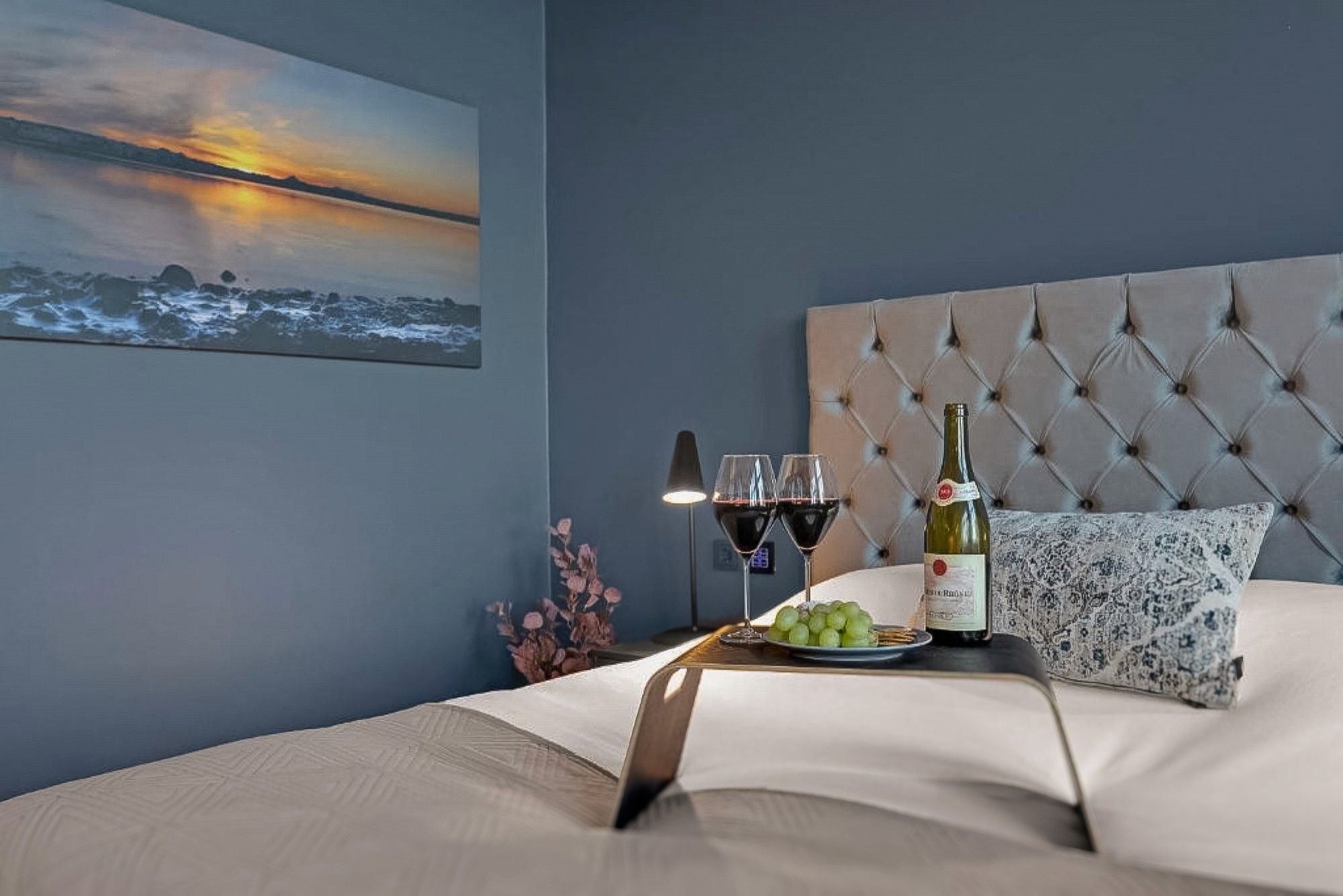
What makes an unhurried day possible is mostly unglamorous. Rooms that are soundproofed, so a late evening outside does not become a short night inside. Parquet underfoot rather than carpet. A private bathroom you are not queuing for. A lounge where the hot drinks stay out all day, so afternoons have somewhere to land when the weather turns. Múli is a pleasant hotel, 92 rooms in a residential street, and it is meant to work as a peaceful retreat rather than a lobby you pass through.
Small practicalities that remove the pressure
The rest is logistics, which is to say it is the part that quietly decides whether a trip feels calm:
Free private parking. Uncommon in Reykjavík, and the reason the car can stay still for two days instead of being moved every three hours.
Self check-in, around the clock. No desk to reach before a certain hour, so a delayed flight or a long drive back from the south coast stops being a problem. We have written about why we set it up that way.
Laundry on site. Useful halfway through a longer trip, when everything you own smells faintly of wet wool.
The Engjateigur bus stop nearby, for the mornings when walking in the rain holds no appeal.
Singles, doubles and twins, family rooms and apartments with a separate living room, so nobody has to whisper after nine.
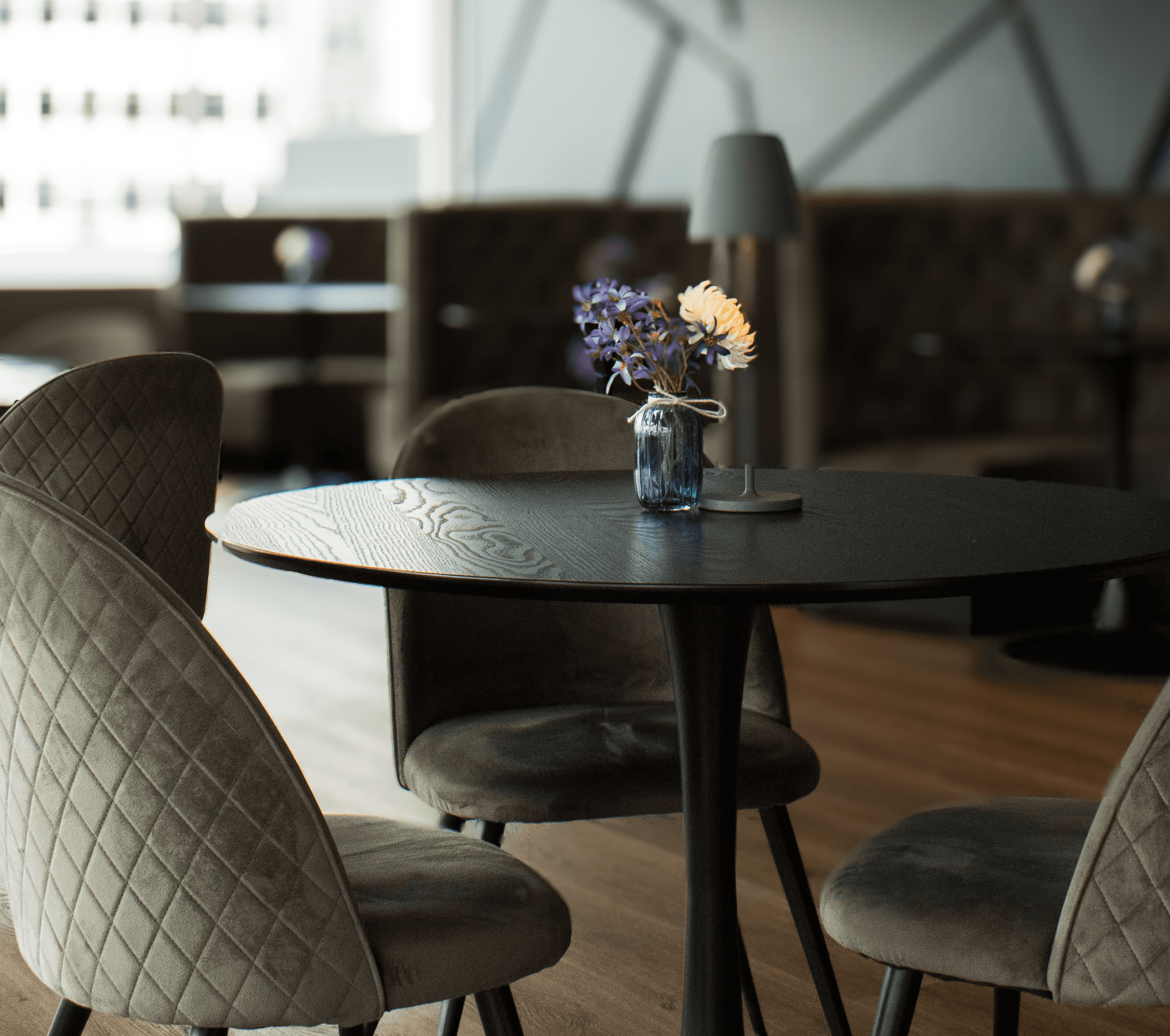
Taking Reykjavík at your own pace
Everything above comes down to one habit: read the hours instead of the list. Between the movements of the coaches and the ships, the city hands itself back to the people walking in it, and a morning coffee, a single gallery, a long soak and a walk around a pond turn out to be plenty for a day.
You will spend less, queue less, and remember more of it. That is the whole argument for learning to enjoy Reykjavík without the rush, and it costs nothing except the willingness to cancel one thing you had planned.
When you are ready to slow down, we have kept a quiet room for it: free parking so the car can stay where it is, self check-in whenever you arrive, and a warm lounge for the hours in between. There is a quiet room waiting in Laugardalur, ten minutes from town and a short walk from the water.